Filmed in IMAX, a young girl questions her grandfather about the alleged curse of King Tutankhamen. His response takes us up to the source of the nourishing river Nile, to the Great Pyramids of Giza, to the Valley of the Kings.
Ocean Oasis is a fascinating journey into the bountiful seas and pristine deserts of two remarkably different, but inextricably linked worlds — Mexico's Sea of Cortés and the Baja California desert.
"All sounds travel in waves much the same as ripples in water." Educational film produced by Bray Studios New York, which was the dominant animation studio based in the United States in the years surrounding World War I.
From polar bears in the arctic tundra to black bears in the Northern Rockies, you'll see some of the most spectacular footage ever shot of these enterprising omnivores. Catch salmon with a group of hungry grizzlies on the McNeil River in Alaska. Crawl inside a den with a mother black bear and her cubs. Learn about the challenges facing each of these species as their habitat diminishes.
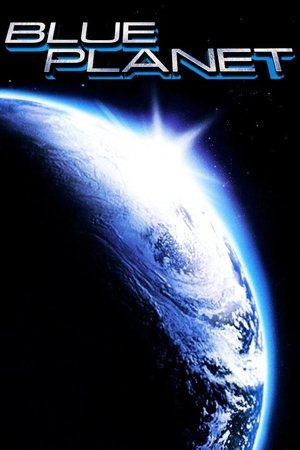
From the unique vantage point of 200 miles above Earth's surface, we see how natural forces - volcanoes, earthquakes and hurricanes - affect our world, and how a powerful new force - humankind - has begun to alter the face of the planet. From Amazon rain forests to Serengeti grasslands, Blue Planet inspires a new appreciation of life on Earth, our only home.
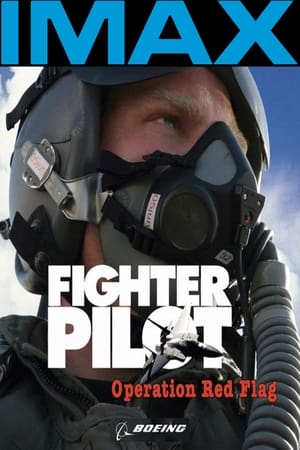
Fighter Pilot: Operation Red Flag follows American F-15 Eagle pilot John Stratton as he trains with some of the world’s best pilots. The movie depicts Stratton’s progression through the challenging and dangerous exercises of Operation Red Flag, the international training program for air forces of allied countries.
Filmed in IMAX, a team of explorers led by Pasquale Scaturro and Gordon Brown face seemingly insurmountable challenges as they make their way along all 3,260 miles of the world's longest and deadliest river to become the first in history to complete a full descent of the Blue Nile from source to sea.
A big-screen look into one of America's most successful entertainment industries, NASCAR racing.
12,000 feet down, life is erupting. Alvin, a deep-sea mechanized probe, makes a voyage some 12,000 feet underwater to explore the Azores, a constantly-erupting volcanic rift between Europe and North America.
Warsaw's Central Railway Station. 'Someone has fallen asleep, someone's waiting for somebody else. Maybe they'll come, maybe they won't. The film is about people looking for something.
Two eighth graders doing an assembly on cleanliness and neatness seek underclassmen. A look into Don and Mildred's hygienic endeavors.
Coral Reef Adventure follows the real-life expedition of ocean explorers and underwater filmmakers Howard and Michele Hall. Using large-format cameras, the Halls guide us to the islands and sun-drenched waters of the South Pacific to document the health and beauty of coral reefs. Featuring songs written and recorded by Crosby, Stills & Nash.
The Living Sea celebrates the beauty and power of the ocean as it explores our relationship with this complex and fragile environment. Using beautiful images of unspoiled healthy waters, The Living Sea offers hope for recovery engendered by productive scientific efforts. Oceanographers studying humpback whales, jellyfish, and deep-sea life show us that the more we understand the ocean and its inhabitants, the more we will know how to protect them. The film also highlights the Central Pacific islands of Palau, one of the most spectacular underwater habitats in the world, to show the beauty and potential of a healthy ocean.
Sea life in a whole new way. Deep Sea 3D, an underwater adventure from the filmmakers behind the successful IMAX® 3D film Into the Deep, transports audiences deep below the ocean surface. Through the magic of IMAX®; and IMAX 3D, moviegoers will swim with some of the planets most unique, dangerous and colorful creatures, and understand this inspiring underworld.
The story of the evolution of tropical rain forests, their recent and rapid destruction, and the intense efforts of scientists to understand them even as they disappear. This film gives viewers a better appreciation of the importance of tropical rain forests on a global scale.
Retrace the groundbreaking footsteps of Charles Darwin with a young scientist as she explores the biological diversity and unique geologic history of the Galapagos archipelago. Using the magic of IMAX® and IMAX® 3D technology, plunge 3,000 feet into underground lava tubes, soar over the peaks of 5,000 foot volcanoes and encounter an abundance of marine life.
Join the Mars rovers Spirit and Opportunity for an awe-inspiring journey to the surface of the mysterious red planet.
"Meat Joy is an erotic rite — excessive, indulgent, a celebration of flesh as material: raw fish, chicken, sausages, wet paint, transparent plastic, ropes, brushes, paper scrap. Its propulsion is towards the ecstatic — shifting and turning among tenderness, wildness, precision, abandon; qualities that could at any moment be sensual, comic, joyous, repellent. Physical equivalences are enacted as a psychic imagistic stream, in which the layered elements mesh and gain intensity by the energy complement of the audience. The original performances became notorious and introduced a vision of the 'sacred erotic.' This video was converted from original film footage of three 1964 performances of Meat Joy at its first staged performance at the Festival de la Libre Expression, Paris, Dennison Hall, London, and Judson Church, New York City."
The earliest surviving motion-picture film, and believed to be one of the very first moving images ever created, was shot by Louis Aimé Augustin Le Prince using the LPCCP Type-1 MkII single-lens camera. It was taken on paper-based photographic film in the garden of Oakwood Grange, the Whitley family house in Roundhay, Leeds, West Riding of Yorkshire (UK), on 14 October 1888. The film shows Adolphe Le Prince (Le Prince’s son), Mrs. Sarah Whitley (Le Prince’s mother-in-law), Joseph Whitley, and Miss Harriet Hartley walking around in circles, laughing to themselves, and staying within the area framed by the camera. Roundhay Garden Scene is often associated with a recording speed of around 12 frames per second and runs for about 2 to 3 seconds.
The first woman to appear in front of an Edison motion picture camera and possibly the first woman to appear in a motion picture within the United States. In the film, Carmencita is recorded going through a routine she had been performing at Koster & Bial's in New York since February 1890.