In 1999, Colorado mother Jessica Gonzales experienced every parent’s worst nightmare when her three young daughters were killed after being abducted by their father in violation of a domestic violence restraining order. Devastated, Jessica sued her local police department for failing to adequately enforce her domestic violence restraining order despite her repeated calls for help that night. Determined to make sure her daughters did not die in vain, Jessica pursues her case to the US Supreme Court and an international human rights tribunal, seeking to strengthen legal rights for domestic violence victims. Meanwhile, her relationship with her one surviving child, her son Jessie, suffers, as he struggles with the tragedy in his own way. Shot over the course of nine years, Home Truth chronicles one family’s incredible pursuit of justice, shedding light on how our society responds to domestic violence and how the trauma from domestic violence can linger through generations.
As the Syrian war continues to leave entire generations without education, health care, or a state, Lost in Lebanon closely follows four Syrians during their relocation process. The resilience of this Syrian community, which currently makes up one fifth of the population in Lebanon, is astoundingly clear as its members work hard to collaborate, share resources, and advocate for themselves in a new land. With the Syrian conflict continuing to push across borders, lives are becoming increasingly desperate due to the devastating consequences of new visa laws that the Lebanese government has implemented, leaving families at risk of arrest, detention, and deportation. Despite these obstacles, the film encourages us to look beyond the staggering statistics of displaced refugees and focus on the individuals themselves.
Women's unwritten history is passed down through memories. Shows women talking about their experiences of the Great Depression in Australia. Covers such areas as: aboriginal women; paid and unpaid work; mothering; marriage; women's participation in the political struggles of the 1920's and 30's.
Profile on three young Adelaide women. Diana, Kerry and Josie are now 18 years old, and continue to have open and frank discussions about their lives.
An exploration of the hopes and expectations of three working class women from Adelaide, and the differences and similarities they share with their daughters.
The third film in a documentary series from acclaimed director Gillian Armstrong, about the lives of three working class women. as they grow up from the age of 14. They're now at the ripe old age of 26, and we witness the women confronting the very real issues of teenage pregnancy, and love versus sex, marriage and career.
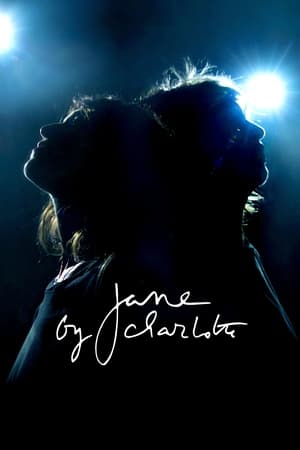
Backstage record of how Lily Tomlin, Jane Wagner and their associates put together "The Search for Signs of Intelligent Life in the Universe," Miss Tomlin's one-woman Broadway play.
The life of Jeremiah Tower, one of the most controversial, outrageous, and influential figures in the history of American gastronomy.
Thirteen Swiss filmmakers, each from their own point of view, chronicle and reconstruct the narrative of Swiss cinema, from its beginning to the present day, and in doing so, retrace the history of the country.
Documentary about the lives of worshippers from the congregation of the Greater Bethany Community Church in South Central LA and the sermons of its Bishop Noel Jones
A unique 1960s documentary on the traditional dirge sung by women in Griko, an ancient dialect of Salento, so old that it originates from the ancient Greeks who once colonized that part of southern Italy.
On a hot summer day, a group of boys of the Roman suburbs play and laugh in one of the many rivers that surround the city. The camera scrutinizes them, approaches them, reveals the gestures and glances, wraps them in a sort of visual dance, while the words of the commentary (entrusted to the poetic sensibility of Pier Paolo Pasolini) narrate the stories, desires, dreams, the future.
In 1976, a 14-year-old Nadia Comăneci became an overnight sensation after she accomplished what no one had ever done before in professional gymnastics—she scored a perfect 10. ETERNAL PRINCESS is an intimate look at her inner struggles, personal dedication, and greatest success.
After three combat tours in Iraq, Alex Sutton attempts a fresh start hatching chickens and raising goats on 43 acres in rural North Carolina. Alex embraces life on the farm with his new love Jessica, but cycles between a state of heightened alert and “feeling zombified” from a cocktail of prescriptions meant to stabilize his injured mind. When Jessica becomes pregnant, the dark past Alex has tried to escape—the loss of his first family, the war he was forced to leave—closes in on him. The farm becomes another battleground. Farmer/Veteran attempts to reconcile the identity of a perfect soldier with the reality of a haunted man determined to hold onto the best chance at peace he’s ever known.
By focusing on the experiences of 25-year-old Nadine Zaidan, who was one of the thousands of activists who gathered in Beirut’s Martyrs’ Square in the chaotic days immediately following the assassination of Prime Minister Rafiq Hariri in February of 2005, Beirut Diaries explores critical transformations and crucial questions facing contemporary Lebanon. With this insightful video diary, director Mai Masri chronicles the political ferment embodied in the March 11th Movement, also known as The Cedar Revolution, as people of all factions, ages and religious affiliations passionately debate such issues as Syria’s influence in Lebanese politics, the establishment of an international commission to investigate Hariri’s assassination and the organization of free parliamentary elections.
This heartfelt documentary from award-winning filmmaker Mai Masri explores the enduring friendship that evolves between two Palestinian girls—Mona, who was born and raised in the economically marginalized Shatila refugee camp in Beirut, and Manar, who lives in the Dheisha refugee camp under Israeli control. The two girls begin their friendship as penpals, sharing the similarities and differences of life in the two refugee camps. Mona and Manar are finally able to meet face-to-face at the Lebanese-Israeli border during Israel's withdrawal from South Lebanon. But when the second intifada suddenly erupts around them shortly thereafter, both girls must face heart-breaking changes in their lives.
Pablo Neruda’s life unfolds and becomes the basis for the symbolic representation of his poem “Barcarola”, intermixing live action, still footage, computer images, dance and poetry.
A documentary film following several years in the life of Jan Potměšil who has become a very popular actor at an early age, representing the type of a young sporty intellectual. After a serious car crash in 1989, he ended up on a wheelchair. He was 23 years old at the time. After a year of rehabilitation, he returned to the stage. Excelling in “Flowers for Algernon”, he continuously acts in the production in front of sell-out crowds across the country. He also lives his personal life, experiencing new loves and breakups, is engaged in civic affairs and returns to the hospital now and then. The film aims to give a non-pathetic image of a life lived to the full despite adversity.
A short docu film addressing issues like racism, homophobia and sexism within the popular sport football(soccer).
Lenka and Míra Hřib are a young married couple with two small children. They are both interested in ecology and sustainable life.