Focusing on the vulnerability of digital data, Digital Amnesia ponders the sustainability of modern artifacts that have no material state. Notable archivists share their perspectives on the Digital Age and whether it poses great promise or threat to the longevity of digital information and our collective memory.
Once upon a time there was a large Finnish company called Nokia that manufactured the world’s best and most innovative mobile phones. Nokia’s annual budget was larger than that of the Government of Finland and their phones spread everywhere and changed the whole culture of communication. But then something changed. Film portrays the rise and fall of Nokia and the Finnish mobile phone industry. Nokia engineers, designers and managers tell their story about the creation, success and downfall of the Finnish mobile phone.
In the first decades of the 20th century, when life was being transformed by scientific innovations, researchers made a thrilling new claim: they could tell whether someone was lying by using a machine. Popularly known as the “lie detector,” the device transformed police work, seized headlines and was extolled in movies, TV and comics as an infallible crime-fighting tool. Husbands and wives tested each other’s fidelity. Corporations routinely tested employees’ honesty and government workers were tested for loyalty and “morals.” But the promise of the polygraph turned dark, and the lie detector too often became an apparatus of fear and intimidation. Written and directed by Rob Rapley and executive produced by Cameo George, The Lie Detector is a tale of good intentions, twisted morals and unintended consequences.
Host Grant Jeffrey discusses how technology and government activities are changing the way our information is handled. How is this shaping our lives?
The story of Tasmanian-born actor Errol Flynn whose short & flamboyant life, full of scandals, adventures, loves and excess was largely played out in front of the camera - either making movies or filling the newsreels and gossip magazines. Tragically he was dead from the effects of drugs and alcohol by the time he was only 50 & the myths live on. But there is another side of Flynn that is less well known - his ambitions to be a serious writer and newspaper correspondent, his documentary films and his interest in the Spanish Civil War and Castro's Cuba
Takes us to locations all around the US and shows us the heavy toll that modern technology is having on humans and the earth. The visual tone poem contains neither dialogue nor a vocalized narration: its tone is set by the juxtaposition of images and the exceptional music by Philip Glass.
Commissioned by the Festival of Britain to show the similarities and contrasts between 1851 and 1951, by means of the Great Exhibition and the Festival.
NOTHING TO HIDE is an independent documentary dealing with surveillance and its acceptance by the general public through the "I have nothing to hide" argument. The documentary was produced and directed by a pair of Berlin-based journalists, Mihaela Gladovic and Marc Meillassoux. It was crowdfunded by over 400 backers. NOTHING TO HIDE questions the growing, puzzling and passive public acceptance of massive corporate and governmental incursions into individual and group privacy and rights. After the emotion initially triggered by the Snowden revelations, it seems that the general public has finally accepted to live in a monitored digital world.
LIKE is an IndieFlix Original documentary that explores the impact of social media on our lives and the effects of technology on the brain. The goal of the film is to inspire us to self-regulate. Social media is a tool and social platforms are a place to connect, share, and care … but is that what's really happening?
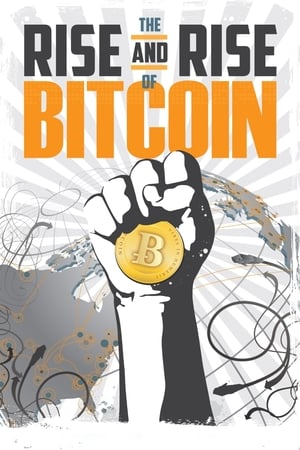
A documentary about the development and spread of the virtual currency called Bitcoin.
A documentary about Goran Ivandic 'Ipe', the drummer of most popular Yugoslav rock band of all time, Sarajevo-based "Bijelo dugme" (White Button). Ivandic's fatal jump from the balcony of hotel Metropol in Belgrade in 1994 sparked much controversy around his fate.
The story of computers: from electronic tape and punched cards, to austere-looking robots.
Do any areas of our lives escape surveillance any more? Citizens of the 21st Century are the focus of prying eyes, whether they agree to it or not.
The Chinese company Huawei wants to expand 5G worldwide and is well advanced in the development of the technology. With the help of 5G, entire communities can function wirelessly, self-driving cars become possible and advanced medical care can be performed remotely in real time. However, many are worried that Huawei is incorporating backdoors that allow vast amounts of data to be collected and then used by China for espionage.
This film is made up of interviews from preteens to adults discussing their thoughts and feelings on sex, relationships, and parenting in relation to teen pregnancy.
A look at global sex tourism, focusing on the situation in Venezuela and Thailand.
A team of scientists search for the lost island of Testerep in front of the Belgian coast, venturing into artificial landscapes and virtual realities.
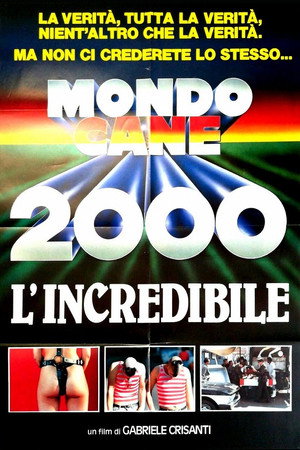
The final official installment in the "Mondo Cane" series dares to go where no other Mondo film has gone before.
In a few years, technology will merge with our bodies in ways that today seem unimaginable, and will redefine the limits of what is a human being. There are already people who, driven by the desire to experiment, have crossed the biological limits by introducing electronic devices that provide them with capabilities that go beyond what is "normal." They are the first hybrids, and they face the reaction of society, which goes from malignancy to enthusiasm. Today they are only a small minority, and many people consider them as disrupted experimenters, but in the near future we may recognize them as pioneers.
This documentary-drama hybrid explores the dangerous human impact of social networking, with tech experts sounding the alarm on their own creations.