Originally edited in two versions. Version I, 70 minutes; version II, 90 minutes. (The only known existing version is not Markopoulos’s edit and contains additional titles, music and voice-over added later than 1961. 65 minutes.) Filmed in Mytilene and Annavysos, Greece, 1958. Existing copy on video, J. and M. Paris Films, Athens.
First film by Julio Bressane shot in exile, "Memoirs" is a film about a man who repeatedly kills the same type of woman in same places, the same way. Filmed on the streets of London.
Bressane's second London film, shot in six days in his apartment. "I had seen the French avant-garde films of the 1920's and naturally the title cites Breton. But underneath it can also be read in many ways. It is a cinema that is invented on the spur of the moment, like you invent an instrument to play music and then abandon it. This film came out like an improvisation, a total risk. It is a deconstruction of meaning but not in the analytical, intellectual sense. I have always tried to lose myself with my films. There is no trace of American or French underground cinema. If anything, it is the idea of home movies, there were many ideas for digital films long before digital film existed. This film made itself, it was like a jazz improvisation. Amor Louco is a lost object, it doesn't speak any language, it has no signs, no letters, no captions. And in the scene where the cataract is cut with the razor blade, it was the adventure of the film itself that was put to the test".
Diwan, a lyric anthology, an outdoor movie with people. With people living in the surrounding precious and very beautifully photographed nature, are neither more nor less than one part of it. What Nekes manages there with landscape, as a cunning and quote many fine artist in a medium that runs in time, as he defeated the time changed, by themselves for change of scenery uses, as it interferes with the laws of chronology through the rewind ability of the camera or destroyed, which is a compelling and highly aesthetic experimental company.
Lacking a formal narrative, Warhol's mammoth film follows various residents of the Chelsea Hotel in 1966 New York City. The film was intended to be screened via dual projector set-up.
A man’s female friend who just came back from London spends time on the river shore.
In 1983, yacht sailor Will Parker leads an American crew financed by millionaire Morgan Weld to defeat during the America's Cup race against an Australian crew. Determined to get the prize back, Will convinces Morgan to finance an experimental boat designed by his ex-girlfriend Kate's new beau, Joe Heisler. When the boat is completed, the Americans head to Australia to reclaim the cup.
Between a man and his lover lies a wall, between the man and the country he loves lies another wall. Can a one-sided dialouge breaks the walls and expresses the man’s feelings and sentiments? Or does the lover or the country wants the wall to be broken in the first place? This short was inspired by Amy Len’s dance choreography “Wall” and colloborated with Loh Bok Lai. The dance was originally choreographed for a performance in Japan Dance Wave Fukuoka ‘06 - Asian Contemporary Dance Now and later made into an experimental video combining elements of an actor and monologue. The video footages were also used for the dance piece itself in KL.
Time-Consciousness offers four mutually contradictory versions of a series of events. The constant factors are a middle-aged poet with a gammy leg, a prostitute who may or may not be dead, and the woman’s humble room (which may or may not be tidy), where the poet does his writing. Asking "What did happen at 9:20 that evening?," the film underlines the unreliability of memory and the impossibility of objectivity.
A bereaved epileptic ditches her pills and follows a mysterious woman to the outskirts of her town, where she slips back into the fearsome yet ecstatic throes of the seizure.
Prometheus, on an Odyssean journey, crosses the Brooklyn Bridge in search of the characters of his imagination. After meeting the Muse, he proceeds to the "forest." There, under an apple tree, he communes with his selves, represented by celebrated personages from the New York "underground scene" who appear as modern correlatives to the figures of Greek mythology. The filmmaker, who narrates the situations with a translation of Aeschylus' Prometheus Bound, finds the personalities of his characters to have a timeless universality.
This is the only feature directed by the famed French painter and sculptor Martial Raysse. In keeping with the revolutionary spirit of the time, the movie has no plot to speak of and appears to have been largely made up on the spot. We follow the cat man into a bizarre fantasy universe presented in negative exposure that reverses color values (black is white and vice versa) and written words. The cat man steals a car and then picks up a young girl he promises to take to “Heaven.” Heaven turns out to be a country chateau inhabited by several more animal mask wearing weirdoes...
A Japanese salaryman finds his body transforming into a weapon through sheer rage after his son is kidnapped by a gang of violent thugs.
A young man experiences his last few minutes of singular consciousness while examining a wild falcon he has studied for months.
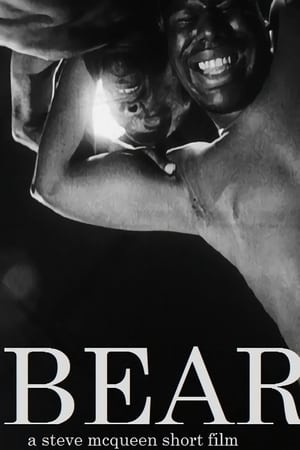
Bear (10 minutes, 35 seconds) was Steve McQueen's first major film. Although not an overtly political work, for many viewers it raises sensitive issues about race, homoeroticism and violence. It depicts two naked men – one of whom is the artist – tussling and teasing one another in an encounter which shifts between tenderness and aggression. The film is silent but a series of stares, glances and winks between the protagonists creates an optical language of flirtation and threat.
A divorced journalist Marko Požgaj starts his working day by taking his son to the school. During the day many thoughts and images pass through his mind - the memories of childhood, ex-wife, current girlfriend, but mostly his father who died in a war.
An experimental film about a peaceful and carefree life in a small Dalmatian town, which turns into bloodshed and horror on the eve of the Italian occupation of the country.
Colossal explores the complexities of grief and the process of grieving as understood through the myth of a Man as he ventures through shifting landscapes ruminating.
Sarah is a debt collector who lives among the inhabitants of the village of Guimbal on the island of Panay. She wants to find the young man who appeared to her in a dream and goes to the island of Negros. Here, as she interacts with the inhabitants, Sarah continues her search, gathering memories of life and war, dreams, myths, legends, songs and stories that she takes part in and at times revolve around her. She is the daughter of an ancient mermaid, a revolutionary, a primordial element, a virgin who was kidnapped and hidden away from the sunlight. “The film is a retelling of fragments of the American occupation. Dialogue, shot in the Hiligaynon language, is not translated but used as a tonal guide and a tool for narration. Using unscripted scenes shot where the main character was asked to merely interact with the villagers, I discard dialogue and draw meaning from peoples’ faces, voices, and actions, weaving an entirely different story through the use of subtitles and inter-titles.”
Born in Los Angeles but a New Yorker by choice, Barbara Hammer is a whole genre unto herself. Her pioneering 1974 short film Dyketactics, a four-minute, hippie wonder consisting of frolicking naked women in the countryside, broke new ground for its exploration of lesbian identity, desire and aesthetic.