She is a 13-foot, 70-pound snake that combines size and strength with a strike faster than the blink of an eye. Meet Squeeze, an eight-year-old African rock python who's capable of hunting in any terrain at any time of day for virtually any prey. As a new mother, her single goal is to incubate her young and keep them from becoming someone else's dinner. Follow her as she discovers that motherhood in the cold-blooded world of the South African savannah is no walk in the park.
How do white South Africans deal with their fears of crime and violence? Like crocodiles, some survive without evolving, living with their fears. Others make fear their friend and evolve in ways you'd never imagine.
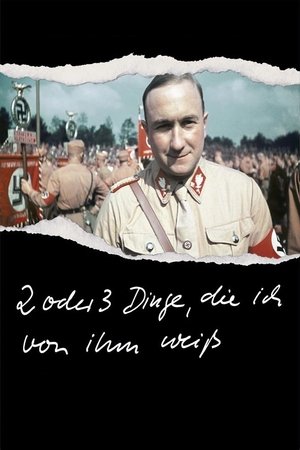
What would your family reminiscences about dad sound like if he had been an early supporter of Hitler’s, a leader of the notorious SA and the Third Reich’s minister in charge of Slovakia, including its Final Solution? Executed as a war criminal in 1947, Hanns Ludin left behind a grieving widow and six young children, the youngest of whom became a filmmaker. It's a fascinating, maddening, sometimes even humorous look at what the director calls "a typical German story." (Film Forum)
A newly discovered mega-hunt is happening off the coast of South Africa. In an epic annual spectacle in False Bay, a pod of cunning killer whales hunt 5,000 common dolphins.
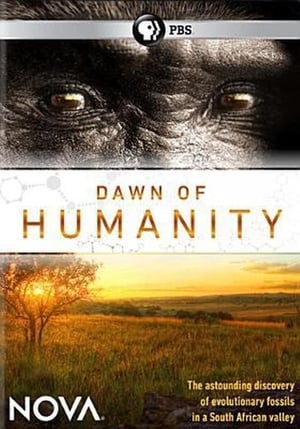
Nova and National Geographic present exclusive access to an astounding discovery of ancient fossil human ancestors.
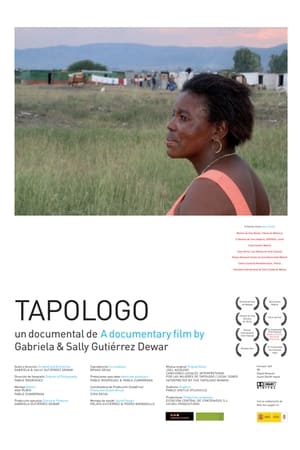
In Freedom Park, a squatter settlement near the platinum mines in SA, a network of former sex workers create Tapologo. They learn to be Home Based Carers for their community, transforming degradation into solidarity and squalor into hope. Catholic Bishop Kevin Dowling participates in Tapologo and raises doubts on the official doctrine of the Catholic Church regarding AIDS and sexuality in the African context.
Directed by Ingrid Martens, this documentary takes place completely within the lifts of Ponte tower in Johannesburg. Over five years, Ingrid films the tenants of the tower and the snippets of their lives that are captured within their rides between floors.
In the dying days of apartheid, three generations of women in a village in South Africa came together to create a community garden. They called it “the thinking garden” – hleketani in the local xiTsonga language – a place where women gather to think about how to effect change. Twenty-five years later the garden is still going strong, providing fresh vegetables and new opportunities for local people while helping to confront the ravages of climate change, poverty, and HIV/AIDS in a community pushed to the edge.
The struggle to eradicate apartheid in South Africa has been chronicled over time, but no one has addressed the vital role music plays in this challenge. This documentary by Lee Hirsch recounts a fascinating and little-known part of South Africa's political history through archival footage, interviews and, of course, several mesmerizing musical performances.
A provocative look from within at Afrikaner extremists who, in 1991, clung to the belief that they were the chosen ‘super race’ of Africa. With the demise of white rule, many of these Boers lived in fear. Some had banded into paramilitary groups, such as Eugene Terre’Blanche’s Afrikaner Resistance Movement, which claimed wide support within the South African army and police. They were preparing for an armed showdown with the new government.
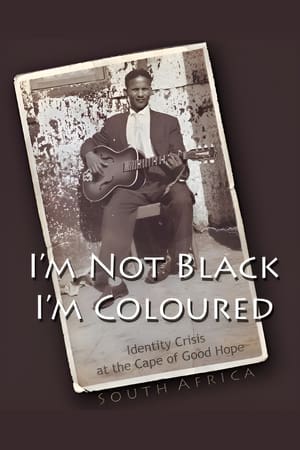
In the wake of one of the worst social experiments in the history of mankind, 'I'm not Black, I'm Coloured' is one of the first documentary films to look at the legacy of Apartheid from the viewpoint of the Cape Coloured. A people who in 1994, embraced the concept of Desmond Tutu's all encompassing 'rainbow nation', but soon thereafter realized that freedom, privilege, economic growth and equality would not include them. A people who for more than 350 years has been disregarded, ignored, belittled, and stripped of anything they can call their own enduring a complex psychological oppression and identity crisis unparalleled in South African history.
In southern Africa’s Mashatu, one of the last bastions for free-roaming leopards, a mother leopard has just given birth. And she’ll do anything to protect her two cubs. But on this land, which is drying up by the day, the struggle for survival is fierce. A leopard war is about to break out. In this 40,000-hectare enclave plagued by climate change, resources are becoming increasingly scarce for wildlife. The leopards living there are forced to adapt, developing new behaviors that will lead to terrible interspecies clashes. Will the mother leopard be able to protect her offspring from the many dangers? Can the cubs master the art of survival? A gripping animal tale that follows the destiny of a family of felines for 3 years, in the wilds of Botswana. Thanks to cutting-edge technology (drones, high-sensitivity cameras), this film captures rare images of a fascinating species, revealing behaviors never before observed.
The halcyon days of skateboarding are alive in rural South Africa. Indigo Skate Camp is home to the village's very first generation of skaters, who are growing up with a different outlook on life from their elders.
Shot in New York, Cape Town, St Helena and the Atlantic Ocean, Sathima's Windsong, is a lyrical portrait of South African jazz singer, Sathima Bea Benjamin. In her Chelsea Hotel apartment, home for over thirty years, she patches together her journeys, from apartheid's 'pattern of brokenness', to a chance meeting and recording with Duke Ellington in Paris, to making a life in New York. The narrative of her journeys are inter-woven with her music and the musings of folks who know her work. Like her haunting song, Windsong, the film is a meditation on displacement, exile and belonging.
Two halves split by the perseverance of a scorpion. Come on, feet.
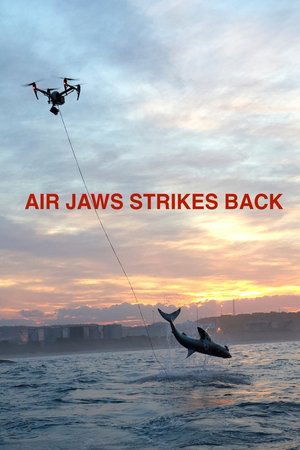
Air Jaws claims new turf in South Africa. Dr. Neil Hammershlag and Enrico Gennari follow with brand new technology: a "drone-towed" seal decoy to study and capture the harrowing and dramatic battles between shark and seal.
The film documents the key political issues in recent years in South Africa that have marked the demise of the African National Congress (ANC). These include the Marikana massacre in August 2012, whereby 34 striking miners were gunned down by the ANC government's police force. Rehad Desai documented this historic event in his 2013 film MINERS SHOT DOWN. He refers to the incident once again in his latest film and shows how the ANC is undermining its close connections to the trade unions it set up as a freedom movement under Nelson Mandela, and how students have also turned on the party to protest against tuition fees under the motto #FeesMustFall. The film's compelling footage unmasks the cynical despotism of corrupt president Jacob Zuma, who is chiefly responsible for the ANC's demise and its catastrophic losses at the most recent elections. It also introduces opposition movements that are challenging his now-untenable position.
‘Future Sounds of Mzansi’ is a documentary, which aims to explore, express, and interrogate South Africa’s cultural landscape. A chief vehicle of this exploration is electronic music, a staple of South African popular culture. The film explores the past, present and future of the scene and its multiple sub-genres, presented through the eyes of internationally acclaimed artist Spoek Mathambo.
Long a target for poachers, the rhino has been hunted for their horns across Africa. In The Last Horns of Africa, debut documentary feature director Garth De Bruno Austin follows those who are putting their lives on the line to protect the animal, from a hidden rhino orphanage to the Kruger National Park. With unparalleled access the filmmakers have created a compelling documentary that explores conservation, the illegal wildlife trade, and rhino poachers.
Included in this groundbreaking work are interviews with active farm attackers and serving police officers who confirm corrupt police are complicit in the mass‐slaughter of South Africa’s whites. Their truths are horrifying—a man and woman branded with hot irons and left to die. A husband killed in front of his wife and children. An elderly woman raped, another with half her face blown off from a shotgun. And they all share a common thread: revenge. This is a disturbing documentary—it wrought both an emotional and physical toll on all involved. What’s more, Katie was detained at the airport in South Africa on the orders of the African National Congress (ANC) for her work on this project because Plaasmoorde is the story—the truth—they don’t want you to see. We owe it to the victims—to our fellow man—to listen and to open our eyes to the truth.