“It’s not my memory of it” is a documentary about secrecy, memory, and documents. A former CIA source recounts his disappearance through shredded classified documents that were painstakingly reassembled by radical fundamentalist students in Iran in 1979 following the takeover of the U.S embassy. A CIA film—recorded in 1974 but unacknowledged until 1992—documents the burial at sea of six Soviet sailors, in a ceremony which collapses Cold War antagonisms in a moment of death and honor. A single photograph pertaining to a publicly acknowledged but top secret U.S. missile strike in Yemen in 2002 is the source of a reflection on the role of images in the dynamic of knowing and not knowing.
Autumn, photographed during the last months of the drought year, 2015, is a stately, but intimate, seasonal tome, a celebration of the poignancy and mystery of our later years. – Nathaniel Dorsky
"After two years of massive didacticism in black-and-white [Hapax Legomena (1971-72)], I am surprised by Tiger Balm, lyrical, in color, a celebration of generative humors and principles, in homage to the green of England, the light of my dooryard… and consecutive matters." - HF
An experimental sports film made partly during the Scandinavian Open Championships in Halmstad in 1970, partly during the Chinese players' exhibition tour in Denmark immediately after the SOC. First of all, it is a film about their style, about the artistic culmination that is ping-pong at its best, it records China's comeback into the international sports world.
Over the course of more than fifteen years, Clémenti films a series of intimate diaries, starting from daily encounters. In La deuxième femme, we see Bulle Ogier and Viva, Nico and Tina Aumont, Philippe Garrel and Udo Kier, a performance by Béjart, a piece by Marc’O, concerts by Bob Marley and Patti Smith (not always recognisable)... It’s like a maelstrom of psychedelic images that are passed through a particle accelerator.
Hollande, DSK, etc ...
H*ART ON dives off the deep end of modern art. A film about the yearning to create, to mould everyday emotions into a meaningful life and, most of all, to live beyond one's death. A struggle that gets to the existential core of each of us. How do you find meaning in everyday fear, love, sex and loneliness?
Sarah is a debt collector who lives among the inhabitants of the village of Guimbal on the island of Panay. She wants to find the young man who appeared to her in a dream and goes to the island of Negros. Here, as she interacts with the inhabitants, Sarah continues her search, gathering memories of life and war, dreams, myths, legends, songs and stories that she takes part in and at times revolve around her. She is the daughter of an ancient mermaid, a revolutionary, a primordial element, a virgin who was kidnapped and hidden away from the sunlight. “The film is a retelling of fragments of the American occupation. Dialogue, shot in the Hiligaynon language, is not translated but used as a tonal guide and a tool for narration. Using unscripted scenes shot where the main character was asked to merely interact with the villagers, I discard dialogue and draw meaning from peoples’ faces, voices, and actions, weaving an entirely different story through the use of subtitles and inter-titles.”
A recollection of almost 40 years of career. A giant image-jukebox, from early 70s autoportrait to films for Alain Bashung / Elli Medeiros, private karaokes to “video sculptures” applied to John Travolta or Maria Callas, and much much more…
SONG 5: A childbirth song (the Songs are a cycle of silent color 8mm films by the American experimental filmmaker Stan Brakhage produced from 1964 to 1969).
Works with sound recordings of Dion McGregor, who became famous for talking in his sleep.
Filmmakers use archival footage and animation to explore the culture surrounding nuclear weapons, the fascination they inspire and the perverse appeal they still exert.
"An experimental documentary on Reverend L.O. Taylor, a black Baptist minister from Memphis, Tennessee who was also an inspired filmmaker with an overwhelming interest in preserving the social and cultural fabric of his own community in the 1930′s and 40s. I combine his films and music recordings with my own images of Memphis neighborhoods and religious gatherings" -Sachs
The collective life of the generation born as Jurij Gagarin became the first man in space. Vitaly Mansky has woven together a fictional biography – taken from over 5.000 hours of film material, and 20.000 still pictures made for home use. A moving document of the fictional, but nonetheless true life of the generation who grew up in this time of huge change and upheaval.
A vehicle of consciousness navigates the vertiginous labyrinths of San Francisco. ROMAN CHARIOT was filmed over several months with a spy camera mounted on filmmaker David Sherman's son's baby carriage.
A total of 17 journalists have been fired since 2008, the beginning of LEE Myung-bak’s presidential term. They fought against the companies that they worked for succumbing to power and are now frustrated at reality where censorship of the press by authority has now become a norm. Can they continue their activities as journalists?
Clouds 1969 by the British filmmaker Peter Gidal is a film comprised of ten minutes of looped footage of the sky, shot with a handheld camera using a zoom to achieve close-up images. Aside from the amorphous shapes of the clouds, the only forms to appear in the film are an aeroplane flying overhead and the side of a building, and these only as fleeting glimpses. The formless image of the sky and the repetition of the footage on a loop prevent any clear narrative development within the film. The minimal soundtrack consists of a sustained oscillating sine wave, consistently audible throughout the film without progression or climax. The work is shown as a projection and was not produced in an edition. The subject of the film can be said to be the material qualities of film itself: the grain, the light, the shadow and inconsistencies in the print.
Dialogue-free short detailing the daily tasks of a man and his wife.
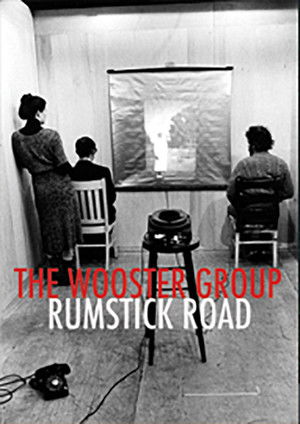
A video reconstruction of the 1977 Wooster Group production Rumstick Road, an experimental theater performance created by Spalding Gray and Elizabeth LeCompte after the suicide of Gray's mother. Archival recordings are combined with photographs, slides, and other materials to recreate the original production.
An experimental journey through a year in the life of the director, using his always playing playlist to cross the boundaries of fiction and documentary. Through scenes of both comedy and tragedy, realistic documentary footage and experimental sequences of the director's environment and daily life we get a sometimes estranging image of a young man and also an intriguing insight in his mindset and how this translates to the imagery on screen.