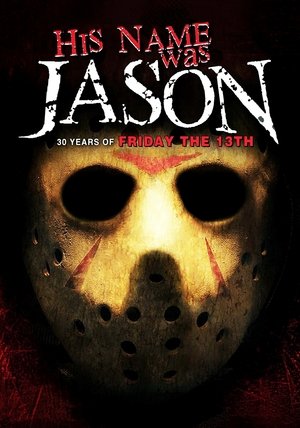
A retrospective documentary about the groundbreaking horror series, Friday the 13th, featuring interviews with cast and crew from the twelve films spanning 3 decades.
Music is an integral part of most films, adding emotion and nuance while often remaining invisible to audiences. Matt Schrader shines a spotlight on the overlooked craft of film composing, gathering many of the art form’s most influential practitioners, from Hans Zimmer and Danny Elfman to Quincy Jones and Randy Newman, to uncover their creative process. Tracing key developments in the evolution of music in film, and exploring some of cinema’s most iconic soundtracks, 'Score' is an aural valentine for film lovers.
Beneath the Surface: The Making of 'Dark Water'
Wicked Wishes: Making the Wishmaster
Anouchka is a 30 year old screenwriter who works in a wine bar for a living. She traces her last 15 years of alcoholism thanks to a screenplay she wrote.
Alongside Rembrandt and Vermeer, Frans Hals was one of the key figures in 17th century Dutch art. But unlike his contemporaries, who tended to paint gloomy or pensive pictures, Hals was entirely devoted to joy. He painted people who could barely conceal their zest for life - at a time when it was frowned upon to show teeth.
This second entry in MGM's "Romance of Film" series documents how celluloid movie film is processed and features behind-the-scenes glimpses of current MGM productions.
The Making of a Mobster: 'Mickey Blue Eyes'
The lives of Stan Laurel (1890-1965) and Oliver Hardy (1892-1957), on the screen and behind the curtain. The joy and the sadness, the success and the failure. The story of one of the best comic duos of all time: a lesson on how to make people laugh.
A documentary feature film which aims to expand the usually one-sided conversation between students and teachers. During its runtime, raw experiences heard from all sides of the conversation are laid bare during its 77 minute runtime. From all of these interviewees, including a student, a school psychiatrist, and five teachers, the viewer shouldn't expect to be confronted with a narrow perspective but rather a question: "where do I stand?"
Shaft: Still the Man
Follows the behind-the-scenes work of Studio Ghibli, focusing on the notable figures Hayao Miyazaki, Isao Takahata, and Toshio Suzuki.
A detailed history of documentary filmmaking in the US and the UK from 1929 to 1945. The first part, Working for Change, focuses on 1929-1941 and the social movements of the times, The Great Depression, The New Deal, and the awakening of the Leftwing in the UK. The second part, The Strategy of Truth, focuses on 1933-1946 and explores the role of film as propaganda during World War II, and the different forms it took in the US, the UK, and Germany.
Follows the story of "Grizzly Man" Timothy Treadwell and what the thirteen summers in a National Park in Alaska were like in his attempt to protect the grizzly bears. The film is full of unique images and a look into the spirit of a man who sacrificed himself for nature.
Legends of the Knight weaves together the stirring true stories of individuals who have overcome devastating obstacles, unselfishly given to the community, and embraced their inner superhero because of their love of Batman. Through the deeply personal tales of Batman fans, writers, and filmmakers, this feature-length documentary explores the power of heroic stories and encourages viewers to find their own unique path to heroism. Funded by over 1,100 people from around the world, Legends of the Knight is a return to our childhood dreams of being a hero. Put on your cape, and be inspired!
A look at the state of the global environment including visionary and practical solutions for restoring the planet's ecosystems. Featuring ongoing dialogues of experts from all over the world, including former Soviet Prime Minister Mikhail Gorbachev, renowned scientist Stephen Hawking, former head of the CIA R. James Woolse
When Francois Truffaut approached Alfred Hitchcock in 1962 with the idea of having a long conversation with him about his work and publishing this in book form, he didn't imagine that more than four years would pass before Le Cinéma selon Hitchcock finally appeared in 1966. Not only in France but all over the world, Truffaut's Hitchcock interview developed over the years into a standard bible of film literature. In 1983, three years after Hitchcock's death, Truffaut decided to expand his by now legendary book to include a concluding chapter and have it published as the "Edition définitive". This film describes the genesis of the "Hitchbook" and throws light on the strange friendship between two completely different men. The centrepieces are the extracts from the original sound recordings of the interview with the voices of Alfred Hitchcock, Francois Truffaut, and Helen Scott – recordings which have never been heard in public before.
A documentary that explores the challenges that a life in music can bring.
Sylvia Kristel – Paris is a portrait of Sylvia Kristel , best known for her role in the 1970’s erotic cult classic Emmanuelle, as well as a film about the impossibility of memory in relation to biography. Between November 2000 and June 2002 Manon de Boer recorded the stories and memories of Kristel. At each recording session she asked her to speak about a city where Kristel has lived: Paris, Los Angeles, Brussels or Amsterdam; over the two years she spoke on several occasions about the same city. At first glance the collection of stories appears to make up a sort of biography, but over time it shows the impossibility of biography: the impossibility of ‘plotting’ somebody’s life as a coherent narrative.
Documentary celebrating the British sitcom and taking a look at the social and political context from which our favourite sitcoms grew. We enjoy a trip through the comedy archive in the company of the people who made some of the very best British sitcoms. From The Likely Lads to I'm Alan Partridge, we find out the inspiration behind some of the most-loved characters and how they reflect the times they were living in.