In 1984 East Berlin, dedicated Stasi officer Gerd Wiesler begins spying on a famous playwright and his actress-lover Christa-Maria. Wiesler becomes unexpectedly sympathetic to the couple, and faces conflicting loyalties when his superior takes a liking to Christa-Maria.
Three families struggle to find their true selves and their soulmates in a world full of expectations, pressure and obstacles. Inspired by real events, this film shows how they pursue their dreams and potential without losing themselves.
Vincent is an all-too-human man who dares to defy a system obsessed with genetic perfection. He is an "In-Valid" who assumes the identity of a member of the genetic elite to pursue his goal of traveling into space with the Gattaca Aerospace Corporation.
Kuhle Wampe takes place in early-1930s Berlin. The film begins with a montage of newspaper headlines describing steadily-rising unemployment figures. This is followed by scenes of a young man looking for work in the city and the family discussing the unpaid back rent. The young man, brother of the protagonist Anni, removes his wristwatch and throws himself from a window out of despair. Shortly thereafter his family is evicted from their apartment. Now homeless, the family moves into a garden colony of sorts with the name “Kuhle Wampe.”
Despite their social differences Luise, called Pünktchen, a girl from rich parentage befriends Anton, a boy who has to earn his own money in order to afford life for his sick mother and himself. Together they undergo different adventures, even preventing a theft in Pünktchens home
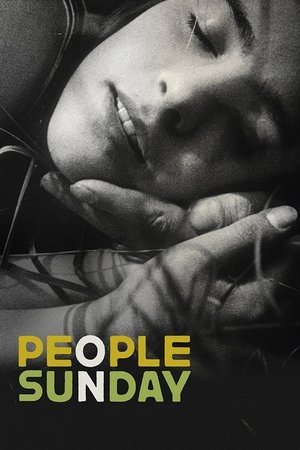
A somewhat impressionist, at times even slightly surreal miniature about a student (Werner Stocker in a splendid performance) who, out of financial difficulties, starts out as pool attendant at an open air swimming pool in Berlin's district of Neukölln. Escaping from his unpleasant landlord and his lover Patrizia (a very young Martina Gedeck), he soon starts to live at the baths, and as swimmers disappear and the baths are closed for the winter, he turns the grounds into his own, perfect refuge from civilisation and social pressure, becoming increasingly detached from reality. What may sound like an annoyingly gimmicky premise is executed here playfully, yet with admirable simplicity and a subtle, unpretentious poetic sensibility that one would wish for more often in contemporary German cinema.
When 17-year-old Effi Briest marries the elderly Baron von Instetten, she moves to a small, isolated Baltic town and a house that she fears is haunted. Starved for companionship, Effi begins a friendship with Major Crampas, a charismatic womanizer.
A gently humorous look at otherness and xenophobia in modern day German with this tale of a black Berlin teen named Leroy who rediscovers his roots after falling for a pretty white girl and meeting her racist family.
The subject of this historical drama is a splintering Berlin in the years of 1948 and 1949. Played against the backdrop of social upheaval, the characters in the drama come to epitomize the best and worst of each pole of the political sphere. A 17-year-old hoodlum by the name of Gladow works hand-in-glove with a local white-collar criminal to rob and pillage every day and night, defying capture. While he and his gang of thugs are terrorizing the people of Berlin, the Soviets are trying to make the blockade of their region of control impermeable. The future casts long shadows over the drama, as Berlin's problems take the shape of times to come.
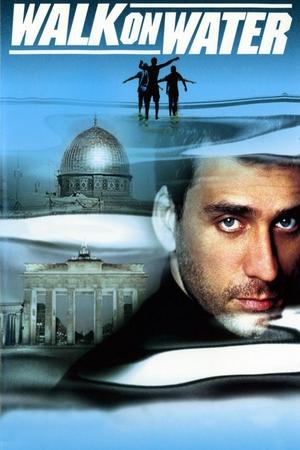
Inspired by true events, Olympic swimmer Harry Melchior defects from East Germany in the 1960s and hatches a daring plot to help his sister and others flee East Berlin through a 145-yard underground tunnel.
Brothers Franz and Erich Sass grew up poor. Together with his brother Franz, Erich specializes in cracking safes. Erich spends the money with his hands full. In the meantime, the police have also become aware of the brothers. Pursued by Detective Fabich, they get deeper and deeper into criminal circles. A man called Adolf demands that the Sass brothers work for him. He blackmails them and has their father beaten to death. The brothers then agree to work together. However, Adolf plans to have them killed after the coup. The two brothers manage to escape; they are also able to flee from the police, who catch them while they are still breaking into the bank.
Johnny Minotaur is a lyrical explosion of taboos: incest, intergenerational desire, pansexuality and autoeroticism are a few of the issues Charles Henri Ford grapples with through mythopoeic, sensual imagery, recitations of his diaries and a philosophical debate featuring an impressive narration by such artists as Salvador Dali, Allen Ginsberg, Warren Sonbert and Lynne Tillman.
A biography of Hildegard Knef, one of Germany's biggest post-war stars.
Maurice is an aging veteran actor who becomes taken with Jessie, the grandniece of his closest friend. When Maurice tries to soften the petulant and provincial young girl with the benefit of his wisdom and London culture, their give-and-take surprises both Maurice and Jessie as they discover what they don't know about themselves.
The Mona Lisa Myth
The world's greatest art thief collects almost two-billion dollars in masters only to have his mother burn them all in the family backyard.
Filmed live at the Wilbur Theater in Boston, the self-proclaimed sweatiest woman in show business brings you her first ever standup special. Told in three acts and influenced heavily by her loves of surrealism and Russia, with multiple scripted sketches and filmed segments, her unique brand of humor will have you laughing while wondering, “is she ok?”.
A CIA operation to purchase classified Russian documents is blown by a rival agent, who then shows up in the sleepy seaside village where Bourne and Marie have been living. The pair run for their lives and Bourne, who promised retaliation should anyone from his former life attempt contact, is forced to once again take up his life as a trained assassin to survive.
45,000 sections of reinforced concrete - three tons each. Nearly 300 watchtowers., over 250 dog runs, twenty bunkers. Sixty-five miles of anti-vehicle trenches—signal wire, barbed wire, beds of nails. Over 11,000 armed guards. A death strip of sand, well-raked to reveal footprints. 200 ordinary people shot dead following attempts to escape the communist regime. 96 miles of concrete wall. Families divided, loved ones lost…
Der Mann im Keller