A documentary about the clashes between squatters and the police in Berlin in early 1981. Despite the absence of commentary, this is an openly partisan film that aims less for political analysis than for an up-close description of the situation and mood.
Once thriving, a dead mall in upstate New York is now home to a ragtag flea market, living proof that the American Dream is in perpetual decay. Blending vérité with a stylized wit, this heartbreaking portrait raises questions about our disposable culture through the unfiltered lives of its eccentric community.
Tell Them We Were Here is an inspirational feature-length documentary about eight artists who show us why art is vital to a healthy society and reminds us that we are stronger together.
Former "Titanic" satire magazine editor Martin Sonneborn takes an undercover trip around Berlin and discovers the East-German mentality and what is left of the socialist German Democratic Republic.
Cranes and Voices follows, on one side, people who hear voices and share their daily lives, and on the other, a collective of tenants who investigate their neighbourhood through its noises, its vibrations and its construction sites. The film moves through apartments, streets, meetings and moments of sound creation, where voices, urban noises and recorded materials are transformed into collective sound compositions and spaces for exchange. Sound appears here as an ambivalent force, at once invasive and generative, shaping the way we inhabit the city, other people and ourselves. Cranes and Voices invites us to pay attention to these singular listening experiences, to hear what they reveal about the housing crisis, about how mental health is viewed and about the ways we organise our shared spaces.
Documentary about the life in Berlin in 1941. The planned premier was stopped by the national party due to the damages and painful changes to the city that soon followed. It thus premiered in 1950.
The intricate history of UFA, a film production company founded in 1917 that has survived the Weimar Republic, the Nazi regime, the Adenauer era and the many and tumultuous events of contemporary Germany, and has always been the epicenter of the German film industry.
Berlin’s brutalist heritage is under fire. The city’s powerful Charité hospital wants to destroy a brutalist icon of the Cold War era: The infamous former animal research laboratory called the Mäusebunker. Meanwhile, a dedicated group of politicians, preservationists, architects, gallerists, and students fight for an adaptive reuse of these magnificent, uncompromisingly unique structures. Who will win? No matter the outcome, you’re left with the impression that preservation can be brutal.
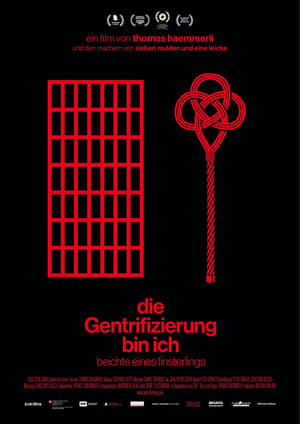
Is the city of Zurich suffering from ‘density stress’? What is it like to live in mega cities such as São Paulo, Mexico City and Tiflis? Filmmaker Thomas Haemmerli broaches the topics of city development, architecture, density, housing market, xenophobia and gentrification from an autobiographical perspective. The path of his life has led him from a childhood in the villa district of Zürichberg, through his teenage years as squatter to flat shares, yuppie apartments and finally second homes in various cities. Only recently having become a dad, he plans to further enhance Zurich’s price appreciation by purchasing a huge, extended city apartment… This multifaceted essay not only humorously questions the filmmaker’s decisions, but also those of the right-wing conservatives, who are afraid of losing their space to immigrants, and the political left, who fail to embrace modern-age architecture.
A documentary produced by the French armed forces which chronicles the way of France’s “1ere armée” in the second world war from the days it first crossed the Rhine in March of 1945, through the liberation of a POW-camp in Swabia, until the forces reached the Danube and the Alps at the end of the war and the day French troops marched in the victory parade in Berlin.
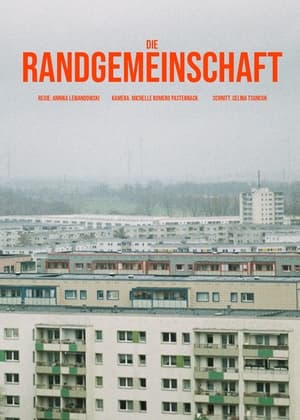
Die Randgemeinschaft
This documentary shows how the Berliner workers lived in 1930. The director Slatan Dudow shows through images: a) the workers leaving the factory; b) the raise of the rents; c) the "unpleasant" guest, meaning the justice officer that brings the eviction notice; d) the fight of classes of the houses of capitalists and working classes; e) the parks of the working class; f) the houses of the working class, origin of the tuberculosis and the victims; g) the playground of the working class; h) the swimming pool for the working class, ironically called the "Baltic Sea" of the working class; i) the effects of humidity of basement where a family lives, with one member deaf; j) one working class family having dinner while the capitalist baths his dog; k) the eviction notice received from an unemployed family and their eviction.
Commissioned by the Berliner Landesbildarchiv, this movie shows countless impressions of (West) Berlin everyday life, accentuated with self-ironic commentary.
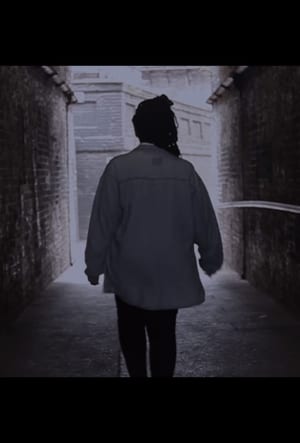
Denim' is a poetic short film by writer, poet and performer Siana Bangura, exploring gentrification and social cleansing in South East London. Through a personal trip down memory lane, visiting the places that moulded her, we learn what happens when the city changes and leaves those who built it behind. Travelling through Bermondsey, Rotherhithe, Elephant & Castle, Walworth Road, Peckham, Brixton and of course Shoreditch, 'Denim' is both a personal tale and a wider social commentary.
Helga Paris, Fotografin
Jesse Owens et Luz Long : le temps d'une étreinte
Ein Tag in Berlin
The documentary portrays the art historian Wilhelm von Bode as a realistic visionary.
In 1952, the Central Committee of the Socialist Unity Party of Germany (SED) decides to establish a "Museum of German History" (MfDG) in the Zeughaus Unter den Linden. As the central history museum of the GDR, it is committed to the Marxist-Leninist conception of history. The film Museum of German History. Insights and Encounters - a GDR television documentary from 1988 - shows the reconstruction of the war-damaged building, presents selected eras such as the Peasants' Wars and the Revolution of 1848 and observes the preparations for a special exhibition on "Artists in the Class Struggle". The film also provides insights into the restorers' workshops, the coin collection and the painting depot.
Documentary