Jozef embarks on a journey via a ghostly train to visit his dying father in a remote Galician sanatorium. Upon arrival, he discovers that the sanatorium exists in a realm where time is distorted—his father's death has not yet occurred, as time here lags behind the outside world by an undefined interval. Jozef's experiences become increasingly fragmented and dreamlike as he confronts various manifestations of his father, each representing different aspects of their relationship and his own psyche.
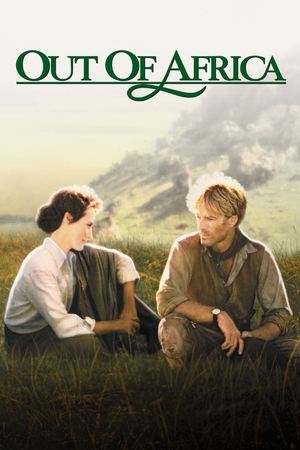
Tells the life story of Danish author Karen Blixen, who at the beginning of the 20th century moved to Africa to build a new life for herself. The film is based on her 1937 autobiographical novel.
Denmark, 1755. Captain Ludvig Kahlen sets out to conquer a Danish heath reputed to be uncultivable, with an impossible goal: to establish a colony in the name of the king, in exchange for a royal title. A single-minded ambition that the ruthless lord of the region will relentlessly seek to put down. Kahlen's fate hangs in the balance: will his endevours bring him wealth and honour, or cost him his life...?
When married couple Egon and Maren lose their adult son, their family, which includes their daughter Lily, is paralyzed with grief. As it turns out, the three of them have very different ways of coping with grief and soon find themselves slipping apart. Now the three of them need to find their way back to life and to reconstitute the family.
Despite mixed emotions, Frederick Winterbourne tries to figure out the bright and bubbly Daisy Miller, only to be helped and hindered by false judgments from their fellow friends.
In the years before World War II, a tomboyish postulant at an Austrian abbey is hired as a governess in the home of a widowed naval captain with seven children and brings a new love of life and music into the home.
Bum Archimède wants to spend the winter in prison, but to get there proves not to be that easy.
Inside a café, on Christmas Eve. Chim Kei meets an enigmatic woman named Mimi Wong who introduces herself as the daughter of an upper-crust family. But the infatuated writer is struck by a spasm of sorrow when he later sees Mimi make her appearance as a taxi-dancer at a party. The lovers are reconciled by the story of her plight told by her sister Annie. However, Mimi goes missing on the engagement day. By a stroke of luck, Chim runs into the elusive woman again and finds out how she was forced into prostitution by her drug-addict husband, his childhood best friend and benefactor Chan Hung-kit. Chim leaves dejectedly, and has since been idling his days away. The frail Mimi confesses her love for Chim on her deathbed, and from not far away, Chan has ended his own life.
Karutthamma, the daughter of a Hindu fisherman, falls in love with a Muslim fish trader. However, social prejudices seem to ruin their love life and invite the wrath of their communities.
Miser Ebenezer Scrooge is awakened on Christmas Eve by spirits who reveal to him his own miserable existence, what opportunities he wasted in his youth, his current cruelties, and the dire fate that awaits him if he does not change his ways. Scrooge is faced with his own story of growing bitterness and meanness, and must decide what his own future will hold: death or redemption.
A kindly shop owner whose overwhelming gambling debts allow a greedy landlord to seize his shop of dusty treasures. Evicted and with no way to pay his debts, he and his granddaughter flee.
A writer leaves his upper-class life and journeys with a woman claiming to be his sister, and her two friends.
Teresa is a spirited young girl chafing under the oppressive attitudes of 1930s society, and her father in particular. She fancies her poverty-stricken Latin tutor Johnathan Crow, without realising he merely considers her a pleasant diversion and nothing more, and eventually follows him from Sydney to London. En route she meets the gentle banker James Quick. Whilst navigating her relationships in London, including with a political poet bound for the Spanish Civil War, she experiences a transformation in her understanding of love. Based upon Christina Stead's best-selling Australian novel.
Martin, a young blind photographer, is divided between his friendship with restaurant worker Andy and the exclusive love that Celia—who is terribly jealous of this new friendship—has for him.
Pickwick is a British television musical made by the BBC in 1969 and based on the 1963 stage musical Pickwick, which in turn was based on the 1837 novel The Pickwick Papers written by Charles Dickens. It stars Harry Secombe as Samuel Pickwick and Roy Castle as Sam Weller. This television production was based on the stage musical Pickwick which had been a commercial success. It was adapted for the screen by James Gilbert and Jimmy Grafton. The musical had premiered in the West End in 1963, again with Harry Secombe in the lead role. Running at 90 minutes and made in colour, the TV musical again had lyrics by Leslie Bricusse and a score by Cyril Ornadel. The book was by Wolf Mankowitz and it was directed by Terry Hughes. The programme was first transmitted on 11 June 1969 and again on 26 December 1969. One of the better known songs from the score is "If I Ruled the World". The cast of this production differed somewhat from that of the stage musical.
Terrifying nightmares, a broken family, and a mysterious Holistic Doctor, haunt Mary as she searches for the strength to find forgiveness amongst dark betrayals.
Wandered away from his asylum, an amnesiac World War I veteran falls in love with a music hall star but his amnesia makes it difficult to last.
Kasper's life is full of speed. He has a wonderful girlfriend, a successful career as a racing driver, and loves his university studies. But underneath the surface traces from a traumatic and violent childhood threaten his road to adulthood.
One out of three silent adaptations of the novella "Les quatre diables" written by Danish author Herman Bang. The most famous one, although unfortunately lost, is without any doubt F.W. Murnau's "4 Devils". This German version, by Danish director A.W. Sandberg, was done eight years prior to Murnau's American one, and was a big success at the time.