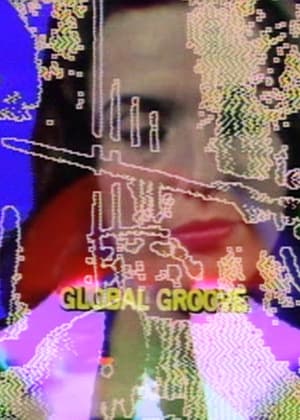
Global Groove was a collaborative piece by Nam June Paik and John Godfrey. Paik, amongst other artists who shared the same vision in the 1960s, saw the potential in the television beyond it being a one-sided medium to present programs and commercials. Instead, he saw it more as a place to facilitate a free flow of information exchange. He wanted to strip away the limitations from copyright system and network restrictions and bring in a new TV culture where information could be accessed inexpensively and conveniently. The full length of the piece ran 28 minutes and was first broadcasted in January 30, 1974 on WNET.
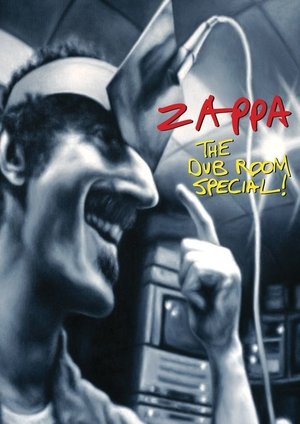
Produced by Frank Zappa in 1982, The Dub Room Special combines footage from a performance at the KCET studios in Los Angeles on August 27, 1974, a concert performed at The Palladium, NYC on October 31, 1981, some clay animation by Bruce Bickford, and several interviews. Previously only available through mail-order, it was made widely available on DVD on October 17, 2005.
A one-hour documentary on the making of Frank Zappa's bizarre 1971 comic musical. Vintage private footage from Frank's personal archives plus behind-the-scenes of the actual shooting and recording. With Ringo Starr, Theodore Bikel, Keith Moon and such songs as "Sleeping in a Jar," and "Strictly Genteel." The inside history of the first feature-length film to be shot on video in 6 days.
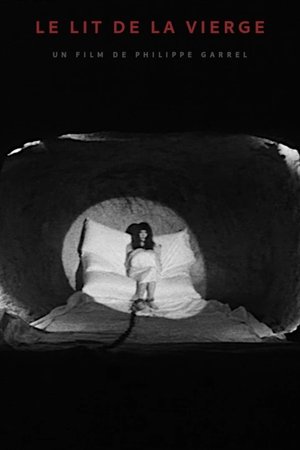
30 year old child enters the new city, riding on a donkey. He says he is the Savior. He has spent no time among men. He is trembling with cold. His clothes are soaked. His mother was overprotective ; his father conspicuously absent. He knows that he must face the mockery, refusal, ignorance and blindness of the men around him. They travel in gangs, in large numbers : soldiers, mercenaries or the like, on majestic, imposing horses. Everything is out of proportion to his thin, bewildered, innocent body ; he is the madman of the new city...
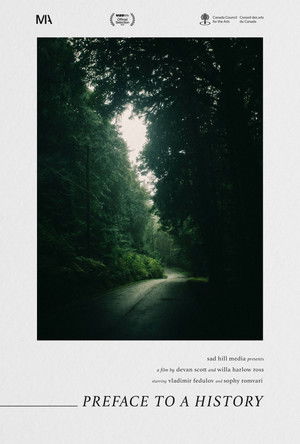
A couple, Vlad and Sophy, navigate their relationship as well as their own struggles with mental health in the context of a highly connected, politically uncertain modern world while on a trip to a remote Canadian island in this avant-garde feature film. PREFACE TO A HISTORY, created with a tiny crew of four people, represents an experiment in using minimalist tools to create an overwhelming aesthetic experience in service of a simple, but specifically contemporary, story about two people attempting to navigate a fraying relationship amid all the anxieties and external pressures of modern adulthood in a technologically-interconnected and politically unstable era.
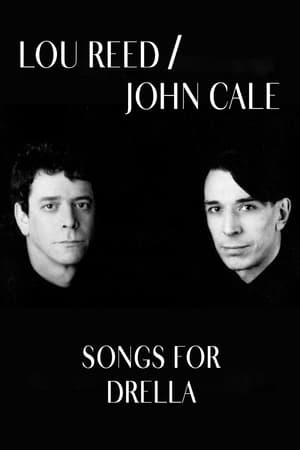
Songs for Drella is a concept album by Lou Reed and John Cale, both formerly of The Velvet Underground, and is dedicated to the memory of Andy Warhol, their mentor, who had died unexpectedly in 1987. Drella was a nickname for Warhol coined by Warhol Superstar Ondine, a contraction of Dracula and Cinderella, used by Warhol's crowd. The song cycle focuses on Warhol's interpersonal relations and experiences, with songs falling roughly into three categories: Warhol's first-person perspective (which makes up the vast majority of the album), third-person narratives chronicling events and affairs, and first-person commentaries on Warhol by Reed and Cale themselves. The songs on the album are, to some extent, in chronological order.
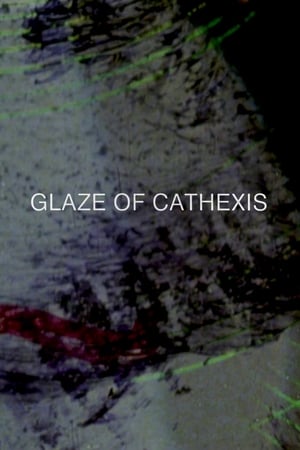
This hand-painted work is easily the most minutely detailed ever given to me to do, for it traces (as best I'm able) the hypnagogic after-effect of psychological cathexis as designed by Freud in his first (and unfinished) book on the subject - "Toward a Scientific Psychology." (SB)
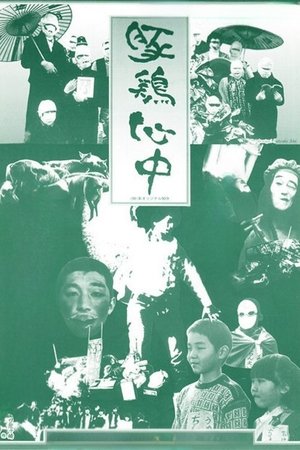
Pig Chicken Suicide is a veritable assault on the senses, mixing violent images of animal slaughter, racial strife and surrealism to tell the story of two Koreans living in Japan who's love is destroyed due to overwhelming racial discrimination.
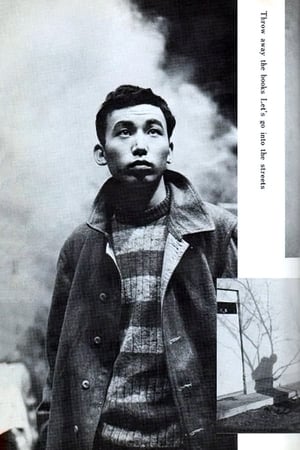
An experimental, psychedelic odyssey through Japanese subculture experienced via the eyes of a disillusioned young man, who must contend with intense familial dysfunction, psychosexual alienation, and existentialist malaise.
Two college buddies try to understand a young woman's suicide through her Super-8 films and clips from their summer trips together.
UUFO consists of 6 short chapters/stories. Each describes a memory. Dealing with conflicting interpretations of China from the 1960s onwards, UUFO contrasts past generations’ stories with contemporary perceptions. UUFO stands for Universal Unidentified Flying Object.
Paper-Scissor-Rock wars draws an episode where the two generals portray the Second World War, mostly through the rock-scissors-bag, but also by some absurd torture techniques that bring to mind some sort of Japanese artificial 70s jack ass. To the sound of classical music, birds chirping and Nazi incendiary speeches travels generals, ever contestant in the seemingly meaningless game around at an abandoned industrial area.
I and other person, we exercise the daily movements by moving each other's body.
In 1967, Knowles, a Fluxus artist, composed one of the first computerized poems, written in Fortran code, with randomly assembled verses. (An example: “A house of steel / Among high mountains / Using candles / Inhabited by people who sleep almost all the time.”) This significant, jam-packed exhibition revives Knowles’s poem on an old-school dot-matrix printer, and includes related ephemera, including a film by Allan Kaprow. The show also highlights forebears of Knowles’s aleatory composition, with a never-completed book by Mallarmé whose pages could be reordered at will, as well as Marcel Broodthaer’s 1969 homage to it. There are also successors: Nicholas Knight’s intricate paintings of overlapping colored curves were generated by an algorithm, and Katarzyna Krakowiak’s audio piece remixes Knowles’s original poem into skittering musique concrète.
In this short slice of transgressive punk cinema, a woman achieves accidental revenge on her boyfriend after he cruelly kills and eats the fish-stick that she had magically brought to life. Despite this tragic event, not all is lost for Lolita, as she soon meets an unexpected new friend.
Experimental short film depicting the life, perhaps real, perhaps a dream, of a young girl named Emi. Emi travels to the city where she encounters her counterpart, Sari, and falls in love with…a vampire?
A journey between Astoria and Herald Square through the windows of the train.
This four-volume boxset released by Image Forum compiles the breadth of Shuji Terayama's experimental short film work into an extensive DVD collection. Originally released by Image Forum on VHS in 1995, this upgraded DVD boxset stands as the definitive collection for Terayama's experimental work in the highest quality possible.
A narrative self-discovery theme done in real time in Art Nouveau style.
A visual representation, in four parts, of one man's internalization of "The Divine Comedy." Hell is a series of multicolored brush strokes against a white background; the speed of the changing images varies. "Hell Spit Flexion," or springing out of Hell, is on smaller film stock, taking the center of the frame. Montages of color move rapidly with a star and the edge of a lighted moon briefly visible. Purgation is back to full frame; blurs of color occasionally slow down then freeze. From time to time, an image, such as a window or a face, is distinguishable for a moment. In "existence is song," colors swirl then flash in and out of view. Behind the vivid colors are momentary glimpses of volcanic activity.