Can a language save your life? Yes it can, even an ancient one from the 15th century. Saved by Language tells the story of Moris Albahari, a Sephardic Jew from Sarajevo (born 1930), who spoke Ladino/Judeo-Spanish, his mother tongue, to survive the Holocaust. Moris used Ladino to communicate with an Italian Colonel who helped him escape to a Partizan refuge after he ran away from the train taking Yugoslavian Jews to Nazi death camps. By speaking in Ladino to a Spanish-speaking US pilot in 1944 he was able to survive and lead the pilot, along with his American and British colleagues, to a safe Partizan airport.
This two-part documentary reveals how al-Qaeda used Bosnia as a training-ground, money-laundering centre and forward operating base during the brutal civil war of 1992-95. The veterans went on to attack New York, Washington DC, London, Madrid, Mombasa and Bali. The story also reveals how the people of Srebrenica were betrayed by the Sarajevo government in advance of the massacres of July 1995.
Oaxaca - Zwischen Rebellion und Utopie
April 1994 in the Lacandona Jungle, Chiapas, México. The Zapatista women talk about the living conditions of Mexican indigenous populations and the life of peasant women. They explain the reasons for their struggle and their uprising.
Rosa is a Mexican woman who, at the age of 17, migrated illegally to Austin, Texas. Some years later, she was jailed under suspicion of murder and then taken to trial. This film demonstrates how the judicial process, the verdict, the separation from her family, and the helplessness of being imprisoned in a foreign country make Rosa’s story an example of the hard life of Mexican migrants in the United States.
A documentary film about men, women, and children fleeing northward from the existential threats in their home countries of Honduras, El Salvador, and Guatemala. They embark on a perilous journey with an uncertain outcome. Shortly after crossing the southern Mexican border, they find shelter with people who want to help them survive the ordeal of the at least 1,700-kilometer journey to the US.
Jesus 'Chuy' Aceves and a dozen living members of his extended family suffer from the very rare condition of congenital hypertrichosis, meaning they were born with excessive hair on their faces and bodies. Due to their appearance, they suffer from discrimination in all areas of their lives: the children are made fun of at school and abandoned by their 'non-hairy' parents, and the adults cannot find work unless they choose to exhibit themselves as freaks in circuses. This moving and visually arresting documentary is a portrait of Chuy and his family members. It examines their day-to-day lives and their struggle to find love, acceptance and employment.
Is the story of a generation of thieves who achieved their greatest victories in the sixties; their distinctive code of ethics, the various categories of delinquents inhabiting the citys streets, their alliances with high ranking police officials that allowed them to operate, the betrayals that followed, and the price they ended up paying.
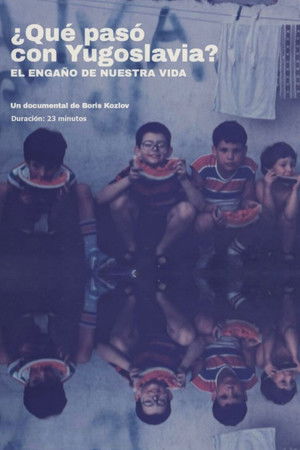
A research-based essay film, but also a very personal perspective on the history of socialist Yugoslavia, its dramatic end, and its recent transformation into a few democratic nation states.
Bosnian Croat writer Miljenko Jergović and Serbian writer Marko Vidojković replace one another by the steering wheel of Yugo, a symbol of their common past while driving on the Brotherhood and Unity Highway that stretched across five of six republics of Yugoslavia.
With the commercialization of the Day of the Dead as well as the growing popularity of Halloween, the Catrina wonders if Mexico will eventually forget about her and their traditions.
This 1942 travelogue film, directed by Aldo Ermini and sponsored by the Office of the Coordinator of Inter-American Affairs, showcases Mexican culture during World War II, focusing on various cultural activities and popular entertainers of the time. The film features notable figures like Puerto Rican actress and singer Mapy Cortés, Mexican comedian Cantinflas, and a re-enactment of Aztec traditions.
A documentary about punk and subculture scene of Pula, Croatia from 1978 to 1991, the city that gave birth to one of the most vivid punk and alternative rock scenes in former Yugoslavia, despite having population of just over 60,000 residents.
Honduran immigrants living in Mexico, teenage siblings Rocío and Ale must take over care of their two younger siblings after their mother is sentenced to prison on dubious grounds. Tensions grow between the pair as the decision must be made on whether to stay together in Mexico or split the family up to cross into the US to work.
A young couple is struck with tragedy when Catalina suddenly dies of tuberculosis, leading a depressed Rosauro to commit a disturbing act. Based on the song by Julio Jaramillo.
Shot in various villages throughout Yugoslavia, this is a disturbing document of a time when people were stabbing each other with knives without any real reason. Murderers, people who witness these murders and the families of victims all talk about the senseless violence and the human condition.
Twelve Mexicans, scattered across different cities worldwide, capture their personal experiences during the early days of the 2020 pandemic lockdown. With only the resources at hand, they document their daily lives, reflecting the uncertainty, confusion, and anxiety that marked this unprecedented moment in history. From the relative comfort of isolation at home to the vulnerability of those at risk of losing their jobs or fighting the virus on the front lines.
Luis Rivera, the best Mexican high jumper of the history, seeks to inspire a generation by qualifying for the Olympic Games as he finishes his doctorate studies. Injuries threaten his dream while his younger brothers follow in his path and example.
Voyages au centre de la Terre : Dans les pas de Jules Verne
After a long and successful career as a skater, Veronica has stepped away from competing, but continues her legacy by organizing skateboarding workshops to teach young girls from indigenous communities to skate, and to push them to fight back for the public spaces that have been occupied by men and to practice a sport that also belongs to women.