Cecil B. DeMille, l'inventeur du blockbuster
The amazing story of stunts, men and women who risk their lives every day on set to get the perfect action scene.
As Australian cinema broke through to international audiences in the 1970s through respected art house films like Peter Weir's "Picnic At Hanging Rock," a new underground of low-budget exploitation filmmakers were turning out considerably less highbrow fare. Documentary filmmaker Mark Hartley explores this unbridled era of sex and violence, complete with clips from some of the scene's most outrageous flicks and interviews with the renegade filmmakers themselves.
In the early nineties, before the massive gentrification of many of New York's then slums, several young people from very disparate backgrounds left their broken homes and ventured onto the brutal streets of the city. United by their love of skateboarding, they formed a family and built a unique lifestyle that eventually inspired Kids, a groundbreaking and outrageous film directed by photographer Larry Clark and released in 1995.
To Hell and Back: The Kane Hodder Story is the harrowing story of a stuntman overcoming a dehumanizing childhood filled with torment and bullying in Sparks, Nevada. After surviving a near-death burn accident, he worked his way up through Hollywood, leading to his ultimate rise as Jason Voorhees in the Friday the 13th series and making countless moviegoers forever terrified of hockey masks and summer camp. Featuring interviews with cinema legends, including Bruce Campbell (Ash vs. Evil Dead), Robert Englund (Freddy Krueger), and Cassandra Peterson (Elvira: Mistress of the Dark), To Hell and Back peels off the mask of Kane Hodder, cinema's most prolific killer, in a gut-wrenching, but inspiring, documentary. After decades of watching Kane Hodder on screen, get ready to meet the man behind the mask in To Hell and Back - an uniquely human story about one of cinema's most vicious monsters.
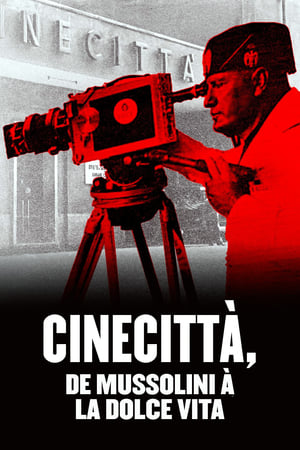
Cinecitta is today known as the center of the Italian film industry. But there is a dark past. The film city was solemnly inaugurated in 1937 by Mussolini. Here, propaganda films would be produced to strengthen the dictator's position.
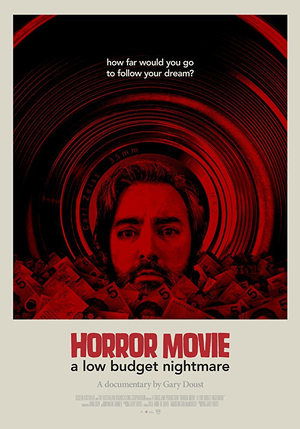
A filmmaker's lifelong dream quickly becomes his worst nightmare when he attempts to make a low budget horror film about an aborted fetus that seeks revenge on its family.
In this visual essay John Bengtson, author of Silent Echoes: Discovering Early Hollywood Through the Films of Buster Keaton, provides a tour of where Seven Chances was filmed, comparing archival images with contemporary photos, and sharing stories of Mrs. Eleanor Keaton's visit to the Seven Chances church.
Four visual essays by Silent Echoes author John Bengtson identifying Buster Keaton's shooting locations for his many short films produced between 1920-1923, many in the streets surrounding his former Hollywood studio, the same studio where, a few years earlier, Charlie Chaplin had made his brilliant series of Mutual shorts.
Documentary about the making of Buster Keaton's silent comedy classic, Sherlock Jr. (1924).
Documentary about Buster Keaton's The 'High Sign' (1921) and Keaton's developing style.
Short documentary on the making of Buster Keaton's One Week.
Ben Model discusses scoring music for silent movies.
The actors in My Wife's Relations (1922) are discussed in this documentary.
Bruce Lawton discusses Buster Keaton's The Blacksmith (1922), a film that Keaton had dismissed as a "lesser" work.
A short documentary on Buster Keaton's The Frozen North (1922), regarding how the events of Fatty Arbuckle's trial and William S. Hart's quick condemnation of Arbuckle, were reflected in the film.
The evolution of The Scarecrow (1920) is discussed in this documentary.
Documentary about the development of Buster Keaton's The Haunted House (1921).
Documentary about the Buster Keaton short Hard Luck (1921).
A short documentary on the works of Buster Keaton.