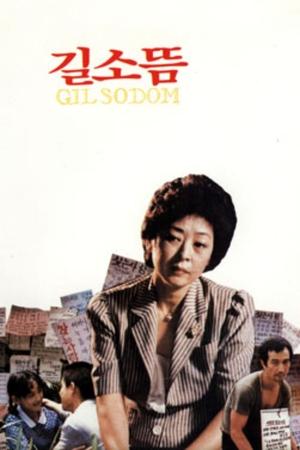
Out of fourteen ministers taken away by the communist troop, only two come back alive. The mystery behind their survival is at the issue here. Told through one of the survivor's testimony, depicts images of men troubled between the war and the religion. Although laden with anti-Communist notions from the 60's military regime.
One of the world's most acclaimed comedies, M*A*S*H focuses on three Korean War Army surgeons brilliantly brought to life by Donald Sutherland, Tom Skerritt and Elliott Gould. Though highly skilled and deeply dedicated, they adopt a hilarious, lunatic lifestyle as an antidote to the tragedies of their Mobile Army Surgical Hospital, and in the process infuriate Army bureaucrats. Robert Duvall, Gary Burghoff and Sally Kellerman co-star as a sanctimonious Major, an other-worldly Corporal, and a self-righteous yet lusty nurse.
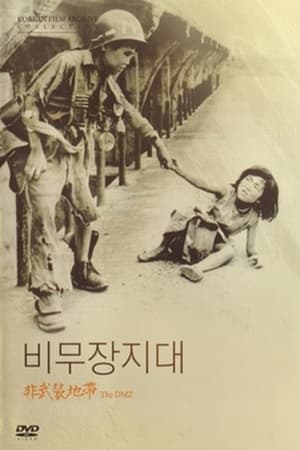
The film exposes the atrocities of war through the eyes of two children who are stranded in the DMZ after the end of the Korean War. The DMZ, strewn with abandoned tanks, dead bodies, land mines, and unexploded shells, is an exceedingly dangerous place for children. But what most endangers them in the end are not weapons but people.
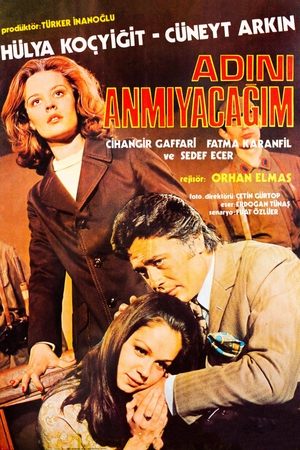
Gul is a famous singer, married to Captain Engin, who has studied law. Engin goes to Korea during the war. One day Gul is told that he is dead. Her violinist, Cemil fancies her. One day Gul meets Engin again, yet Cemil continues molesting her. Engin takes his daughter while Gul gives becomes an alcoholic and is miserable. Engin learns about her condition and decides to go to her but in a car accident he becomes blind. Gul starts to work in their house under a false name, Seher. In the meantime she gives piano lessons to their daughter Oya. Engin regains his eyesight after a surgery. Cemil attempts to rape Oya, but Gul reaches in time, saves Oya and kills Cemil. Oya finds out that Gul is her mother and asks Engin to defend her in court. A happy future awaits all three.
It is a dramatization about Major Kim Man-il's service during the Korean War. The Korean forces dispatch two military units to defend the Baeti Heights led by Kim. Although it is hard to do so, Kim and his senior, Kim Mu-cheol (Choe Bong), and other soldiers do their best. Kim even risks his life to save his juniors, but many die as the enemy forces approach. Meanwhile, Lee Kang-no (Yun Il-bong), a communications officer, reads a letter from his wife - missing her and his daughter. Encouraged by it, Lee risks his life to make successful communication between his military unit and the headquarters. His unit wins. Commander Kim Man-su gathers a small number of his subordinates because many had died, and encourages them to do their best toward the enemy off.
A Communist spy ring in Japan is hard at work trying to sabotage the American war effort during the Korean War, using kidnapping, murder and a disturbed former kamikaze pilot. A U.S. secret agent, posing as a reporter, is dispatched to Tokyo to put a stop to these nefarious activities.
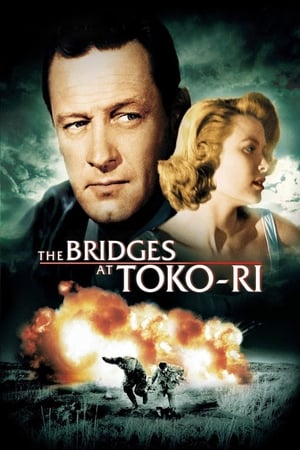
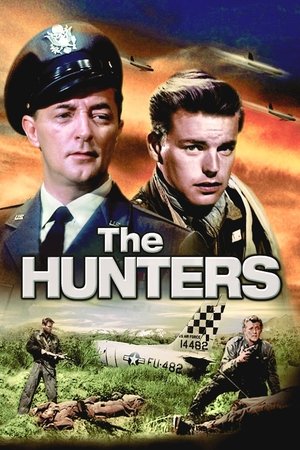
The pilot, co-pilot, and crew of a bomber try to hit a Korean bridge in bad weather.
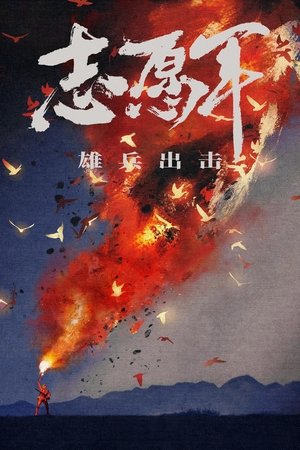
Korean War, winter 1950. In the frozen and snowy area of Changjin Lake, a bloody battle is about to begin between the elite troops of the United States and China.
In this war drama, set during the Korean War, an Air Force nurse gets involved in a love triangle on the front lines.
Upon hearing that her fiance has been killed in battle, a woman makes her way to the Park Pagoda to seek comfort from the monument. There she becomes acquainted with Henry Jang, a Korean-American whom she eventually marries. There is no happy ending for the two, however, because her fiance shows up alive and well, but bitter over his lover's fickle nature
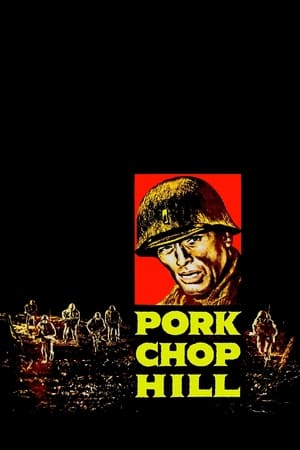
Korean War, April 1953. Lieutenant Clemons, leader of the King company of the United States Infantry, is ordered to recapture Pork Chop Hill, occupied by a powerful Chinese Army force, while, just seventy miles away, at nearby the village of Panmunjom, a tense cease-fire conference is celebrated.
Captain Kim is grievously wounded in the first days of the war. When the northern troops continue their advance, his wife and small daughters flee south to Taegu, dragging him along in a two-wheel handcart. His wife struggles to keep herself and their surviving daughter alive. Working as a market trader, she meets a kind young man -- who happens to be tall, dark and handsome.
A man wanders around the mountains with a bleeding leg, holding a rifle in his hand. Seemingly a fugitive, he runs from as-yet unknown pursuers, but he also seems to be following somebody who has already walked the same path. As he hides in a secluded cave, past memories sweep through his exhausted mind, memories of lifelong cowardice and evasion. And this recollection leads to a reconstruction of early 20th century Korean history. Winner of Best Picture (Nam-a Pictures Co., Ltd.), Best Actor (Ha Myung-joong), Best Art Direction (Kim Yoo-joon), Best Lighting (Son Young-cheol) at the 14th Grand Bell Awards. (source: Jiro Hong, koreanfilm.org)
A look at the Korean War through the eyes of a mute boy who was kept as a mascot by a regiment of soldiers near the front lines.
A ragtag group of American stragglers battles against superior Communist troops in an abandoned Buddhist temple during the Korean War.
In 1950, amidst the ravages of the Korean War, Sergeant Süleyman stumbles upon a a half-frozen little girl, with no parents and no help in sight and he risks his own life to save her, smuggling her into his army base and out of harm’s way.
In Korea, on 6 September 1950, Lieutenant Benson's platoon finds itself isolated in enemy-held territory after a retreat. Soon they are joined by Sergeant Montana, whose overriding concern is caring for his catatonic colonel. Benson and Montana can't stand each other, but together they must get the survivors to Hill 465, where they hope the division is waiting. It's a long, harrowing march, fraught with all the dangers the elusive enemy can summon.
The film portrays MacArthur's life from 1942, before the Battle of Bataan, to 1952, when he was removed from his Korean War command by President Truman for insubordination, and is recounted in flashback as he visits West Point.
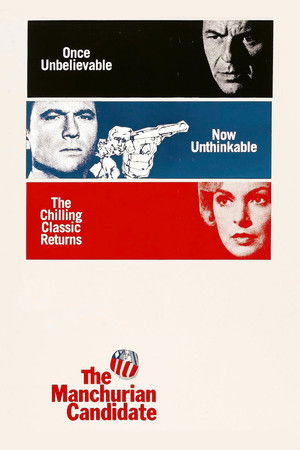
Near the end of the Korean War, a platoon of U.S. soldiers is captured by communists and brainwashed. Following the war, the platoon is returned home, and Sergeant Raymond Shaw is lauded as a hero by the rest of his platoon. However, the platoon commander, Captain Bennett Marco, finds himself plagued by strange nightmares and soon races to uncover a terrible plot.
When two brothers are forced to fight in the Korean War, the elder decides to take the riskiest missions if it will help shield the younger from battle.