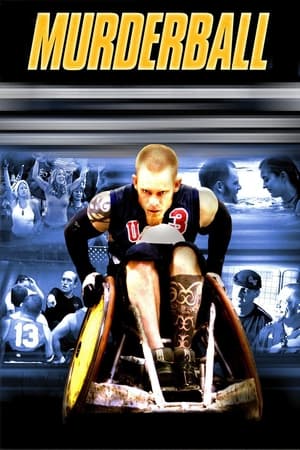
Quadriplegics, who play full-contact rugby in wheelchairs, overcome unimaginable obstacles to compete in the Paralympic Games in Athens, Greece.
Follow the 2021 Queensland State of Origin Women's team as they strive to achieve the extraordinary in one of the most physically demanding professional sports in Australia.
Images of Argentinian companies and factories in the first light of day, seen from the inside of a car, while the director reads out documents in voiceover that reveals the collusion of the same concerns in the military dictatorship’s terror.
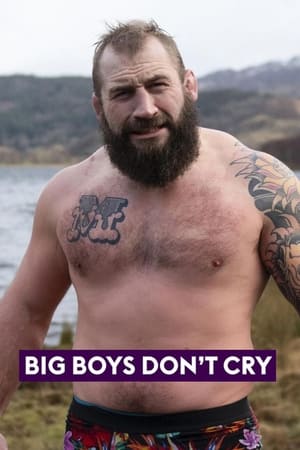
Big Boys Don't Cry' follows Joe Marler as he discusses his own struggles and learns new methods of managing mental wellbeing. The England and Harlequins player has opened up about his battles with mental health during his private life and his time playing rugby on the international stage. The documentary follows Marler as he travels around the UK to open up the conversation around mental health challenges and to learn about how people manage with their mental wellbeing - from taking the plunge in cold water swimming and getting involved in singing in a choir along the way.
They're young, unemployed and on the march - from Glasgow, Liverpool and Swansea to London.
An insider documentary following Scott Robertson and Ronan O’Gara’s management of the invitational Rugby Union Club; Barbarian F.C. for the 2022 Killik Cup tie versus the All Blacks' "Second XV" at the Tottenham Hotspur Stadium.
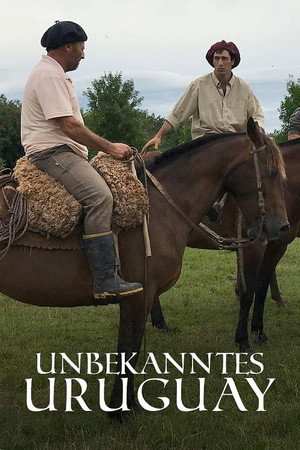
Unbekanntes Uruguay: Fußball, Tango und Gelassenheit
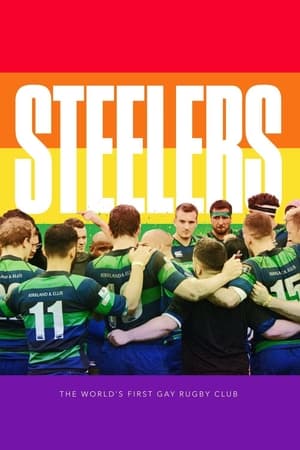
Told through the eyes of an Australian news reporter, Eammon Ashton-Atkinson, who moved to the UK to escape depression, the documentary, follows 3 characters on their journey to overcome their struggles as the club competes against 60 other gay clubs in the Bingham Cup in Amsterdam – the World Cup of gay rugby.
Documentary about the birth and development of candombe in Uruguay. It is built through testimonies, audiovisual files and animations. It also covers the actuality of the candombe on the shores of the Río de la Plata.
The Punta de Rieles prison was where most female political prisoners were incarcerated during the dictatorship in Uruguay. The way up to the building led through “the meadow” where there were animals grazing, and the prison itself was surrounded with flowers. The place seemed eminently liveable, almost comfortable, and at first sight there was no sign of the silent struggle going on behind those walls. This documentary is an attempt to reconstruct life at the prison through the testimony of some of the hundreds of women who were there and who resisted the military regime's attempts to grind them down and destroy them.
A Media Agua is a documentary filmed in 16mm, made up of a series of short films that review the history of the last century through the eyes of an Anglo-Uruguayan family and their perception of Uruguayan culture, World War II and technological advances of the time. Based on found and salvaged film reels, the team attempts to piece together the history of this fragmented family and its subsequent three generations, with the goal of understanding their beliefs and secrets as part of the Secret Service in South America.
A documentary on the life of Uruguayan politician and former guerrilla fighter José Mujica.
Rugby Union has long been viewed in South Africa as a game for the white population, and the country’s success in the sport has been a true source of Afrikaner pride. When the 50-year-old policies and entrenched injustices of apartheid were finally overthrown in 1994, Nelson Mandela’s new government began rebuilding a nation badly in need of racial unity. So the world was watching when South Africa played host to the 1995 Rugby World Cup. Though they had only one non-white player, the South African Springboks gained supporters of all colors as they made an improbable run into the final match where they beat the heavily favored New Zealand team. When Mandela himself marched to the center of the pitch cloaked in a Springbok jersey and shook hands with the captain of the South African team, two nations became one. Oscar winner Morgan Freeman and director Cliff Bestall will tell the emotional story of that cornerstone moment and what it meant to South Africa’s healing process.
Armed based on photography, period films, archival materials and testimonies of survivors, family members and historians, the documentary accurately and exquisitely reconstructs the course of the “expropriating anarchists” in the Río de la Plata and specifically in Montevideo del First third of the 20th century.
The film follows the rugby season of Uitenhage prop forward Zama Takayi - who plays for Progress Rugby club, the club that amalgamated the black clubs of the Uitenhage area in the early 90’s.
With great bawdiness and backbone, a rugby team made up of farmers strive to redeem themselves from a long run of bitter losses. In the face of the hefty demands of farming and fatherhood, the Saturday game becomes the focus of the men’s passions and the ground on which their worth is proved. ‘The Ground We Won’ is a highly authentic, slice of life film about the challenges and joys of manhood, as seen through the rites and rituals of a rural New Zealand rugby club.
Two segments make up this short film. The first portion called “The French” has two men taste testing some delicious wine, and the other, titled “The Gauls”, is of men playing rugby. This short by Werner Herzog is part of the “The French as Seen By…” series. It was initiated and sponsored by the newspaper Le Figaro, as part of the 1988 celebration of the tenth anniversary of its magazine section.
Chasing Great is an insightful portrayal that weaves Richie McCaw's life story into his final season as an All Black, revealing the determination and mental toughness of an international sporting legend who still sees himself as an 'ordinary guy' from small town New Zealand.
In a closed locker room, rugby players perform the last pre-match rituals. Warming up their souls and bodies, all tense in anticipation of the fight.
This documentary captures a deeply personal journey by Argentinian actor and musician, Nicolás Pauls, to the Uruguayan coast. This area hosts two of the world's foremost sea lion colonies. Isla de lobos and Cabo Polonio. A famed sanctuary for hundreds of thousands of sea lions. Pauls presents the two sides of the complex conflict between the local artisanal fisherman, struggling to earn their living and the sea lions who risk their survival in leaving the boundaries of the island.