When her grandson is kidnapped during the Tour de France, Madame Souza and her beloved pooch Bruno team up with the Belleville Sisters—an aged song-and-dance team from the days of Fred Astaire—to rescue him.
This mostly lost film is often confused with director Paul Wegener third and readily available interpretation of the legend; Der Golem, wie er in die Welt kam (1920). In this version of the golem legend, the golem, a clay statue brought to life by Rabbi Loew in 16th century Prague to save the Jews from the ongoing brutal persecution by the city's rulers, is found in the rubble of an old synagogue in the 20th century. Brought to life by an antique dealer, the golem is used as a menial servant. Eventually falling in love with the dealer's wife, it goes on a murderous rampage when its love for her goes unanswered.
God and Satan war over earth; to settle things, they wager on the soul of Faust, a learned and prayerful alchemist.
A young woman trying to make it in Hollywood decides that the only way she can attain stardom is to go the "vamp" route, although in her private life she's nothing like her on-screen character. She gets the recognition she wants, but for the wrong reason--she finds herself in the middle of a notorious society scandal.
Parisian opera star Nora Harrigan is idolized by legions but not her rival Flora Desimone. Edward Courtlandt pursues her, but she rejects him in favor of Herr Rosen. Nora is abducted but by whom is a mystery though Courtlandt is suspected. Once free Nora goes to the south of France accompanied by her parents. By chance she again meets Courtlandt and though she has lost interest in Herr Rosen she remains cool to Edward. Subsequently, Courtlandt discovers that Rosen was responsible for Nora's abduction and Nora finds that Flora and Courtlandt were once married. However, Flora's husband intervenes, forcing his wife to explain the misunderstanding and thus clearing all obstacles from love's path.
Aspiring filmmakers Mel Funn, Marty Eggs and Dom Bell go to a financially troubled studio with an idea for a silent movie. In an effort to make the movie more marketable, they attempt to recruit a number of big name stars to appear, while the studio's creditors attempt to thwart them.
Pinku distributed by Xces / Nikkatsu.
When her cotton crop is burned, Barbara Pelham, a beautiful southern girl, comes to New York to find work as a fashion designer, staying with Mrs. Kemp, a woman she meets on the northbound train. In Mrs. Kemp's house, Barbara encounters Peter Heffner, a wealthy stockbroker, and discovers from him that she has taken up residence in a whorehouse. There is a police raid, but Barbara escapes arrest and returns home. Heffner's son, Neil, goes south to inspect some family property and there meets Barbara, with whom he falls in love. They decide to be married, and she accompanies him to New York, where she meets the elder Heffner for a second time. He denounces her as a whore, but Barbara goes to Mrs. Kemp, who explains the misunderstanding to everyone's satisfaction.
A successful artist and a struggling one both love the same woman; she chooses the poor one but as the years roll on and other choices she makes and her husband’s misunderstanding lead to a near breaking point for the couple.
A typist threatens to expose her lover when he prosecutes the divorce of a woman he means to marry.
When Rin-Tin-Tin's master is found murdered, Rinty is accused of the crime.
During World War I, Rin-Tin-Tin finds that he must rescue his master, a fighter pilot, from his wrecked aircraft. He also has to help him escape his rival, who has ordered him shot so he can have the girl they're competing for all to himself.
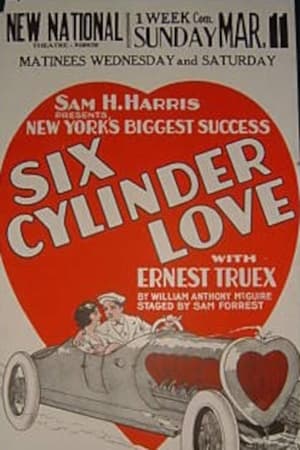
Newlyweds Warren and Helen have an unplanned honeymoon in Death Valley.
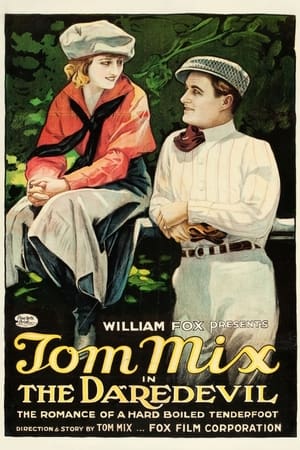
A bill collector working in a tough neighborhood manages to rescue a young socialite from kidnappers.
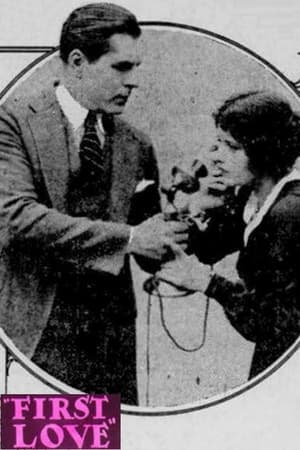
Lloyd Kent returns to his hometown after twenty years a wealthy man. All the while he was gone, he held the memory of his sweetheart, Emily Lester though she jilted him in a moment of anger and married his rival, John Rand. Emily is now a widow in diminished circumstances with an 18-year-old daughter, Betty, who is the image of her now careworn mother in her youth. Because of that memory Lloyd is drawn to Betty who is flattered despite her love for her neighbor Hal Edwards. Betty, realizing the situation, finds one of her mother’s old gowns and helps transform her appearance closer to her girlish self. Lloyd is swept away with renewed love and both couples happily paired with the proper partner.
A stranger called Allan goes to the House of Usher. He is the sole friend of Roderick Usher, who lives in the eerie house with his sick wife Madeleine. When she dies, Roderick does not accept her death, and in the dark night, Madeleine returns.
Thwarted by his despotic uncle from continuing his love affair, a young man's thoughts turn dark as he dwells on ways to deal with his uncle. Becoming convinced that murder is merely a natural part of life, he kills his uncle and hides the body. However, the man's conscience awakens; paranoia sets in and nightmarish visions begin to haunt him.
A romantic rivalry among members of a secret society becomes even more tense when one of the men is assigned to carry out an assassination.
Two young brothers become the leaders of a gang of kids in their neighborhood. Ozu's charming film is a social satire that draws from the antics of childhood as well as the tragedy of maturity.
This 1919 silent is the first American film based on the same Sholem Aleichem stories as Fiddler on the Roof, but produced 50 years before the blockbuster musical. Unlike most adaptations of Aleichem’s work, Broken Barriers (Khavah) focuses not on Tevye the milkman, but on his daughter Khavah, who falls in love with the gentile boy Fedka and must navigate the reverberations from this with both her community and her family.