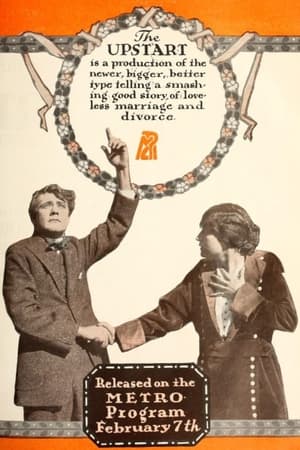
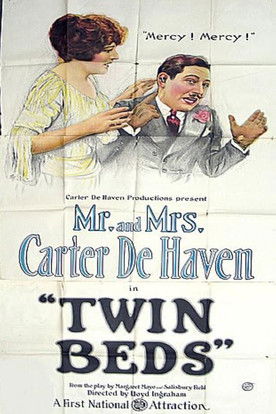
After his mining partner Joe Pelton's death, wealthy bachelor Richard Chester adopts Joe's five young children and takes them East by train. The children are hellions upsetting the calm of the Pullman car en route to New York City, and his home upon arrival. Richard enrolls them all in school except for the youngest. His frosty society fiancée Ethel McVae refuses to have anything to do with the children. After seeing how Richard interacts with his stenographer Sally Lockwood when she helps him nurse the youngest child through a night's illness Ethel breaks the engagement. Richard declares his love for Sally, and they join to raise a family.
A man tries to burgle his own safe on the same night that a professional criminal attempts it.
Kalora is the "slim princess of Morevana," a land in which fat is prized. This distresses her family, who must marry off Kalora, before her rotund younger sister Papova may wed. To remedy this situation, Kalora's father, the governor general, throws a garden party and disguises his slim daughter in an inflated rubber suit. All goes well until the suit ruptures, deflating Kalora to her normal size....
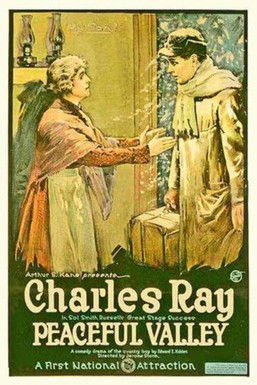
When Pinto reaches her eighteenth birthday, the five wealthy Arizonans who adopted her upon the death of her parents decide that ranch life will never make a lady of her. Their old friend Pop Audry, formerly of Arizona and now a member of New York society, agrees to provide Pinto with the necessary education. Accordingly, Pinto and her cowboy nursemaid Looey are dispatched to New York where they lose Audry's address. ...
Cowboy Billy Fortune is in love with Hope Beecher, who prefers Billy's friend Ben Morgan, but resists his advances because of his fondness for drink. Hope's discontent is echoed by the town wives' public outcry against drink. To divert their interest, Billy is nominated to make love to their leader, widow Fay Bittinger, who has already disposed of four husbands....
While working as a dishwasher in a fashionable New York hotel, Elsie MacFarland often sneaks upstairs to enviously peek at the people dancing to jazz music. Seeing the attractive Elsie dressed in a boy's uniform, wealthy Lemuel Stallings wagers a friend that he can get Elsie onto the dance floor....
The ambassador of the Kingdom of Luvaria orders Baron Belmar, his attaché, to win the interest of Mona, wife of the war minister, who opposes a treaty the ambassador very much wants signed. However, his mission is complicated by the fact that Helene, the ambassador's wife, is extremely jealous of every woman he meets, for she was responsible for getting him his appointment as attaché. Belmar, nevertheless, is in love with Greta, who will not marry him until he is proven worthy of her trust. After many narrow escapes from exposure of the personal intrigue, he manages to sway the attentions of Mona, who persuades the war minister to sign the treaty, thus gaining Belmar an appointment as ambassador to Peru and Greta as his wife.
Saucy slapstick comic short.
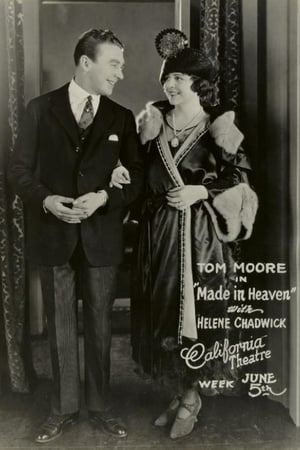
Gerald Faulkner, a young tin-can salesman, has fallen for sexy chorus girl Carlotta La Mere. One day Gerald's wealthy uncle Dunley makes him an offer: if he gets married by the following Saturday, Dunley will give him $100,000. Gerald rushes to propose to Carlotta, who agrees. However, the day before the wedding she asks for a postponement. Complications ensue.
Attracted by his wealth, avaricious Germaine marries D'Artois, then leaves him for a more sophisticated man. D'Artois retaliates by moving to the city and learning the proper social graces. His new life style proves to be too expensive for him, and at the end he is left with nothing but one suit of evening clothes and his now contrite wife.
During the COVID-19 pandemic, two college students set out to make a revolutionary television show. The pilot episode was uncovered and presented alongside exclusive interviews with the cast and crew.
A young man's journey into adulthood, love, and ambition, inspired by a serial by George Randolph Chester exploring themes of love, ambition, and self-discovery, set against the backdrop of the Roaring Twenties.
Comedy of a school marm teaching a social climber some life lessons.
One of the two earliest horror films ever made. This film is presumed lost. In this black comedy scene, the bottom falls out of a coffin, the corpse tumble out, and is jolted back to life. Short sequences like this, as well as street scenes and dancing geisha girls were the main subjects of early Nippon cinema, pioneered by Shiro Asano and Shibata Tsunekichi from 1897 onwards. In creating dramatic, scenes, film-makers naturally chose the most striking or bizarre. Another undocumented film, recalled by cameraman Shiro Asano.
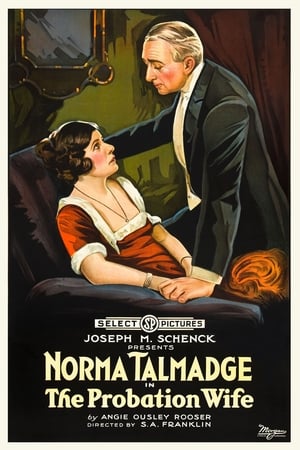
A woman "rents" a husband for the purpose of divorcing him so she can win another man, who prefers widows.
A young man marries an actress, but meanwhile her uncle has signed a contract binding her to spinsterhood, many complications arise.
A very rare lost film by Pathe Exchange that was found by Ben Model on eBay and preserved in time. Not much information known to exist.
A young woman of wealth revenges herself on a young author whose peculiar ideas about women have led him to act and speak in an insulting manner. This young man isolates himself in the mountains for the purpose of writing a story on the primitive woman, where he is discovered by his friends, to whom he vows that no woman shall cross his threshold. The mischievous young woman of the story, determined to place him at her feet, goes secretly to the home of a mountain woman with whom she lives in the guise of a wild girl of the hills. Purposely sliding over an embankment where she knows she will fall in his path, she is rewarded by having him pick her up and carry her to his cabin, where she pretends to be too much injured to be moved that day. The mountain woman is sent for and the two remain in the cabin of the author for several days. Finally she is discovered by her people, when it also comes to light that the woman-hating author has fallen to the charms of his pretty visitor.
A story with a college background revolves around sprinter Charles Paddock, utilizing newsreel footage of the 1924 Olympic Games.
Because of the circumstances of her parents' marriage her grandfather rejects their child, Mary. Following her their deaths she is placed in an orphanage where Mary finds hardship.