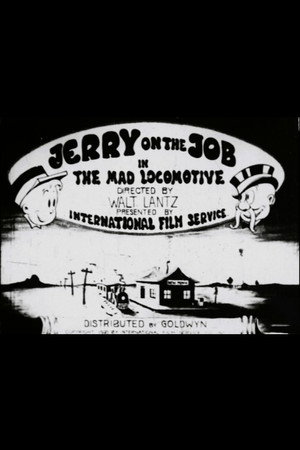
This one is amusing in its early use of the rubber tire school of animation as Mr. Givny informs Jerry that they are out of coal for the train. The passengers who appear behave amusingly and when the train itself takes on anthropomorphic life, it makes its own sense -- outrageous for the day, even if slightly banal for fans of "Thomas the Engine".
When the New Monia station is overrun with mice, Mr. Givney can only shoot them one at a time, but Jerry uses a flute to lure them out, "Pied Piper of Hamlin" style.
Animated film based on the comic strip "Jerry on the Job" - a man on the station platform tells Jerry Flannigan and Mr. Givney that he knows how to run a train without coal.
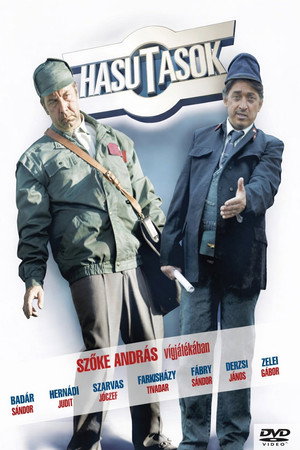
Four good old friends - all railwaymen until the change of regime - will be the victims of the cutbacks. Many years later, when the old station has been removed by thieves, the former stationmaster of Honos village, Lajos Zsuzsa, receives a notice from the town to go to the station office. Lajos Zsuzsa, in order to get the four friends occasionally back to work, lies that the station still exists and that they are able to carry out their duties.
Jerry Flannigan and Mr. Givney encounter some bellicose mosquitoes.
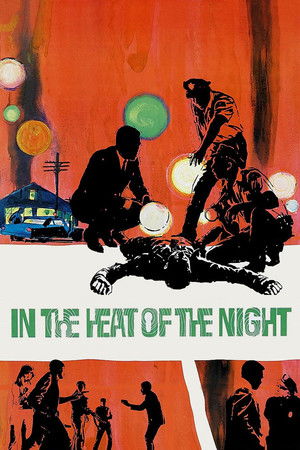
African-American Philadelphia police detective Virgil Tibbs is arrested on suspicion of murder by Bill Gillespie, the racist police chief of tiny Sparta, Mississippi. After Tibbs proves not only his own innocence but that of another man, he joins forces with Gillespie to track down the real killer. Their investigation takes them through every social level of the town, with Tibbs making enemies as well as unlikely friends as he hunts for the truth.
When Marie St. Clair believes she has been jilted by her artist fiance Jean, she decides to leave for Paris on her own. After spending a year in the city as a mistress of the wealthy Pierre Revel, she is reunited with Jean by chance. This leaves her with the choice between a glamorous life in Paris, and the true love she left behind.
Jan Horak is a middle-aged railroad dispatcher stationed at a forsaken spot in the desert, within driving distance of the nearest town. A widower, he has saved his money and goes to town to buy a dog, meets Betty, a flashy blonde who gains his confidence and marries him to acquire his $7,000 "fortune."
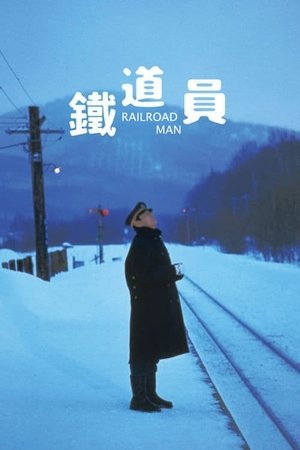
A railway stationmaster at a dying end-of-the-line village in Hokkaido is haunted by memories of his dead wife and daughter. When the railroad line is scheduled to be closed, he is offered a job at a hotel, but he is emotionally unable to part with his career as a railroader. His life takes a turn when he meets a young woman with an interest in trains who resembles his daughter.
In the heart of New York City stands Grand Central Terminal. Explore the magnificent secrets of this iconic landmark as we take you inside the heart, soul and amazing engineering of this superstructure. From railroad cars to rush hours, we unlock the colorful tales of its past, present and future.
The romance of a couple set in the time of Juan Manuel de Rosas with a federal corporal serving as a link.
Dr. Moreau is an abstract horror short, adapted from H.G.Wells' classic novel, that will invite the viewer to board on a tangible journey to the borders of science, where the differences between nature and humanity are blurred.
An obese 11-year-old attempts to give a love letter to his elementary school crush and winds up at dinner with her intensely suburban family and her new flame.
A drug dealer in love with university student Ikhlas resorts to taking revenge when she refuses to marry him because of her love for Omar.
The order comes in the summer of 1941 from propaganda minister Joseph Goebbels himself: The best animators are summoned to Berlin. Their task: Producing feature-length cartoons in ‘Disney-Quality’ with the newly founded ‘Deutsche Zeichenfilm GmbH’. To get trained, the Disney movie “Snow White” is re-traced frame by frame. After the final victory, one new feature-length production of quality shall be released every year from 1947 onwards. – that is the plan. Only in 1943, the first production is completed: “Armer Hansi” a 17-minute-long colour movie, realized with the effortful Multiplane-technology. The second film by the ‘Deutsche Zeichenfilm’ is only completed in 1946 – by DEFA. In the territories occupied by Germany, cartoons are produced as well, sometimes harmless ones, sometimes propagandistic ones. With excerpts from animated movies, life-action film documents, and witness reports by contemporaries, this documentary draws a picture of the cartoon production in the third Reich.