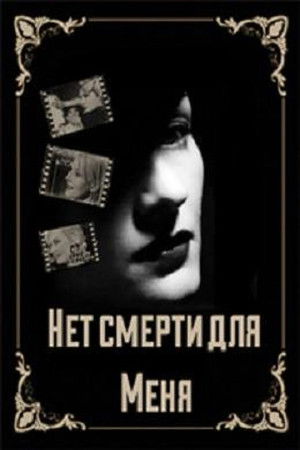
It is a documentary story about five legends of russian cinema: Nonna Mordyukova, Tatyana Okunevskaya, Tatyana Samoylova, Lidiya Smirnova and Vera Vasileva. These wonderful women tell about their lifes and careers in hour interview.
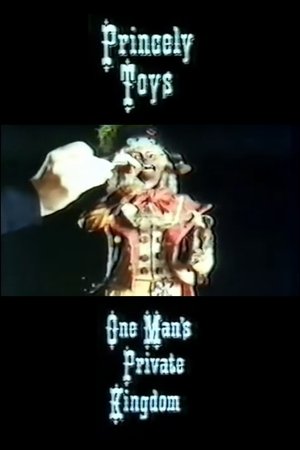
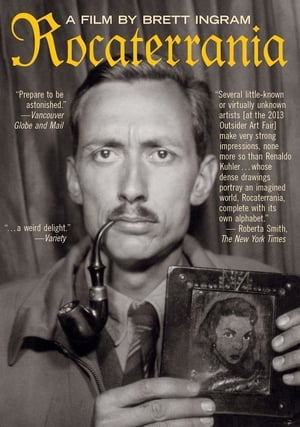
A journey into the secret world of 76-year-old Renaldo Kuhler, a scientific illustrator who invented an imaginary country to survive his disaffected youth.
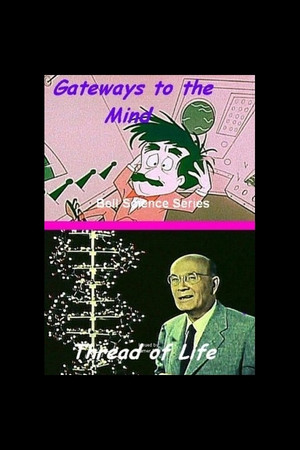
The film presents how the human body recognizes and becomes aware of its surroundings. The various information pathways to the brain such as sight, sound, smell, taste and touch are explored in a accurate but simple manner via human impression and cartoon characters!
The point of departure for this film is the 1981 composition De Tijd by Dutch composer Louis Andriessen. Van der Keuken leaves the music undisturbed as an autonomous soundtrack and has the images engage in a sort of battle with it. These images are associations, fragments of events, scenes and situations. The film is preceded by a text by Bert Schierbeek.
Manual Scavenging is an all India Phenomenon. However, the Government of India is kind enough to enact Prohibition of Employment as Manual Scavengers and their Rehabilitation Act and implementing many schemes. But none of them failed to work as the caste system is paramount in the so called democratic constitutional India. This film Kakkoos elaborates on the deplorable status.
De Madrid a la Luna
Siempre días azules
Rhythmic composition of moving photographs of cyclists in Amsterdam, ‘set’ to Vivaldi’s The Four Seasons.
A documentary that takes an in depth look at a government sanctioned art school in Cuba and its students. Interviews of various artists attending the school allow viewers a glimpse into their personal and professional lives.
In November 1936, a few months since the beginning of the Spanish Civil War, the government of the Second Republic moves to Valencia. In this situation, several Valencian artists and intellectuals decide to build four fallas — satirical plasterboard sculptures created to be burnt — to mock fascism.
The Dangers of the Fly is an educational film made by Ernesto Gunche and Eduardo Martínez de la Pera, also responsible for Gaucho Nobility (1915), the biggest blockbuster of Argentinean silent cinema. De la Pera was a talented photographer, always willing to try new gadgets and techniques. This film experiments with microphotography in the style of Jean Comandon's films for Pathé and it is part of a series which included a film about mosquitoes and paludism and another one about cancer, which are considered lost. Flies were a popular subject of silent films and there are more than a dozen titles featuring them in the teens and early twenties.
Cómo empezar una película sobre Javier Aguirre
In the spring of 1974, a camera team from Studio H&S succeeded against the explicit orders of the Junta’s Chancellery, entered into two large concentration camps in the north of the country - Chacabuco and Pisagua - leaving with filmed sequences and sound recordings.
Hop on a Harley for this tour of the nation's highways and byways with other motorcycle enthusiasts by your side. This documentary examines the cult of Harley-Davidson and its followers, who traverse America free and unencumbered on their beloved "hogs." Viewers will make a side trip to South Dakota for the Sturgis Motorcycle Rally; celebrate Harley's 100th anniversary in Wisconsin; join the 9/11 Patriot Ride and the Love Ride; and more.
Filmed to praise the work of the Spanish Ministry of Housing in solving the problem of shanty towns in Bilbao, it was made to be viewed by General Franco and not for public screening or distribution through the NO-DO newsreel. Although the short film was commissioned by the Ministry of Housing, director Jorge Grau produced a subtly critical work.
A day in the life of Mr. Istvan and Ms. Magdi, neighbors for many years, is narrated by the building of Budapest where both live. The walls surrounding them reveal their small passions, stories and routines.
Oxígeno para vivir
Documentarian Jose Sanchez-Montes turns his attention towards the late Cuban musician Ignacio Villa, known throughout the world as Bola de Nieve (Snowball), with this 2003 biographical documentary entitled simply Bola de Nieve. A master pianist, Bola de Nieve was a mainstay through the middle portion of the 20th century, with his music almost omnipresent in South America cinema throughout those formative decades. With Bola de Nieve's famous statement "I'm a sad person, but my songs sound happy" in mind, Sanchez-Montes also looks at the influence of the musician's African heritage and homosexuality upon Bola de Nieve's unique musical style.
The eagerly anticipated wait is over, after 5 years since the release of her last album, Adele is back! Fans have applauded her return, by breaking the record for most viewed video in a single day, reaching an astounding 28.7M views in the first 24 hours. The British singer has knocked Taylor Swift off the record, previously holding most viewed video in a single day for her Bad Blood video which reached 20 million views. “Hello” has now been viewed nearly 89 million times on Vevo alone since the day of its release, and has already topped the iTunes charts in 85 countries. The success of this debut single has blown everyone away and the rest of her album will most likely follow suit. Through her own words, video and live performance this documentary takes an incredible look at the life and times of this truly amazing young artist.
This short focuses on the job of the costume designer in the production of motion pictures. The costume designer must design clothing that is correct for the film historically and geographically, and must be appropriate for the mood of the individual scene. We see famed costume designer Edith Head at work on a production. The Costume Designer was part of The Industry Film Project, a twelve-part series produced by the film studios and the Academy. Each series episode was produced to inform the public on a specific facet of the motion picture industry. Preserved by the Academy Film Archive in 2012.