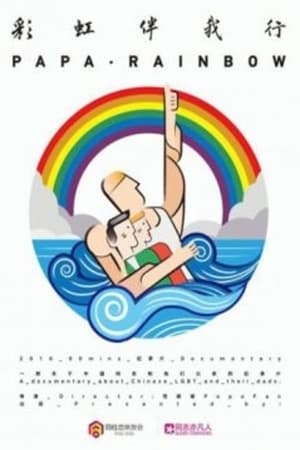
In China, most families have difficulties facing their lesbian, gay, bisexual and/or transgender (LGBT) children. They have to contend with common social beliefs that homosexuality is shameful, abnormal, a perverted condition caused by deviant family relationships. Many parents see their kids as their property, and fathers often assert their authority to ensure that no harm comes to the family reputation. The documentary 'Papa Rainbow' features six Chinese fathers who talk openly and freely about their experiences with their LGBT children. Speaking out against discrimination and stigma, they redefine what it means to protect a household. They fully embrace their kids for who they are, and become pioneer activists fighting for an equal and diverse society.
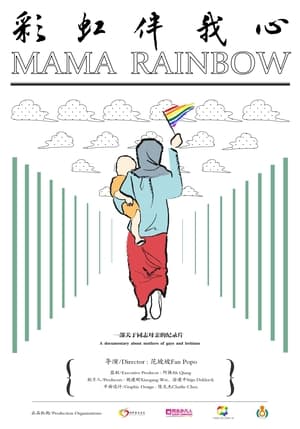
For Chinese parents, finding out that their kid is gay usually presents a major tragedy, with the big majority utterly unable to accept the homosexuality of their son or daughter. However, during recent years a fresh rainbow wind has been blowing over the Chinese mainland: a pioneer generation of Chinese parents has been stepping up and speaking out on their love for their gay kids. This documentary features 6 mothers from all over China, who talk openly and freely about their experiences with their homosexual children. With their love, they are giving a whole new definition to Chinese-style family bonds.
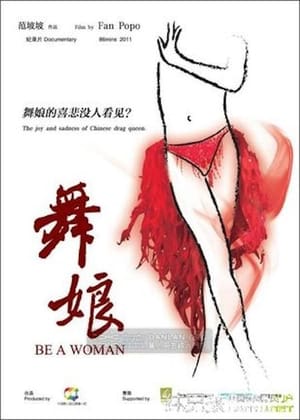
Over the course of 3 years, Fan Popo visited a bar called “Only-Love” in Nanning, China, getting to know the dancers and drag queens there and discovering who they really were behind their exuberant costumes and personas.
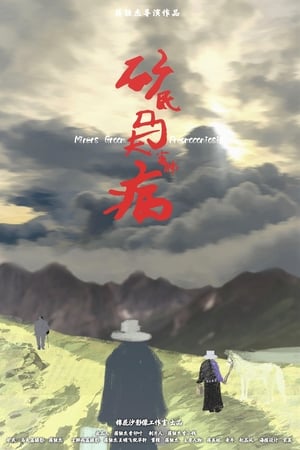
The location of Hunan's southwestern Hunan, the local economy is not active, the people either go out to work or go up the mountain to mine. Due to the constant mining disasters, despite the government's efforts to rectify and regulate, many people still illegally mine. Miners often do not pay attention to the protection of mines. Many years later, many miners have pneumoconiosis. The film started shooting in 2010 until 2018, with a filming period of nearly ten years, until the death of Zhao Pingfeng, the protagonist of pneumoconiosis, leaving young children and mentally handicapped wife.
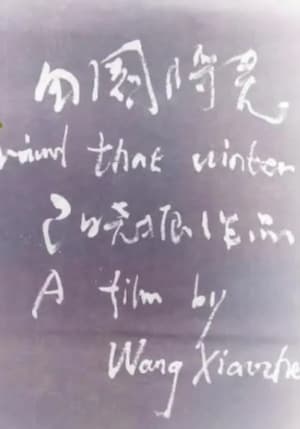
Qing Zhou and Xiaozhen Wang came to Huojiacun to visit Wang’s parents at the end of winter. They met the foul-mouthed boy Yongshun, the confused girl Zige, the forgetful old lady Grandma, and also Xiaohu, who knew nothing but hanging out. All of them enjoyed their lives purely without any targets. Meanwhile, Wang and Zhou felt nothing interested while waiting for the parents, who never showed their faces.
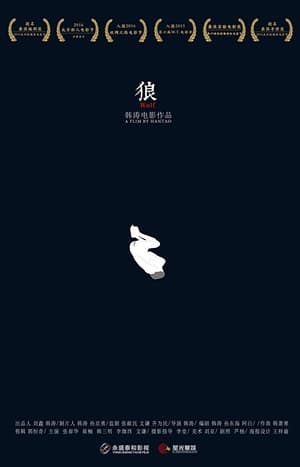
Poet Wolf (Lang) chose to starve himself to death, in a beautiful flower blossoming Spring. This is a poetic, aesthetic and brutal film that adapted from the true stoy of Poet Wo Fu's suicide.
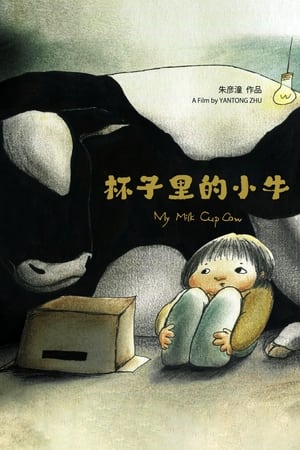
The father tells his daughter Nunu a lie that there is a cow in her milk cup. She believes it and drinks up milk, but there isn't any cow. Her father tells her a variety of lies, which Nunu finds increasingly difficult to believe.
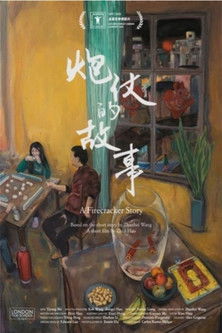
An 8-year-old boy searching for fireworks on a Chinese New Year's Eve, after the firework ban is introduced in this southern Chinese town.
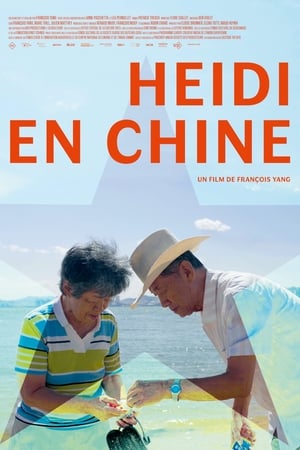
In 1946, Heidi is entrusted to a Swiss family by her father. He will never come back for her. Today, François Yang questions his mother about her past. What follows is a journey to China, a quest to reconstruct memory. Through contact with her brothers and sister, Heidi measures the extent of the drama experienced by her family that remained in China, persecuted by the Communist Party.
Truth becomes fiction when the fiction's true; Real becomes not-real where the unreal's real. ——The Story of the Stone
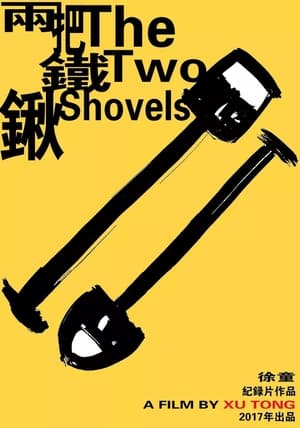
After "Old Tang Tou", Xu Tong continued to film the family of Old Tang Tou's son, Tang Laosan, in Northeast China. Tang Laosan was sent to prison for a murder case, and Tang Laosan's son, Xiaobao, unexpectedly encountered such a change in the year of his high school entrance exams, which made the fates of father and son both unpredictable.
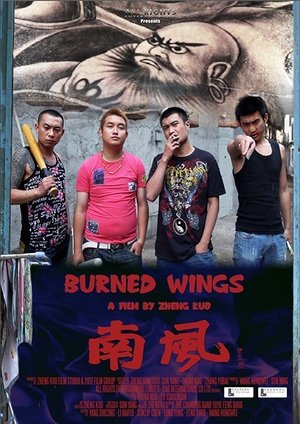
This crime drama follows a group of young men, who at face value just appear to be nasty thugs that above all else are up for a good fight. Trying desperately to make a name for themselves and become the type of gangsters people bow down to, Zheng cleverly takes the edge off the brutality by balancing it with some charmingly dry humour.
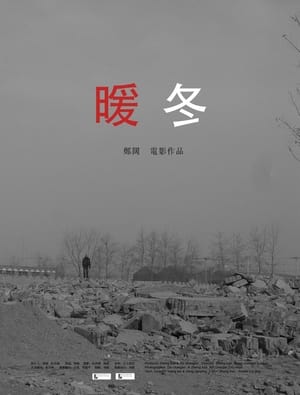
The Cold Winter was shot from the end of 2009 to early 2010, and focuses on the struggle of artists near Beijing’s famous Chaoyang District 798 Art Zone to protect their land and studios from demolition by developers. During the exceptionally cold winter of the title, the artists formed the “Warm Winter Plan” movement as a means of defending their rights and raising public awareness, being subjected to threats and brutal violence in the process.
Carriage
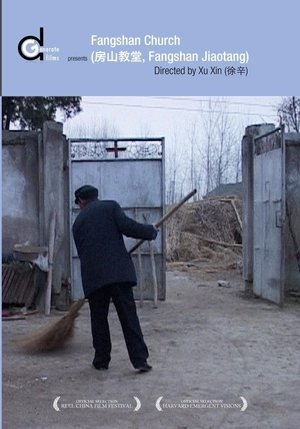
A lively community of Christians inhabit Fangshan, a remote rural town in Jiangsu Province. At the start of the millennium, a church was built there with support of local inhabitants' relatives from Taiwan. On Sundays, up to 900 people gather to worship, while spending most of their days maintaining a modest living as farmers. Their faith governs how they handle family conflicts, illnesses and other difficulties. Still, they must contend with constraining forces in their community, from ancient folk religious practices to laws forbidding evangelism.
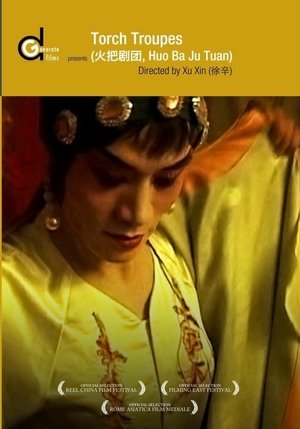
In this vivid portrait of China's musical heritage, Sichuan Opera performers strive to keep a centuries-old artform alive. After thriving for 300 years, Sichuan Opera is an endangered art form. Having survived the Cultural Revolution, state-sponsored opera troupes now face extinction in the era of private enterprise. Opera master Li Baoting began his career at eight, but now performs pop songs with showgirls in cheap bars. His colleague Wang Bin performs in travelling tents, trying to resist the massive cultural changes threatening to wipe out this artform.
An ice sculpture in a northern city, a marching band, and the bitter silence on the radio.
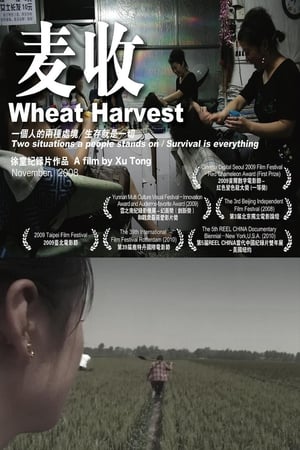
A documentary film showing the life of Niu Hongmiao, a 20-year-old country girl who is now a prostitute in Beijing. Around the time of wheat harvesting, she goes back home to Dingxing County, Hebei Province to visit her parents.
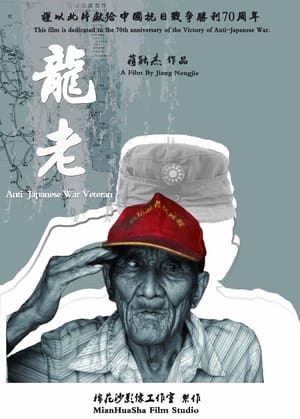
A veteran, Mr. Long’s life was full of legend. Yet, he lived his life in silence and never told others about his experience in the battlefield. There were many scars on his body and he got three shots only in the Songshan Battle. One of them went through between the bones and the scar had been apparently seen so far.
Luo Liang, a young man trying to meet the expectations of family and work, has come to town looking for something better but is unsure of his lot in life.