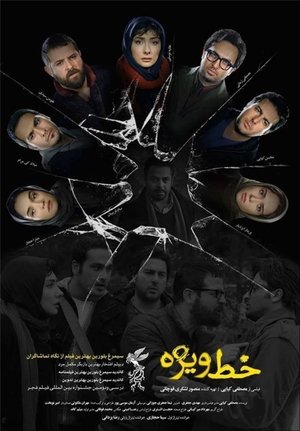
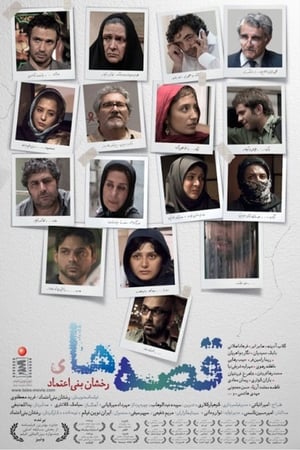
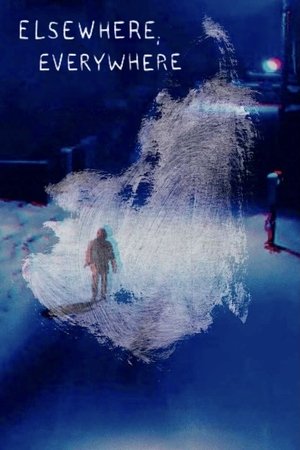
Award-winning Iranian filmmaker Rakshan Banietemad ends her eight-year hiatus from feature filmmaking with this ingenious, mosaic-like narrative, which knits together the stories of seven characters to create a microcosm of Iranian working-class society.
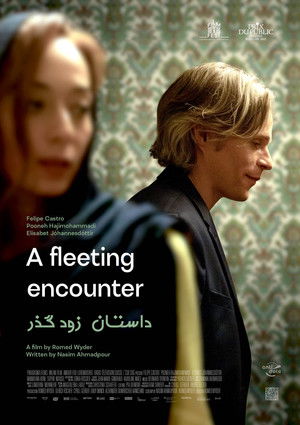
Events take a sinister turn one night in London, when two very different couples arrive at a double-booked apartment. Actions have consequences and not all debts are paid for with money. Leaving, it's harder than you think.
Jalil is 17-year-old boy living with his Iranian family in a suburb near Helsinki. Though he has lived in Finland all his life, it seems hard for him to find acceptance among the "native" Finns. At home he faces the opposite problem. His parents demand him to respect Iranian cultural traditions. Jalil is about one day in the life of a boy standing on the edge of two cultures. On this summer day big things are bound to culminate; religion, identity, love.
Famed actress Susan Taslimi plays three roles here: Kian, who doubts her identity; Vida, the twin sister, a self-assured artist; and their mother, who gives up one child out of fear of poverty, then deprives the other of affection because she deeply regrets the child whom she has abandoned.
A 15-year-old Somalian boy meets a 40-year-old Iranian man in a refugee camp in Skåne, in the south of Sweden. With the threat of deportation hanging over them, they decide to take their faiths in their own hands and together they go on a journey in the Swedish summer.
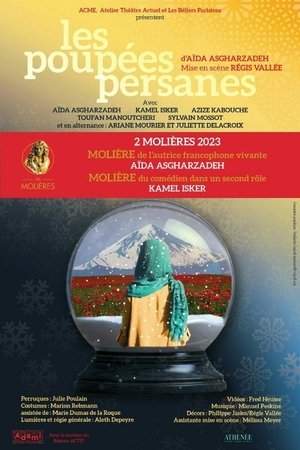
Grief is an inheritance. Perhaps the sorrow you feel today once belonged to a woman who, a thousand years ago, watched a mountain of books burn in the fire of an invasion.
As Raman prepares to migrate out of Iran, his friends plot the perfect way to celebrate his impending departure. However, their path is plagued with conflict; an unresolved argument over the accidental death of a friend and a conservative elder brother who looks upon their lives with disdain, further resolves to stop the celebration.
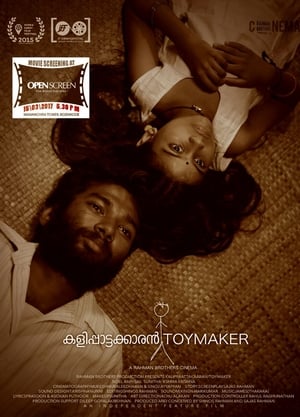
A young toymaker tries to make sense of the impermanence of life that he has been forced to acknowledge through experiences of separation and death.
A young woman's wedding becomes a ritual of mourning when her sister and family die in an auto accident on the way to the wedding. The sisters' mother refuses to accept her daughter's death, and in the midst of wedding guests and mourners, including the drivers of the truck that caused the accident, she orders the wedding to take place. But how can the daughter marry in the midst of a wake and without the family's traditional mirror, which the sister was bringing to the service?
Soghoot (سقوط) A music Video By Amir Tabari
25-year-old Arghavan lives with her parents in Tehran, and intends to marry her fiancé, Hesam. One day, her short stories win her a grant to attend a writing workshop in Germany. Soon before she is to leave, however, Arghavan is abducted and raped. In a strict, conservative society where young women are expected to be virgins before marriage, this is a social catastrophe. Plagued by gossip and finding little solace, Arghavan's life begins turning into a nightmare.
This social Iranian drama, directed by Flora Sam, centers on an old man named Yousef who resides in Kashan. He lives with his daughter, Samira, and his young grandson, Amir Ali. The main conflict arises when Yousef faces the difficult situation of being forced to leave his home. Despite the pressure and the necessity of the move, Yousef is deeply attached to his current house and strongly resists the idea of leaving at all. The film explores the emotional turmoil and challenges faced by the old man and his family as they deal with this impending displacement.
Hamid is an Iranian teenage boy whose sexuality brings him into conflict with his family's Muslim beliefs.
An Iranian journalist couple wants to move to America to escape the difficulties of their country. The woman receives her visa but her husband doesn't. He stays in Iran and watches his wife find success on television and falls into a state of depression.
A Tehran mullah-in-training struggles to take care of his ailing wife and their children in this profoundly moving melodrama. A film of near-universal appeal, it puts a human face on Iran's Muslim clergy with its unusual tale of a man forced by hardship to become a better husband and father. Seyed Reza has just moved with his family to Tehran so he can study the Koran, and he relies on his lovely wife Zahra to look after their two young children and weave the intricate rugs that earn them a living. But one evening Zahra collapses and is taken to the hospital, where she's diagnosed with multiple sclerosis. Scarcely able to process the tragedy, Seyed is left to cook, change diapers, walk his daughter to school and take his toddler son with him to his classes, where peers and elders treat him with scorn. But Seyed eventually learns to cope, his prayers and devotional studies taking on deeper meaning as he attends to the hard nightly work of rug weaving, getting through with a heavy ...
Prince Ehtejab, one of the last remaining heirs of the Qajar royal family, is suffering from tuberculosis, which he knows is fatal. He spends his last days alone in the magnificent rooms of his wintry palace, from where he recollects the glory days of his ancestors as well as days of degradation. Among the latter are the gruesome manner in which his cruel grandfather murdered his mother and brother, and the way that he himself caused the death of his wife.
Stories of families who live in the Zanjan city in the 1980s. Family atmosphere of those years of war and its impact on their lives A family tradition in the 1980s they live in the city. Families who affected by the war between Iran and Iraq.
Sarah and Ayda are two close friends, one of whom was notorious and now they must work together to bring their conditions to normal, but they stand to where for their friendship?
A documentary featuring interviews with teachers and officials on the profession of teaching and what it means to them.
A director of a television series on the history of cinema, who has been grappling with the screenplay of his first feature film, receives an assignment to oversee the installation of a television relay station in a remote region of Zahedan province. He has already hired Turkmen tribespeople for his film and selected his filming location. Meanwhile his wife, who is working on her Ph.D. dissertation about the Mongol invasion of Iran, attempts to dissuade him from accepting the assignment. One night, while working on his history of the cinema series, the director fantasizes a diegetic world that consists of clever juxtapositions of his different worlds: the history of cinema, the history of the mongol invasion, his own film idea and his imminent assignment to the desert.