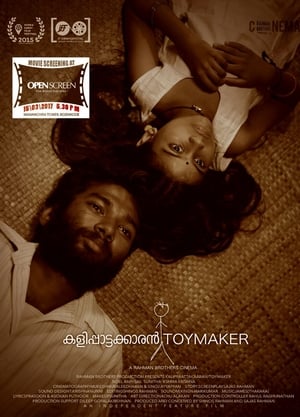
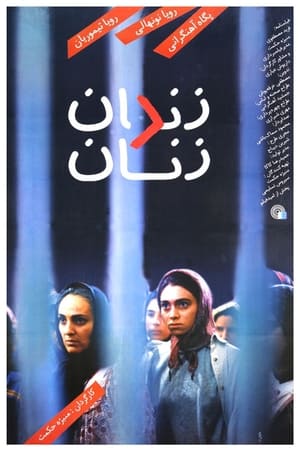
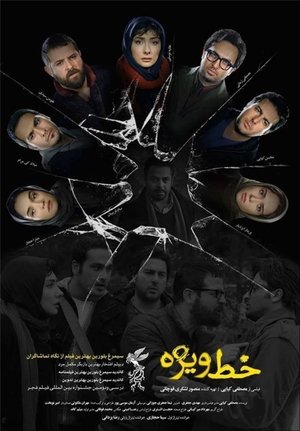
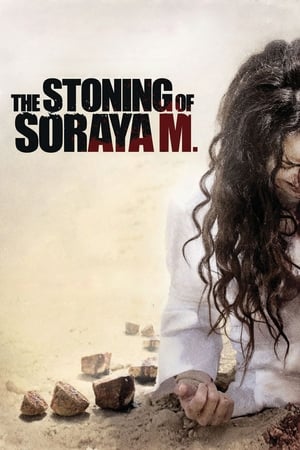
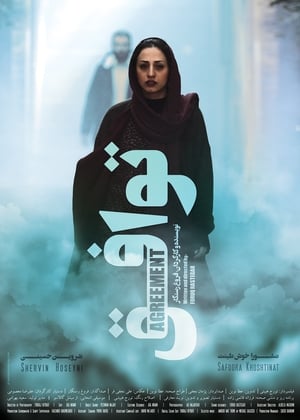
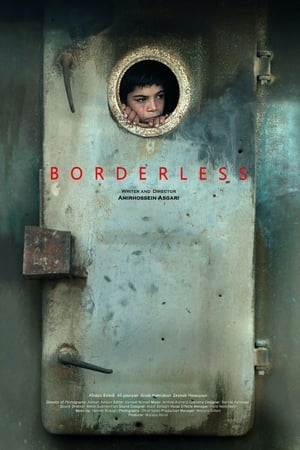
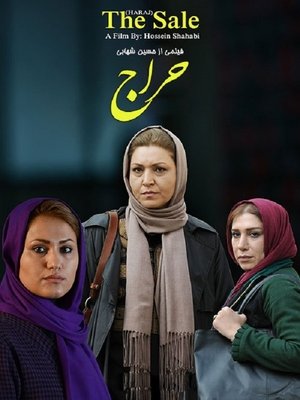
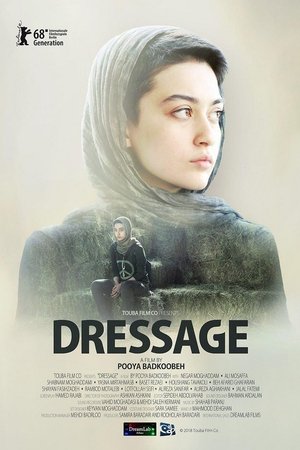
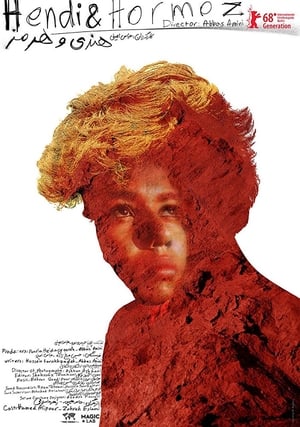
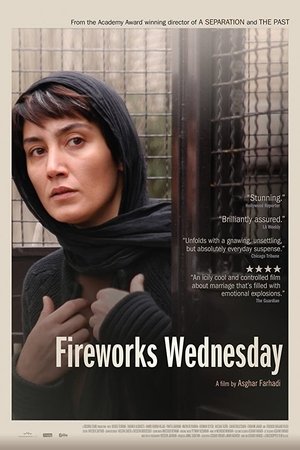
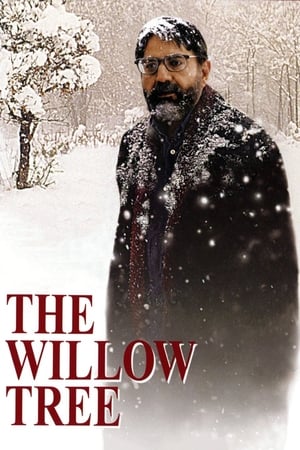
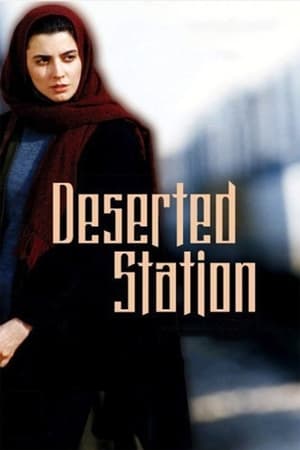
A wedding day becomes a ritual of mourning when the bride's family die in an auto accident. Refusing to accept her daughter's death, and in the midst of guests and mourners, including the drivers that caused the accident, the mother orders the wedding to move forward. But how can the bride marry in the midst of a wake and without the family's traditional mirror, which the sister was bringing to the service?
A series of loosely related sequences representing a wandering train of thought.
An Iranian Film
A haughty acclaimed newly married fashion designer named Iraj is shown the door by his boss after the boss's son arrives at Iran to take over his father's company. Iraj reluctant to promulgate the loss of his job, starts using his savings, trying to conceal the truth from his naive wife. Having squandered all the money he had on trivial matters, he tells his wife about being axed & that's when the tables turn on him.
After having medical problems, and after a long time, Mina becomes pregnant, but she feels ignored by her husband, Hesam. Since he has become concerned and involved with the personal and family problems of his colleague Shirin, who has recently divorced from her husband...
An Iranian film
An Iranian film.
An urban guerrilla, wounded after a bank robbery, seeks refuge with his childhood friend—only to discover that his friend has fallen into addiction. The guerrilla hides in his house and gradually begins to influence him, helping him regain his courage and strength. Eventually, he entrusts the stolen money to him…
Dash Akol is greatly respected in Shiraz as an honorable man who has lost his family's money through helping his friends. He has an enemy, however, named Kaka Rostam, a mean and spiteful person. Dash Akol, who is in his forties, falls in love with Marjan, daughter of the late Haji Samad, for whose estate he is the executor. But he keeps his love secret. One day a suitor asks for Marjan's hand, and Dash Akol considers it against his code of honor to refuse. On the night of the wedding, Dash Akol hands over responsibility for the family to the bridegroom. As he is leaving the house, however, Kaka Rostam is waiting for him and a fight ensues. Kaka Rostam stabs him in the back, but Dash Akol succeeds in killing him. On his deathbed, Dash Akol sends his parrot to Marjan with the confession of love he has taught it.
Valeh, a member of a leftist organization, is arrested by the SAVAK and sentenced to death. In prison, he reconsiders his relationships with members of his political cell, and begins to doubt the validity of the ideas for which he is condemned. At the same time, his comrades pressure him to make a sacrifice for their cause, and his beloved wife experiences personal problems and economic hardships.
This social Iranian drama, directed by Flora Sam, centers on an old man named Yousef who resides in Kashan. He lives with his daughter, Samira, and his young grandson, Amir Ali. The main conflict arises when Yousef faces the difficult situation of being forced to leave his home. Despite the pressure and the necessity of the move, Yousef is deeply attached to his current house and strongly resists the idea of leaving at all. The film explores the emotional turmoil and challenges faced by the old man and his family as they deal with this impending displacement.
Behrani, an Iranian immigrant buys a California bungalow, thinking he can fix it up, sell it again, and make enough money to send his son to college. However, the house is the legal property of former drug addict Kathy. After losing the house in an unfair legal dispute with the county, she is left with nowhere to go. Wanting her house back, she hires a lawyer and befriends a police officer. Neither Kathy nor Behrani have broken the law, so they find themselves involved in a difficult moral dilemma.
A playwright Iran tries to confront a creative crisis while political clashes erupt during her country's 2009 election.
A filmmaker named Hadi is sent to Croatia to complete his research for a film. Aziz, Hadi’s friend, gives him a cassette tape, a piece of image, and a half a piece of plaque in order to find a girl named Fatima. Alongside a Farsi-speaking Bosnian woman, Hanifa, Hadi begins his quest for Fatima.
Bahman, Mahtab, Ramin and Donya Mehdipour are enjoying a perfect summer in a small Finnish town. Their routines are fractured by a negative decision on their application for asylum by the Finnish Immigration Service. But life must go on and the 13-year-old Ramin is about to enter an entirely new school, junior high. The Mehdipours use their last chance to appeal but continue their everyday lives, fuelled by their exceptionally positive outlook and attitude.
Leyla and her six-year-old daughter Nila live in the holy city of Mashhad in Iran. Nila is the result of a temporary marriage, which allows a man to marry a woman even if he is already married. Children born from such a relationship are legally non-existent. As long as the father does not recognize the child, no birth certificate can be issued and Nila cannot attend school. The documentary depicts Leyla's tireless efforts to clarify Nila's legal status in order to offer her a perspective for her future. In a never-ending bureaucratic battle, Leyla fights not only against the legal system, but also against a judgmental society.
Makhmalbaf puts an advertisement in the papers calling for an open casting for his next movie. However when hundreds of people show up, he decides to make a movie about the casting and the screen tests of the would-be actors.
An old villager deeply in love with his cow goes to the capital for a while. While he's there, the cow dies and now the villagers are afraid of his possible reaction to it when he returns.
Against the tumultuous backdrop of Iran's 1953 CIA-backed coup d'état, the destinies of four women converge in a beautiful orchard garden, where they find independence, solace and companionship.
Jalil is 17-year-old boy living with his Iranian family in a suburb near Helsinki. Though he has lived in Finland all his life, it seems hard for him to find acceptance among the "native" Finns. At home he faces the opposite problem. His parents demand him to respect Iranian cultural traditions. Jalil is about one day in the life of a boy standing on the edge of two cultures. On this summer day big things are bound to culminate; religion, identity, love.