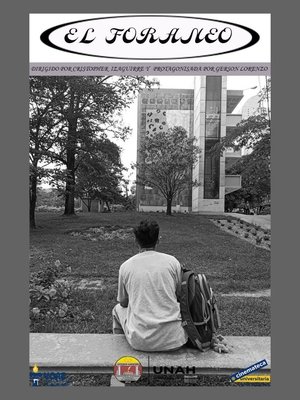
A Blue Soldier and a Yellow Soldier play a board game trying to outwit each other, struggling for control over a piece of land. The Farmer who belongs to the land is not allowed to play and must pick a side. As the fighting escalates, what side does she choose?
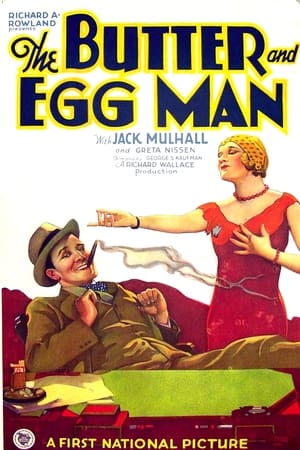
Peter Jones is a young man who arrives on Broadway from Chillicothe, Ohio, hoping to invest $20,000 in a play and turn a profit sufficient to buy a local hotel back home. He is conned by Joe Lehman and Jack McClure into backing their play with a 49-percent stake. The play opens out-of-town in Syracuse and bombs. Lehman and McClure want out, and Jones buys them out
A 1916 short comedy starring Marcel Perez
A silent film exploring the life and times of Groover Walz, and the ultimate tragedy of the very thing that brings him joy — dance.
Fabian Bom, auctionist in a small town, one day finds a baby boy in a small crib that is for sale at an auction. He places the boy at an orphanage but returns the next day since he realizes that he misses the boy. Since a single man is not permitted to adopt a baby he arranges a marriage with a young woman, who really is the baby's mother.
a silent movie by Robert Wiene
When Luke, a travelling salesman, finally arrives at the Countess' castle, he discovers his client is not what she seems to be...
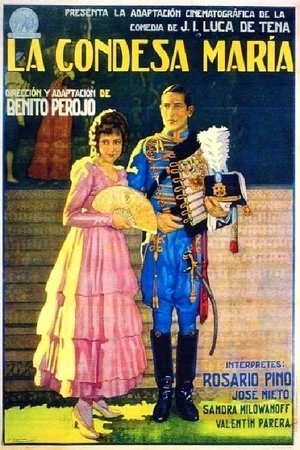
Sergius, a student in Paris, is called upon to ascend the throne of Deliria, and the Duke of Onnandoff comes to announce the fact accompanied by his beautiful young Duchess. The Prince, however, has gone off for a night's merrymaking in Paris, and at a popular cafe he meets and falls in love with a beautiful ex-dancer, who is none other than the Duchess of Onnandoff, who is paying a surreptitious visit to the scene of her former triumphs. A group of conspirators who wish to prevent Sergius ascending the throne, lure him to the house of the Delirian Ambassador where they intend to keep him prisoner. The young Duchess caught in a heavy shower, is given shelter at the house by the Ambassador's footman. Here she learns of the plot against the youth with whom she has spent a charming evening, and it is her wit and ingenuity that upset the plans of the conspirators and enable Sergius to secure his crown.
Some naughty scenes from a balcony.
Mo Geum-san is a barber living in the rural area, who once aspired to be an actor. He starts to have doubts about his humdrum life after the village health center advises him to be examined at a larger hospital. He comes up with a plan to give a gift to his beloved ones in the coming Christmas. The plan is to invite everyone to the local culture center and to screen his self-made comedy movie based on his own tragic life.
An unethical merchant moves into town and steals customers from the widowed owner of an established store; the gang steps in to help.
The Mystic J.J.J.'s challenge Ernie's bravery; he spins a tale of saving a rich young girl from kidnappers and of creating a utopia called Freetown.
The Rascals, feeling unloved at home, decide to become pirates. Meanwhile, a mother, an aunt and a valet join the cops in searching for the runaways.
Mrs. Pennington Van Renssalaer, a publicity-minded society matron, sponsors a children's outing, much to her and her chauffeur's eventual regret.
The gang forms a fire department; they end up thwarting a bootlegger, but not before their pet animals get drunk on his moonshine.
Cheng the fruit seller is in love with the daughter of his neighbor the doctor, but the good doctor won't let him marry her unless Chang finds him more patients...
Come Along, Do! is an 1898 British short silent comedy film, produced and directed by Robert W. Paul. The film was of 1 minute duration, but only forty-some seconds have survived. The whole of the second shot is only available as film stills. The film features an elderly man at an art gallery who takes a great interest in a nude statue to the irritation of his wife. The film has cinematographic significance as the first example of film continuity. It was, according to Michael Brooke of BFI Screenonline, "one of the first films to feature more than one shot." In the first shot, an elderly couple is outside an art exhibition having lunch and then follow other people inside through the door. The second shot shows what they do inside.
A satire on the way that audiences unaccustomed to the cinema didn't know how to react to the moving images on a screen - in this film, an unsophisticated (and stereotypical) country yokel is alternately baffled and terrified, in the latter case by the apparent approach of a steam train.