Il trovatore - Liceu
La bohème - Liceu
Romeo et Juliette - Liceu
Glyndebourne's celebrated production of Nikolaus Lehnhoff's Tristan und Isolde is a supremely intelligent achievement; gravely beautiful, haunting and meditative, it is deeply reflective rather than visceral, fortified by Roland Aeschlimann's stunningly effective set, a womb-like space through which the protagonists move like gods. Conductor Jiří Bělohlávek mirrors Lehnhoff's approach in his sophisticated plumbing of the score's depths, with every shift in texture carefully laid bare by an inspired London Philharmonic Orchestra. Nina Stemme's Isolde and Robert Gambill's Tristan, both gloriously lyrical, are matched by superb performances from René Pape as the betrayed and vulnerable King Marke and Bo Skovhus as Kurwenal, deeply touching in his helpless devotion to Tristan. This High Definition recording of a production of uncommon intimacy reveals the opera's music and drama in a new light.
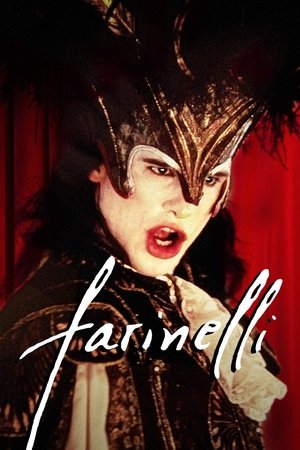
Set in 18th-century Venice, the paths of two unlikely collaborators: a Venetian noble and a castrated singer from Calabria, both tries to succeed in the world of the opera.
During World War I, in an unnamed country, a soldier named Tamino is sent by the Queen of the Night to rescue her daughter Pamina from the clutches of the supposedly evil Sarastro. But all is not as it seems.
Originally commissioned to celebrate the completion of the Suez Canal and the opening of Cairos new opera house, Verdis Egyptian epic Aida is here seen in a spectacular new staging in the Teatro Regio Torino by the Oscar-winning American film director William Friedkin, creator of such famous movies as The Exorcist and The French Connection. The cast features American soprano Kristin Lewis who has been heralded for her remarkable voice, which she uses with powerful dramatic instinct, and Georgian mezzo-soprano Anita Rachvelishvili, whose Amneris dominates the stage with her dark, rounded, irresistible voice and extraordinary stage presence. Gianandrea Noseda leading the Orchestra and Chorus Teatro Regio Torino received accolaides from all: he controls everything- orchestra, singers, chorus, dancers, acrobats- with an all-encompassing overview. He knows exactly when its time to linger over a timbre, a color, an expressive chord.
Mozart’s Don Giovanni was first performed in 1787, and was based on the story of the Spanish lothario, Don Juan. The title character seduces, deceives and murders his way through the opera, doing his utmost to experience life, and all that it has to offer, to the full.
The Biblical story of Belshazzar's hubristic arrogance, set against the valour of the young warrrior-leader Cyrus, provided the 20-year-old Rossini with a dramatic story enriched by West-Eastern implications which still speak to us today. For the title role of Cyrus, Rossini wrote what would be his longest-ever contralto role, to which the great Rossini singer Ewa Podles´ is both naturally attracted and ideally suited. She is partnered by two young stars of Rossini singing, Jessica Pratt and Michael Spyres, and a conductor-scholar, Will Crutchfield, of great experience and sympathy. Filmed in High Definition and recorded in true Surround Sound.
Carlos Álvarez takes the title role in the first of Verdi's Shakespearean operas, with Maria Guleghina as the manipulative wife whose desire to gain the Scottish throne drives her husband to murder and leaves both with blood on their hands. Bruno Campanella conducts the Symphony Orchestra and Chorus of the Gran Teatre del Liceu in the 2004 recording of Phyllida Lloyd's powerful production, first staged at London's Royal Opera House.
The audience is invited into Violetta’s privacy to have a close look at the fire to which she abandons herself among the guests of this musical and phantasmagorical celebration that blends theatre and opera, voices that speak and sing, and where the distinction between the instrumentalists and the singers becomes blurred, where Charles Baudelaire is seated next to Christophe Tarkos, and where the phantoms of this Paris in full industrial boom whose future we are living at present, sing and die.
I usually don't like classic operas with modernized production and costumes. This one is an exception. The modernized twist is made to fit the story very well and makes watching this opera very enjoyable. Alagna as Orphee does a great job and and is more realistic than a female singer in the role. His impeccable french is an added bonus for french speakers like me. This is the version of this opera that you would want to watch without getting bored
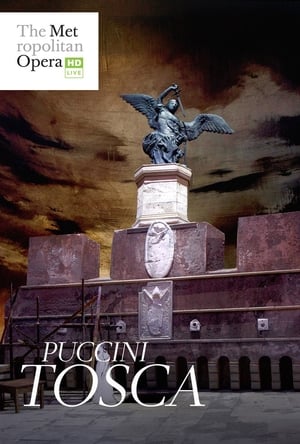
Tosca is an opera in three acts by Giacomo Puccini to an Italian libretto by Luigi Illica and Giuseppe Giacosa. It premiered at the Teatro Costanzi in Rome on 14 January 1900. This version is conducted by Riccardo Muti at La Scala, Milan.
There are elements of Eurotrash in this outdoor Aix-en-Provence summer opera production. Nevertheless, the splendid singing and acting transform the story, normally treated as farce, into something considerably more serious. As many other critics have noted, the young lovers have not yet sorted everything out as this performance ends. Act One begins with the principal characters running around in the outdoor theater -- while the audience takes it in as if they had been advised to sit back and enjoy the novelty. Very likely they were also asked to refrain from applauding at the end of arias and ensemble pieces, in which the three-hour opera abounds.
A film of the opera The Turn of the Screw by Benjamin Britten. A young governess arrives at an old house in the country to look after two orphans. What unfolds is a chilling tale as she experiences strange ghostly encounters with some of the previous occupants of the house and finds herself engaged in a battle to protect the children’s souls from evil. Myfanwy Piper’s libretto of Henry James’s famous short story leaves much to our imagination and Britten’s score is haunting, terrifying and brilliant. Shot on location at Wilton's Music Hall, London, the whole space of the venue, not just the stage, is used to tell the story.
Joan Sutherland's farewell performance to the operatic stage offsets this story of the St. Bartholomew's Day massacre and the magnificence of 16th century France.
This Blu-ray is a splendid record of a creative production with terrific voices and direction, as good as the Met's videos any day. It also tends to be creepy and atmospheric, with music as good as anything Gounod wrote for his FAUST. Recommended to lovers of horror and opera!
This thought-provoking, modern-day interpretation of Rossini's 'Mosè in Egitto' sets the scene for superior music-making at the prestigious Rossini Festival in Pesaro. For conductor Roberto Abbado, the transposition of the action to the present day releases the energy of Rossini's music. At his disposal is a cast of top-quality vocalists such as the “refined bel canto artist(Bresciaoggi) Sonia Ganassi as Elcia, and the “outstanding” Dmitry Korchak as the Pharaoh's son, two lovers fatefully drawn into the political turmoil and catastrophes of their time. Also among the protagonists are the “thoroughly brilliant” (DeutschlandRadio Kultur) baritone Alex Esposito as Faraone and, in his Rossini Festival debut, young, full-bodied bass Riccardo Zanellato as Moses. Conductor Roberto Abbado “inspired his musicians to deliver a spectacular performance” (Salzburger Nachrichten).
Visually this is a gripping production which captures the drama of this opera perfectly. It's downright exciting! and I found the singing, acting, and orchestral playing reasonably fine. I found only one major problem with it, a problem that kept Puccini for quite a few years. Turandot has been looking for an opportunity to kill Calif and Calif has singlemindedly tried to get Turandot to love and wed him focusing on her and ignoring a better looking girl who loves him truly. The problem is how to get the audience to applaud the match once Calif gets his wish. Puccini couldn't figure out how to do it. The traditional quick ending doesn't do it, and Berio's attempt is longer , tries its best, but ends up making it plain this is one wierd couple.
From the Teatro dell'Opera di Roma Terme di Caracalla "Carmen" by Georges Bizet. Director Jesus Lopez-Cobos. Orchestra, Chorus and Corps de Ballet of the Teatro dell'Opera di Roma.