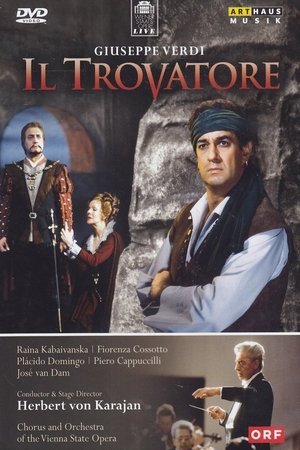
It's an event that draws many thousands of music lovers to one of the most beautiful cities in the world every summer: the opera season at the ancient Arena di Verona. The 2,000-year-old roman amphiteatre with its gigantic stage dimensions is one of the largest and best preserved Roman construction of its kind, and with over 22,000 seats it is undoubtedly one of the most spectacular open-air venues of the world! The revered master of opera Franco Zeffirelli, who died shortly before the premiere of Il Trovatore, created a legendary scenery with groups of giant sized armoured knights, a fortress turning into a luminous cathedral, an enormous choir, horses, breathtaking fights: “his perhaps best arena production” (Opernglas). It brings Anna Netrebko to the Arena of Verona where she is giving her much-anticipated debut in one of Giuseppe Verdi’s most popular operas.
The life and career of Italian opera singer Farinelli, considered one of the greatest castrato singers of all time.
Disciplined Italian composer Antonio Salieri becomes consumed by jealousy and resentment towards the hedonistic and remarkably talented young Salzburger composer Wolfgang Amadeus Mozart.
The first words uttered by Carmen mark one of the greatest entrances in the history of opera and express all that need be said: “Love is a rebellious bird that no one can tame…” With a devilish sway of the hips and a hint of Andalusian flair, the beautiful cigar-maker sets her sights on a soldier: Don José. Fate will do the rest.
The water fairy Rusalka falls in love with an earthly prince. In vain, Father Aquarius warns her. Her sincere feelings are met with human treachery...
The grand scale and magnificent acoustics of the Roman arena in Verona are ideally suited to the pageantry of Verdi's Egyptian opera, presented here in a staging that is true to the original 1913 production, framed by obelisks and sphinxes and filled with chorus and dancers. Chinese soprano Hui He has won international acclaim for her portrayal of the eponymous slave girl whose forbidden love for the war hero Radamés (Marco Berti, the experienced Verdi tenor) brings death to them both.
Rigoletto is an opera in three acts by Giuseppe Verdi. The Italian libretto was written by Francesco Maria Piave based on the play Le roi s'amuse by Victor Hugo. Despite serious initial problems with the Austrian censors who had control over northern Italian theatres at the time, the opera had a triumphant premiere at La Fenice in Venice on 11 March 1851. This 1994 recording, directed by Riccardo Muti, stars Roberto Alagna, Renato Bruson and Andrea Rost.
Oidipus Rex
Tan Dun portrays the Venetian explorer's travels to the Far East as a journey of both inner and physical discovery, a voyage depicting spiritual experiences as well as a geographical expedition. Pierre Audi's mythical staging and Jean Kalman's fabulous set design complement the composer's own musical direction, forging the dazzlingly versatile soloists, the Netherlands Chamber Orchestra and Cappella Amsterdam to a stunning symbiosis of elements across time and space, a true testimony to cultures intertwined in globalization.
Opera at La Scala Milan
Although Domingo was younger and Banackova looked more like the sweet and innocent young Madalena than the one played by Tomowa-Sintow in the ROH production, this production was not as good. It was not as tight and neat. The tempo set was far too slow for the time-period of the story. The stage setting was distracting. The lighting was too dark. Except Domingo, a natural actor who was always into his role and sings and acts with passion, none of the other performers came up with a convincing portrayal of the role he/she played.
Dr. Hohner, theatre physician at the Vienna Royal Theatre, murders his mistress, the star soprano when his jealousy drives him to the point of mad obsession. Ten years later, another young singer reminds Hohner of the late diva and his old mania kicks in. Hohner wants to prevent her from singing for anyone but him, even if it means silencing her forever.
The Marx Brothers take on high society and the opera world to bring two lovers together. A sly business manager and two wacky friends of two opera singers help them achieve success while humiliating their stuffy and snobbish enemies.
Loosely based on the story of the singer Nellie Melba...
Last production staged by Patrice Chéreau, this Elektra will remain as the main and most striking lyrical event of these last years in Aix-en-Provence. This production is leaded by three amazing singers: the German soprano Evelyn Herlitzius gave a tremendous, never-to-be-forgotten account of the title role, Waltraud Meier portrays a human and chilling Clytemnestra and Adrianne Pieczonka is a fantastic Chrysothemis. Everyone's loneliness and intimate struggles are Patrice Chéreau's favorites theatrical themes. With Esa-Pekka Salonen conducting the Orchestre de Paris, this production of Elektra becomes an unforgettable experience.
Captured live from Naples’ splendid San Carlo Theatre – the world’s oldest continuously running public opera venue – where it opened the company’s theatrical season, acclaimed director Dmitri Tcherniakov stages a new production of Dvořák’s beautiful, supremely romantic opera about a water sprite Rusalka who longs to find love.
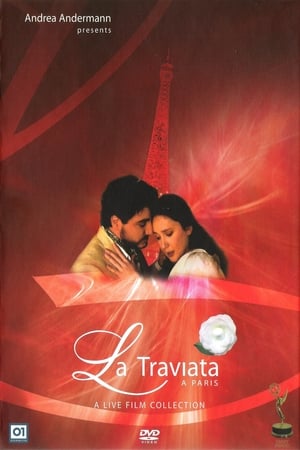
The audience is invited into Violetta’s privacy to have a close look at the fire to which she abandons herself among the guests of this musical and phantasmagorical celebration that blends theatre and opera, voices that speak and sing, and where the distinction between the instrumentalists and the singers becomes blurred, where Charles Baudelaire is seated next to Christophe Tarkos, and where the phantoms of this Paris in full industrial boom whose future we are living at present, sing and die.
Originally commissioned to celebrate the completion of the Suez Canal and the opening of Cairos new opera house, Verdis Egyptian epic Aida is here seen in a spectacular new staging in the Teatro Regio Torino by the Oscar-winning American film director William Friedkin, creator of such famous movies as The Exorcist and The French Connection. The cast features American soprano Kristin Lewis who has been heralded for her remarkable voice, which she uses with powerful dramatic instinct, and Georgian mezzo-soprano Anita Rachvelishvili, whose Amneris dominates the stage with her dark, rounded, irresistible voice and extraordinary stage presence. Gianandrea Noseda leading the Orchestra and Chorus Teatro Regio Torino received accolaides from all: he controls everything- orchestra, singers, chorus, dancers, acrobats- with an all-encompassing overview. He knows exactly when its time to linger over a timbre, a color, an expressive chord.
Bill Morrison’s experimental short features decayed film reels from the lost, German silent film Pawns of Passion (1928).
What happened to Figaro and his friends after the events told in Rossini’s and Mozart’s operas? One possible sequel is told in John Corigliano’s “grand opera buffa” The Ghosts of Versailles—an uproariously funny and deeply moving work inspired by Beaumarchais’s third Figaro play, La Mère Coupable, and commissioned by the Met to celebrate its 100th anniversary. This telecast captures its world premiere run, conducted by James Levine. Håkan Hagegård is Beaumarchais, Figaro’s creator, who is deeply in love with Marie Antoinette (Teresa Stratas in a heart-searing performance) and determined to rewrite history and save her from the guillotine. A young Renée Fleming, at the beginning of her international career, sings the unfaithful Rosina. Gino Quilico is the wily Figaro who tries to take matters in his own hands, and Marilyn Horne stops the show as the exotic entertainer Samira.