"Irresistible" (Opera News) rising-star mezzo Elina Garanca triumphs as Rossini's Cinderella in this delightful Metropolitan Opera production. "As close to pure joy as you will find in a big-time opera house" (New Yorker), conquering audiences and critics alike, "Garanca has a gorgeous voice that she uses with exceptional skill, melting tenderness; but when the part calls for coloratura fireworks, she unleashes a flawless technique and ringing high notes of impressive power" (Associated Press). Filmed in High Definition Widescreen.
23-year-old Gioachino Rossini completed his masterpiece IL BARBIERE DI SIVIGLIA incredibly quickly – legend has it in just 13 days – which Rossini attributed to ‘facility and lots of instinct’. The opera, characterized by youthful energy and bold wit, has all the ingredients for comic chaos: an imprisoned young woman, her lecherous guardian and a young noble suitor. Skilfully plotting behind the scenes is Figaro, an irrepressible and inventive character in whom many have seen a resemblance to the young Rossini himself. The score fizzes with musical brilliance, from Figaro’s famous entrance aria to the frenzy of the Act I finale. This recording sees Joyce DiDonato (Rosina) bring literal meaning to the old theatrical motto Break a leg! She did just that in an earlier show but was determined to finish her commitment and was re-staged into the production to allow for the additional challenges that come when a leading lady in a lively physical role must wheel around the other performers...
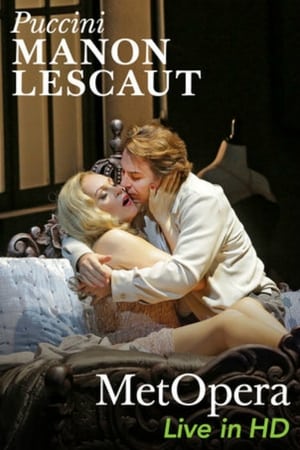
"Manon", wrote Puccini to his publisher Giulio Ricordi in 1889, "is a heroine I believe in and therefore she cannot fail to win the heart of the public." This turned out to be a truly prophetic statement since none of Puccinis other world successes were received on their first nights as rapturously as Manon Lescaut. The popularity of Puccinis great masterpiece has never waned and the highly acclaimed Götz Friedrich production at Covent Garden was hailed as an operatic milestone. Two of the worlds leading stars--Kiri Te Kanawa and Placido Domingo--head a strong cast conducted by the brilliant Italian conductor Giuseppe Sinopoli.
Georgian mezzo-soprano Anita Rachvelishvili gives a dynamic performance as Bizet’s iconic gypsy, the woman who lives by her own rules. Aleksandrs Antonenko is Don José, the soldier who falls under her spell, and Ildar Abdrazakov plays Escamillo, the swaggering bullfighter who takes Carmen away from Don José—an action that seals Carmen’s tragic fate. Anita Hartig is Micaëla, and Pablo Heras-Casado conducts Richard Eyre’s hit production, set in 1930s Spain.
Gaetano Donizetti and his librettist Felice Romani kept the focus of their opera ANNA BOLENA on the personal rather than the political in this fictionalized Tudor tale: Henry VIII of England wants to get rid of his second wife, Anne Boleyn, so that he can marry her lady-in-waiting, Jane Seymour. He brings Lord Richard Percy, Anne's first love, back from exile so that he can find an excuse to accuse her of adultery. With the unwitting aid of Smeaton, a court musician, and Lord Rochefort, Anne's brother, the trap is easily sprung. This 2011 live recording from the Wiener Staatsoper showcases Anna Netrebko as she "scored a personal triumph" in her debut as the hapless Tudor Queen, while her stage partners - notably Elīna Garanča as Jane Seymour and Ildebrando D'Arcangelo as Henry VIII - were likewise showered with critical acclaim.
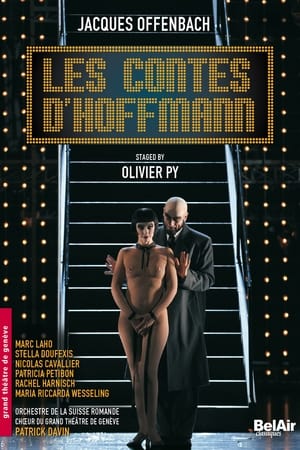
Live performance, Bayerische Staatsoper, 2011. The Tales of Hoffmann (French: LES CONTES D'HOFFMANN) is an opéra fantastique by Jacques Offenbach that combines three short stories by E.T.A. Hoffmann into a haunting whole: a melancholy poet reflects on three women he loved and lost in the past: a mechanical performing doll, a Venetian courtesan, and the consumptive daughter of a celebrated composer. One of the questions this opera poses for any director is how to link the 'tales' of Hoffmann's three lost loves together and knit them satisfactorily into the Prologue and Epilogue. In this production, Richard Jones solves the puzzle by turning it into an autobiographical journey which ends with a grand meet-up of all the characters Hoffmann has encountered: for once, Hoffmann is not presented as a rollicking kind of drunken story-spinner, but rather a sad-eyed, sobered-up depressive, who reaches for the bottle only because his disastrous love life has gone wrong yet again.
Mozart's famous Singspiel after Christoph Friedrich Bretzner's work "Belmonte und Konstanze", DIE ENTFÜHRUNG AUS DEM SERAIL comes to life in the sumptuous setting of Topkapi, the Ottoman sultans' own Istanbul seraglio (palace harem). Belmonte finds his fiancée Konstanze and her English maid Blondchen, who were captured and sold by pirates, in the Mediterranean seraglio of the Ottoman pasha Selim. Belmonte's servant Pedrillo gets him engaged as builder. After Selim tried to enforce himself upon Konstanze, Pedrillo and Blondchen, his own sweetheart, prepare their flight, managing to get Osmin, the pasha's overseer, drunk. Yet Osmin and Selim's guard still capture them, already in the garden; however the touching display of true love melts the pasha's heart, so he lets them go.
Iconic songstress Barbra Streisand culminates her 13-city tour in Miami with dazzling ballads, Broadway standards and stories from behind the scenes.
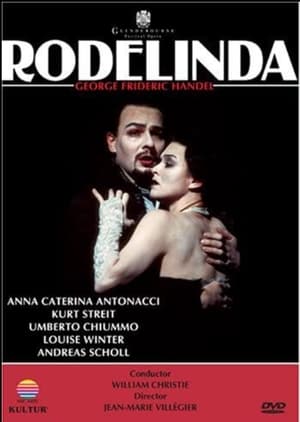
Jean-Marie Villegier's modern interpretation of Handel's "Rodelinda" – filmed live at the world-renowned Glyndebourne Opera House in the United Kingdom, sets the timeless tale of jealousy and treachery in the black-and-white world of the silent-movie era. Soprano Anna Caterina Antonacci sings the title role of Rodelinda, with tenor Kurt Streit and bass Umberto Chiummo performing the parts of Grimoaldo and Garibaldo, respectively.
The writer Dario Fo applies his inventive genius to Rossini's comic opera in its premiere DVD release. Recorded in 2005 under the musical direction of Maurizio Barbacini, Fo's production brings fresh vitality and colour to the story of Lisetta, and of her father Don Pomponio's increasingly ridiculous attempts to find a husband for her through an advertisement in the newspaper LA GAZZETTA. Filmed using high definition cameras with multitrack sound.
Renée Fleming stars in the title role of one of Handel’s greatest dramas, seen in Stephen Wadsworth’s 2004 Met premiere production. Rodelinda is faced with an impossible dilemma: With her husband Bertarido believed dead, she either has to marry the despised Grimoaldo (the elegant Joseph Kaiser), who has usurped her husband’s throne, or see him murder her son. But Bertarido (leading countertenor Andreas Scholl) is alive and eventually reclaims both throne and wife—and makes peace with his enemies. Stephanie Blythe is marvelous as Eduige, Bertarido’s sister, who is betrothed to Grimoaldo but turns against him. Baroque authority Harry Bicket conducts.
Live 2001 production from the Zurich Opera House of the classic Mozart/Da Ponte opera, with Nikolaus Harnoncourt conducting and directed for television and video by Brian Large.
“Let us assume that Switzerland is truly a paradise. The music hereto was written long ago. We have merely forgotten it.” (Daniel Schmid) This is the material from which the most Swiss of all operas is made: the legendary Wilhelm Tell – a Swiss hero: straightforward, a primus inter pares of the indomitable freedom fighters, a good shot, surefire. A myth that becomes a poetic playground: nature in turmoil, the struggle for freedom and forbidden love. A legendary overture at a gallop with an iconic post horn motif – all this and much more in the thirty-seventh and last opera by Rossini.
Tosca is an opera in three acts by Giacomo Puccini to an Italian libretto by Luigi Illica and Giuseppe Giacosa. It premiered at the Teatro Costanzi in Rome on 14 January 1900. This version is conducted by Riccardo Muti at La Scala, Milan.
José Cura, Dmitri Hvorostovsky, Verónica Villarroel and Yvonne Naef lead the star cast of Verdi's blazingly passionate opera IL TROVATORE, in Elijah Moshinsky's new Royal Opera House production co-produced with Teatro Real Madrid, with sets by the noted film designer Dante Ferretti and costumes by Anne Tilby.
Filmed at the 1992 Glyndebourne Festival in Lewes, England, this production won unanimous critical acclaim for its innovative interpretation of Tchaikovsky's opera "Pique Dame" ("Queen of Spades"). Although sung in Russian, the production features English sopranos Felicity Palmer as the old countess and Nancy Gustafson as Lisa. Russian tenors Dimitri Kharitonov, Sergei Leiferkus and Yuri Marusin co-star.
When Barbe-bleue loses his fifth wife, the turbulent Boulotte is selected at random to be the next one. But Barbe-Bleue falls in love with Hermia – who loves the shepherd Saphir – and soon wearies of Boulotte. So, he asks his alchemist to concoct for him an “anti-wife” philtre. But, as on the previous occasions, it is merely a sleeping potion and Boulotte wakes up the other five “dead” wives. They reappear, dressed up as gypsies and bring the truth to light.
Director Robert Carsen and his creative team flood the stage with summer blossoms, drifts of autumn leaves, winter snows and thunderous spring storms. The cast of 140 are attired in elegant costumes inspired by late 1940s Dior. This mythical tale of a young queen, Alphise, determined to abdicate rather than contemplate an enforced marriage to a descendant of Boreas, is nothing less than highly-charged.
Inspired by a fable by La Fontaine, [composer Jean-Philippe] Rameau produced perhaps his most brilliant music for his penultimate great work, blending reality and the surreal on several levels.
The award-winning show is re-imagined as a live concert event, featuring an all-star cast of recording artists, set during the last week of Jesus' life as he deals with betrayal, love and jealousy, and told from the perspective of Judas.