Fuku-chan was one of the most popular newspaper comic strip boy-characters in Japan at the time. The film portrays a submarine attack on an enemy cargo ship. Though this, too, was to boost patriotism, Japanese children particularly enjoyed the scenes in which the kitchen crew cooked in the submarine kitchen. Released in November of the same year, the food shortage was quite serious in Japan, and the abundant food supply in the submarine kitchen -- vegetables, fruit, fish, rice, and more which were already luxury items in Japan at the time -- was prepared into various dishes along with a merry, rhythmic song.
An early silhouette animated film by Hidehiko Okuda, Hakusan Kimura and Tomu Uchida. The original story is a Buddhist tale of a young lady who saved a crab (a spiritual being according to Japanese Buddhist faith) from being eaten, and was later saved from danger by the same crab.
A western occupation propaganda film in which a boy repairs a western style doll that comes to life and uses a magic pen to rebuild his bleak and war torn world into a happy place resembling western civilization.
The love story between a girl whose parents were murdered and a murderer known as a demon.
Short animated film by Kuri Youji.
Independent animation by Suzuki Shiniichi
Short animated film by Yasuji Murata
Short animated film by Yanagihara Ryouhei.
A short film satirizing consumerism.
Independent animation by Suzuki Shin'ichi.
Independent animation by Hayashi Seiichi.
In his early experimental short Karma (カルマ, 1977), Aihara uses water as his central motif. The film is hand drawn and appears to be shot on 16mm using a blue filter. At first we can only see tiny specks on the screen, coming and going like snow flurries. The specks gradually grow larger and take the shape of bubbles, then even larger into rivulets of water on a transparent surface.
In a family with a mother, father, two daughters, and a bulldog, the dog is neglected and taken for granted. It seeks peace under the dining table but is ignored. Eventually, the dog is banished, and a family discussion may be its final humiliation.
In what would become a familiar theme throughout his carrer, Jarnow explores the earth from above, invoking Buckminster Fuller's Dymaxion and the Gnomic map to illustrate different geometric and compromise projections.
Pings is a short film featuring cute characters in “politically incorrect” situations with an original graphics style. Two of these short films exist, this is the second one with the penguin.
Jarnow's first work for Sesame Street and the Children's Television Workshop - yak is a goofy take on the letter "Y."
Tondo introduces the cosmic formalism that was the primary theme of Al Jarnow's independent films. An infinite gridscape alternates with vibrating etchings, spirograms and other surreal realities.
Mickey's on African safari, riding on an elephant, but his shotgun disintegrates the first time he tries to use it. To sooth the vicious beasts, he plays tunes, sings, and dances, using the various animals and objects around him as instruments.
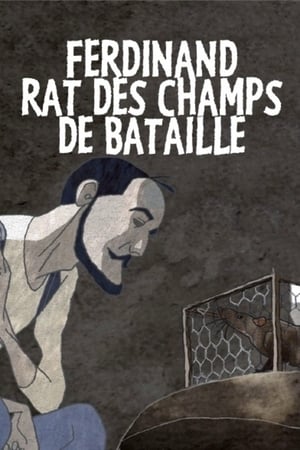
This animated short by Claude Cloutier is a pictorial account of an attack on Canadian soldiers during WWI. On the edge of the battlefield, recruits are dreading the order to attack. At the signal, a young soldier leaps into a hell of fire and blood where the earth engulfs both the living and the dead. Blending archival images and Cloutier’s hypnotizing brushstroke, the film is a dazzling illustration of the futility of war.