Disciplined Italian composer Antonio Salieri becomes consumed by jealousy and resentment towards the hedonistic and remarkably talented young Salzburger composer Wolfgang Amadeus Mozart.
Richard Jones’ “La bohème” is an important weapon in the Royal Opera’s commercial arsenal. This is its second revival since Jones’ production hit the stage in autumn 2017, replacing John Copley’s beloved 40-year old staging, resplendent with period detail and resolutely naturalist. Jones brings a considerable break with the past in his approach, pointing the way towards thought-provoking possibilities for the work, though it is a clearly a show that defers to the need for regular revival and breadth of appeal.
O komínku zedníky laškovně nakřivo postaveném aneb Souboj pantátův se zedníky
Beethoven’s only opera is a masterpiece, an uplifting story of risk and triumph. In this new production, conducted by Antonio Pappano, Jonas Kaufmann plays the political prisoner Florestan, and Lise Davidsen his wife Leonore (disguised as ‘Fidelio’) who daringly sets out to rescue him. Set in strong counterpoint are the ingredients of domestic intrigue, determined love and the cruelty of an oppressive regime. The music is transcendent throughout and includes the famous Act I Quartet, the Prisoners’ Chorus and Florestan’s impassioned Act II cry in the darkness and vision of hope. Tobias Kratzer’s new staging brings together the dark reality of the French Revolutionary ‘Terror’ and our own time to illuminate Fidelio’s inspiring message of shared humanity.
Royal Opera favourite Bryn Terfel heads the cast for this new production of Donizetti’s comedy of domestic drama across two generations. The witty story of a middle-aged man whose supposed young wife runs rings around him – with her own ulterior romantic purpose in mind – has long delighted and surprised audiences, not least as presented with the sparkle of its music and the virtuoso skill of its performers. Damiano Michieletto’s exhilarating production shows how contemporary the characters still are and how immediate and touching the story remains.
Simon Keenlyside smolders dangerously in the title role of Mozart’s version of the legend of Don Juan, creating a vivid portrait of a man who is a law unto himself, and all the more dangerous for his eternally seductive allure. Adam Plachetka is his occasionally unruly servant Leporello. It’s when Giovanni tangles with Donna Anna (Hibla Gerzmava) that things start to unravel, aided by the reappearance of Donna Elvira (Malin Byström), who is determined not to let her seducer go. With Paul Appleby as Don Ottavio, Donna Anna’s eternally steadfast fiancé. Principal Conductor Fabio Luisi leads the Met Orchestra and Chorus.
Franco Zeffirelli's magnificient staging of Puccini's final opera - a fairy tale set in a mythical China - is one of the most popular in the Met repertory. In this Live in HD production, Maria Guleghina takes on the title role and Marcello Giordani is Calaf, the unknown prince. Marina Poplavskaya and Samuel Ramey co-star, and Andris Nelsons conducts in his Met debut.
Opera lies at the heart of Rimsky-Korsakov's colourful idiom, but performances are few and far between; this realisation of his penultimate and grandest stage work is a very rare and special experience. Kitezh is known as "the Russian Parsifal", which encapsulates its mystical flavour and steady unfolding of a legend of redemption
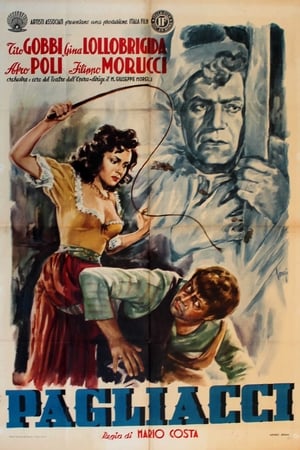
Franco Zeffirelli directs these two legendary La Scala productions telling tragic tales of jealousy. Mascagni's Cavalleria Rusticana features performances by Elena Obraztsova, Plácido Domingo, and Renato Bruson. Leoncavallo's I Pagliacci stars Teresa Stratas, Plácido Domingo, and Juan Pons. Both are conducted by George Pretre. This production of Pagliacci earned director Franco Zeffirelli the coveted Emmy as Best Director in the category of Classical Music Programming.
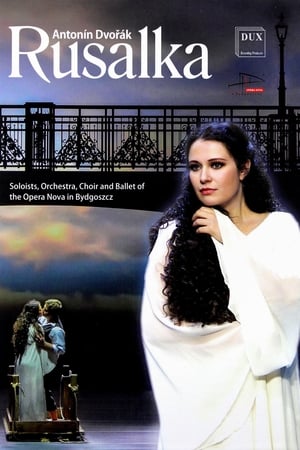
The water fairy Rusalka falls in love with an earthly prince. In vain, Father Aquarius warns her. Her sincere feelings are met with human treachery...
Legendary opera house, La Scala is more than just a stage— it’s a dream factory. And this year, over the course of four intensive months, 900 people will work relentlessly to incarnate Verdi’s opera masterpiece, ‘‘The Force of Destiny”. Under the masterful eyes of director Léo Muscato, we will follow set designer Federica Parolini, as her sketches evolve into towering architectural marvels crafted by dedicated artisans. In the costume workshop, Silvia Peroni and her team weave magic with fabric and thread through their expert hands. Then, a stellar international cast of virtuosos arrives in Milan, ready to fill La Scala’s hallowed halls with their soaring voices. But with the clock ticking, and expectations going through the roof, tensions unfold like an opera of its own. As Milan holds its breath for the legendary Prima on the 7th of December, the stakes couldn’t be higher. Will they be ready in time for curtain rise?
La Cenerentola, ossia La bontà in trionfo (Cinderella, or Goodness Triumphant) is an operatic dramma giocoso in two acts by Gioachino Rossini. The libretto was written by Jacopo Ferretti, based on the fairy tale Cendrillon by Charles Perrault. The opera was first performed in Rome's Teatro Valle on 25 January 1817.---- IMDB id refers to Great Performances: Season 24, Episode 12 La Cenerentola (3 Apr. 1996) from Houston Grand Opera so release date is misleading.
Ernst Krenek's theatrical piece Karl V. consisting completely of twelve-tone series should have premiered at the Vienna State Opera. The political situation in the Vienna of 1933 and the fact that Krenek was despised by the Nazis because of this Jazz opera Jonny spielt auf, prevented the première. It only took place five years later in Prague, however Krenek had already emigrated to the USA. Karl V was the last emperor to hold to the idea of a Christian empire in which the sun never set, although its downfall was always inevitable, for numerous reasons. For the second production of Karl V. in the Nationaltheater, Carlus Padrissa in particular seeks out political power systems that are highly topical, and so very precisely analyses the treatment in the theatrical piece. At the core of the intellectually and linguistically highly qualified libretto, written by the composer himself, Karl V. reflects on his life and makes his confession to a young monk below Titian's La Gloria.
Opera in three acts, a prologue and an epilogue, by Jacques Offenbach (1819-1880), with a libretto in French by Jules Barbier (1825-1901), based on a work that Barbier himself and Michel Carré (1821-1872) had written based on stories by E.T.A. Hoffmann (1776-1822). Approximate duration: 2 h 45 min Recommended for those over 15 years old. The young poet Hoffmann, accompanied by Nicklausse, his alter ego and confidant, is in a tavern next to the theatre where Mozart's Don Giovanni is being performed. During the opera's intermission, some diners arrive at the bar who, upon seeing the poet, encourage him to sing and tell them the story of his famous love affairs. Hoffmann finally gives in and shares with them the stories of Olympia, Antonia and Giulietta. They, absorbed in the poet's stories, remain in the tavern, forgetting about the opera performance.
The Zurich Opera gathered a superb cast for this production: Italian soprano Eva Mei sings the Countess Violante, known as Sandrina, the feigned gardener of the title. Spanish soprano Isabel Rey is her opponent Arminda, and Arminda's former lover, the melancholy Cavaliere Ramiro, is sung by Romanian mezzo Liliana Nikiteanu. Moretti's staging presents the action in a modern villa in a hierarchical world of the rich and famous.
Kristine Opolais is the young woman whose conflicting desires for love and luxury lead to her tragic end, and Roberto Alagna plays the man who falls for her in Puccini’s early hit. Richard Eyre’s elegant production, which sets the action in 1940s occupied France, was one of the highlights of the Met’s 2015–16 season. Massimo Cavalletti as Manon’s brother and Brindley Sherratt as her aging admirer co-star, and Principal Conductor Fabio Luisi is on the podium.
Based on real events and drawing on Georg Büchner's revolutionary play, Alban Berg's Wozzeck turns a grimly tragic narrative of violence and murder into one of the most powerful and original operas of the 20th century. Berg's uncompromising portrayal of brutality and madness generated much controversy, but the significance of Wozzeck was soon recognised; its compelling lyrical expansiveness, large-scale dramatic gestures and remarkable musical structures producing music of overwhelming emotional intensity. The Financial Times declared this to be 'a beautiful, moving, engrossing production… this is a consummate Wozzeck, blending clarity, lyricism, compassion and crushing force.'
The soldier Wozzeck (Christian Gerhaher) flits through a world that he is unable to decipher. The doctor torments him with absurd medical experiments; the captain humiliates and ridicules him. And Wozzeck’s lover, Marie (Gun-Brit Barkmin), with whom he has a child, cuckolds him with the drum major. Wozzeck becomes a murderer, stabbing Marie to death. Georg Büchner’s drama fragment, on which Alban Berg based his first opera, is an unflinching case study of social injustice and human suffering. But it is also a grotesque piece that thrives on exaggeration – and in which only a fine line separates the unfathomable from the ridiculous. Accordingly, director Andreas Homoki forgoes all realism.
Live performance from the Schwetzinger Festspiele, 1987. At the age of 21, Italian composer Giacchino Rossini penned the masterful comic opera “L’Italiana in Algeri” (“The Italian Girl in Algiers”) in less than a month. The composer’s youthful exuberance comes across in this infectious 1987 performance. Though she’s known mainly for her Wagner roles, acclaimed German mezzo-soprano Doris Soffel shines in the title role of Isabella. Ralf Weikert conducts, and Mauro Pagano oversees sets and costumes.
An anthology of four abbreviated operas: "William Tell" by Rossini, "The Marriage of Figaro" by Mozart, "Don Pasquale" by Donizetti, and "Carmen" by Bizet. Filmed in Italy with major opera stars, and accompanied by English narration.