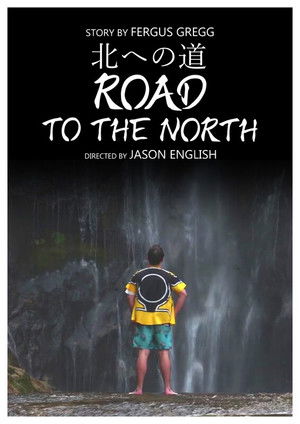
Documentary about two boys and a girl who travel to surfing spots around the world.
J-hope's debut world tour "HOPE ON THE STAGE" concludes with a live cinema broadcast. Watch him perform hits from his solo albums and new releases across a spectacular 31-show run through Asia and North America.
Film about the town of Penge featuring local personalities, housing, shopping, traffic and the Penge formation dancers.
This film is about Japanese women, escape, glamour and dreams. The Takarazuka Revue is an enormously successful spectacular where the all-women cast create fantasies of erotic love and sensitive men. It is also a world for young girls desperate to do something different with their lives. In return for living a highly disciplined and reclusive existence, they will be adored and envied by many thousands of Japanese women. They will look, act and behave like young men while having no real men in their lives. Dream Girls explores the nature of sexual identity and the contradictory tensions that face young women in Japan today.
The earliest surviving motion-picture film, and believed to be one of the very first moving images ever created, was shot by Louis Aimé Augustin Le Prince using the LPCCP Type-1 MkII single-lens camera. It was taken on paper-based photographic film in the garden of Oakwood Grange, the Whitley family house in Roundhay, Leeds, West Riding of Yorkshire (UK), on 14 October 1888. The film shows Adolphe Le Prince (Le Prince’s son), Mrs. Sarah Whitley (Le Prince’s mother-in-law), Joseph Whitley, and Miss Harriet Hartley walking around in circles, laughing to themselves, and staying within the area framed by the camera. Roundhay Garden Scene is often associated with a recording speed of around 12 frames per second and runs for about 2 to 3 seconds.
A small rural hospital in Japan battles an international cybercriminal gang that is holding them ransom with their stolen patient data.
Using never-before-seen footage, Japan's War In Colour tells a previously untold story. It recounts the history of the Second World War from a Japanese perspective, combining original colour film with letters and diaries written by Japanese people. It tells the story of a nation at war from the diverse perspectives of those who lived through it: the leaders and the ordinary people, the oppressors and the victims, the guilty and the innocent. Until recently, it was believed that no colour film of Japan existed prior to 1945. But specialist research has now unearthed a remarkable colour record from as early as the 1930s. For eight years the Japanese fought what they believed was a Holy War that became a fight to the death. Japan's War In Colour shows how militarism took hold of the Japanese people; describes why Japan felt compelled to attack the West; explains what drove the Japanese to resist the Allies for so long; and, finally, reveals how they dealt with the shame of defeat.
What is peace? What is coexistence? And what are the basis for them? PEACE is a visual-essay-like observational documentary, which contemplates these questions by observing the daily lives of people and cats in Okayama city, Japan, where life and death, acceptance and rejection are intermingled.
Special concert film of the final day of Kep1er's "Kep1going JAPAN CONCERT 2024" held on July 15, 2024 at K Arena Yokohama.
Made in Japan, Last Room is both fiction and documentary. The occupants of the love-hotels and capsule-hotels tell their own intimate, dreamlike stories, interspersed with journeys through the archipelago's landscapes. Soon, these personal stories resonate with a collective history: that of Gunkanjima, the abandoned ghost island of Nagasaki, and then that of Japan as a whole.
By mid-1945, Hitler is dead and the war has ended in Europe. Halfway around the world, however, the fighting is still going strong on a small island in the Pacific. Okinawa was the site of the last battle of the last great war of the 20th century, with a casualty rate in the tens of thousands. Through it all, military cameramen risked their lives to film the conflict, from brutal land combat to fierce kamikaze attacks at sea. See the footage they captured and experience this intense battle the way the soldiers saw it -- in color.
Isamu Noguchi was a sculptor, designer, architect, and craftsman. Throughout his life he struggled to see, alter, and recreate his natural surroundings. His gardens and fountains were transformations meant to bring out the beauty their locations had always possessed.
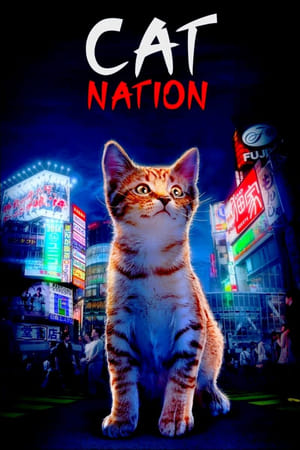
A journey into the unique, often bizarre, world of Japanese cat culture. Cat themed cafes, bars, temples, cat islands, cats with human jobs, cat friendly businesses, and the origins of the iconic beckoning cat statue.
The war in the South Pacific, a country doctor in Colorado, victims of industrial pollution in a Japanese village — all were captured in unforgettable photographs by the legendary W. Eugene Smith. This program showcases over 600 of Smith’s stunning photographs and includes a dramatic recreation in which actor Peter Riegert (Crossing Delancey, Local Hero) portrays the artist using dialogue take from Smith’s diaries and letters. Interwoven through the program are archival footage and interviews with family and friends of this brilliant, complicated man, whose work developed from twin themes of common humanity and social responsibility.
Documentary about the world of the Japanese geisha. Unattainable by all but the wealthy and powerful, geisha are the ultimate massagers of the male ego. Behind the delicate fan and enigmatic smile can also be found a darker side to the geisha story, including treachery and suicide.
Director Miho Niikura examines the modern practice of tee (Okinawan karate), and its attractiveness to Westerners—some of whom travel thousands of miles to study the venerable martial art in its birthplace, Okinawa.
Japan is a country of steep mountains surrounding wide flat plains where people have lived for thousands of years. On the largest plain lies the country's largest freshwater lake, Lake Biwa, which is not at all far from Japan's ancient, capital city of Kyoto. The slopes that stretch down towards the lake have been terraced. Here rice seedlings need shallow water in which to grow, and the neat, meticulously constructed paddy fields provide just this. Some of them have been cultivated continuously for thousands of years. Alongside them stand patches of woodland where, for centuries, the people have found their fuel and their food. This is a land that has been touched by people, yet the people tread lightly upon it. It's a land that has been ruled for centuries by the demands of the rice, yet it's still dominated by the rhythmic cycle of the seasons. Here is a landscape that the Japanese people hold so close to their hearts that they have a special word for it: Satoyama.
Ono plays video games and dreams of directing porn. As a young porn actor he was known as a “juice” man for his ability to produce photogenic amounts of seminal fluid on cue. That would be quite enough success for most young men, but like so many actors before him, Ono is earnest in his desire to direct. Tonight he will get chance on Japan’s notorious Paradise TV, an insane 24 hour-a-day sex channel on Tokyo television. Honeymoon is a documentary on life behind the scenes at Paradise TV, where the realms of capitalism, culture and commerce intertwine. Slovenian director Dražen Štader and his cameras are provided rare access to the inner workings and politics of this strange sex business.
In the 1980s, Michelangelo Antonioni traveled with his partner, actress and filmmaker Enrica Fico Antonioni, to Japan with the intent of creating a documentary, Un viaggio in Giappone, that would chronicle “the social transformations undergoing in Japan through the experimental use of new film technologies,” specifically the Betacam. Un po' di Giappone is the shortened version of the documentary.
A film about modern Japanese architecture, its roots in the Japanese tradition and its impact on the Nordic building-tradition. Winding its way through visions of the future, traditions, nature, concrete, gardens and high-tech, KOCHUU tells us how contemporary Japanese architects strive to unite the ways of modern man with the old philosophies in astounding constructions. Interviews with, and works by, Japanese architects Tadad Ando, Kisho Kurokawa, Toyo Ito and Kazuo Shinohara and Scandinavian architects Sverre Fehn, Kristian Gullichsen and Juhani Pallasmaa.