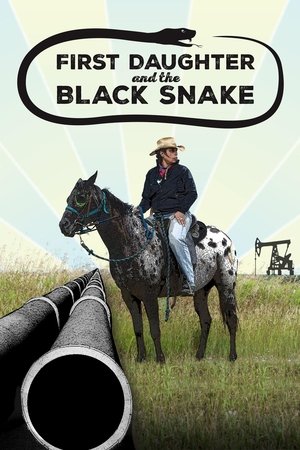
The “Prophecy of the 7th Fire” says a “black snake” will bring destruction to the earth. For Winona LaDuke, the “black snake” is oil trains and pipelines. When she learns that Canadian-owned Enbridge plans to route a new pipeline through her tribe’s 1855 Treaty land, she and her community spring into action to save the sacred wild rice lakes and preserve their traditional indigenous way of life. Launching an annual spiritual horse ride along the proposed pipeline route, speaking at community meetings and regulatory hearings. Winona testifies that the pipeline route follows one of historical and present-day trauma. The tribe participates in the pipeline permitting process, asserting their treaty rights to protect their natural resources. LaDuke joins with her tribe and others to demand that the pipelines’ impact on tribal people’s resources be considered in the permitting process.
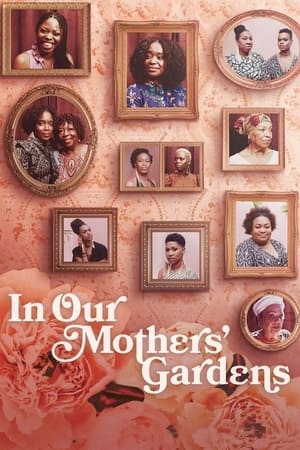
In Our Mothers' Gardens celebrates the strength and resiliency of Black women and Black families through the complex, and often times humorous, relationship between mothers and daughters.
Blind Light is filmed in the artist’s London loft. The presence of camera, studio and artist/performer are registered through image and sound, the loss of the former filling out the presence of the latter. In this way the physicality of object, space and subject as well as their inferiority is fleshed out, mapping out a space that is at once material and psychical. Controlling the light she allows into the frame, the artist lifts the blinds or pulls them shut, applies or removes lens filters, opens wide the aperture or closes it. Each performance or action threatens the image as it shifts in and out of ‘proper’ exposure until it disappears completely. Focusing either on the window or the sky, the artist narrates her camera operation whilst also describing what she sees; intermixing receptive and projective vision.
Magic Mirror combines a re-staging of the French Surrealist artist Claude Cahun’s black and white photographs with selected extracts from her book Aveux Non Avenus (Confessions Denied). In Surrealist kaleidoscopic fashion the film creates a weave between image and word, exploring the links between Cahun’s photographs and writing as well as between those of the films of Sarah Pucill, as both artists share similar iconography and concerns.
a documentary feature about street performers
The journey of 12 people who share the common bond of losing 100 pounds on average and then embarking on one of the biggest challenges of their lives - the 200 mile mega distance Ragnar Relay Race.
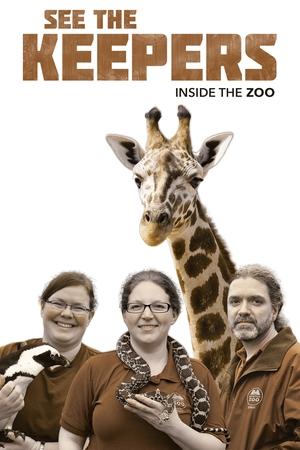
The Keepers is a documentary portrait of the personalities and work of zookeepers shot with unprecedented behind-the-scenes access at the Memphis Zoo. The film is a bittersweet, nonjudgmental look at what it means to find a place for yourself, working a job that you love.
Under the Rubble is the filmmakers’ harrowing attempt to tell the real story behind the 1982 Israeli invasion of Lebanon as it took place in Beirut—a traumatizing experience for the city and its people. This moving and informative documentary won the Special Jury Award at the Valencia Film Festival.
When Gina Kim turned twenty-two, she decided to leave her home in Korea and not return. Taking advantage of an opportunity to study abroad, she was anxious to escape her mother’s authority and avoid a similar fate as an overweight, underappreciated housewife. Traumatized by her decision, the filmmaker began to develop symptoms of anorexia and proceeded to document her mental decline and eventual recovery. Combining video performance art with an intimate home-movie diary, this self-documented coming-of-age story demonstrates how video technologies can be used to capture the most intimate, confessional voice of a filmmaker.
A character-driven heartfelt story of resilience and the impact of education. The film follows Angel, Moses and Nina from the slums of Kampala, Uganda through a world tour with the Grammy-nominated African Children's Choir; stunningly shot and told through Angel, Moses and Nina's perspectives on their one shot journey from poverty to education.
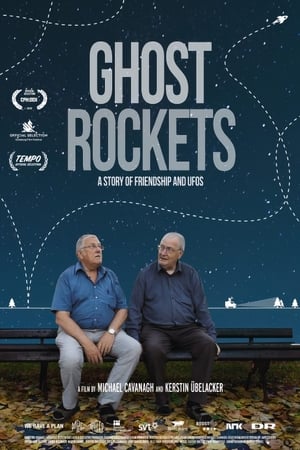
Ghost Rockets centers on human desire to explore and explain the unknown. The film weaves together an ambitious UFO investigation with a personal story that gives a rare insight into the hearts and minds of a UFO-investigator. Every year, the organization UFO‐Sweden receives numerous reports about inexplicable occurrences ‐ usually dismissed as having to do with the moon, airplanes, satellites or mental instability on the part of the witness. Sometimes, though, they get a report that they are unable to explain, one of them being the story of the ghost rocket.
Whatever Comes Next is a documentary about the curious and dynamic life of Annemarie Mahler-Ettinger. The film portrays the painter and scholar, Annemarie Mahler. Born in Vienna in 1926, Mahler fled by herself as a twelve-year child to the United States and has since 1955 has lived in Bloomington, IN, and in the summers in Woods Hole, MA. The documentary portrays the artist's outer and inner lives, which bridge two centuries and two continents.
Penthesilea, the first of six films made by Laura Mulvey and Peter Wollen, traverses thousands of years to look at the image of the Amazonian woman in myth. It asks, among other questions, is the Amazonian woman a rare strong female image or is she a figure derived from male phantasy? The film explores the complexities of such questions, but does not seek any concrete answers.
In the male dominated society of Iran, Farahnaz Shiri, the first female bus driver in Tehran, has made her own little society in her bus. In Iran there are different sections for men and women on public buses. Women should enter buses from the back door, which is separated from men’s entrance, and should sit or stay in a limited zone at the end of the buses which is separated from men’s zone. But in Mrs. Shiri’s bus everything is vice-versa. She is the governor and the only law maker of her own little society. In her bus, men must enter from the backdoor entrance and must sit or stay in the limited zone at the end of the bus. Mrs. Shiri is struggling to prove herself in this society and resisting a series of injustices that she faces as a woman in the Iranian society.
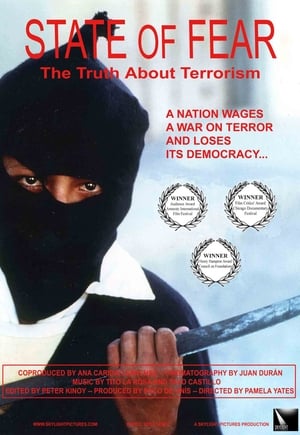
STATE OF FEAR takes place in Peru, yet serves as a cautionary tale for a world engaged in a "global war on terror." It dramatizes the human and societal costs a democracy faces when it embarks on a "war" against terror, a "war" potentially without end, all too easily exploited by unscrupulous leaders seeking personal political gain.
Maya Deren's Sink, a 30 minute experimental film, is an evocative tribute to the mother of avantgarde American film. The film calls forth the spirit of one who was larger than life as recounted by those who knew her. Teiji Ito's family, Carolee Schneemann and Judith Malvina, float through the homes recalling in tiny bits and pieces words of Deren's architectural and personal interior space. Clips from Maya Deren's films are projected back into the spaces where they were originally filmed appearing on the floorboard, furniture, and in the bowl of her former sink. Fluid light projections of intimate space provide an elusive agency for a filmmaker most of us will never know as film with its imaginary nature evokes a former time and space.
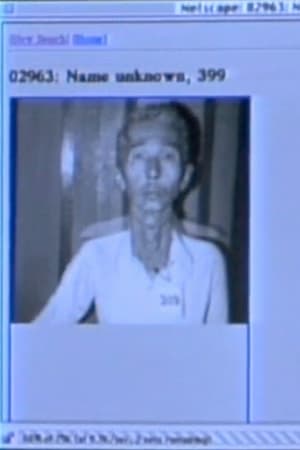
In okay bye-bye, so named for what Cambodian children shouted to the U.S. ambassador in 1975 as he took the last helicopter out of Phnom Phenh in advance of the Khmer Rouge, Rebecca Baron explores the relationship of history to memory. She questions whether, "image and memory can occupy the same space." Building on excerpts from letters, found super-8 footage of an unidentified Cambodian man, iconographic photographs from the Vietnam War and other partial images, Baron combines epistolary narrative, memoir, journalism, and official histories to question whether something as monumental as the genocidal slaughter of Cambodians during the Pol Pot regime can be examined effectively with traditional methodologies.
A glimpse into the world of the women who create and consume romance novels.
In the Netherlands, the final year of elementary school means turmoil for the pupils and their parents. There is no escape from the pressure on children to score as high as possible on tests to get into the best secondary schools. Parents who can afford it pay for as many private lessons as possible; other parents put pressure on the teachers. This documentary shows pupils and parents from very different backgrounds going through this process. They struggle anxiously for the same goal: the best possible start in life.
Three young people living in South Dakota's Pine Ridge Reservation are faced with difficult challenges.