EBS Docuprime - Perfect Baby
When 30 women aged 67 - 84 from across America and around the world descend on Fall River, Massachusetts to compete in the 30th anniversary Ms. Senior Sweetheart Pageant, hilarity and heartbreak ensue.
During the Pinochet dictatorship, Jorge Lübbert became an instrument for the Chilean secret services, who forced him to work for them in an extremely violent way. He was able to escape from Chile and became a war photographer based in Belgium. Today, his son Andrés takes him back to the places of his unfinished past.
A Documentary on the Making of 'Gore Vidal's Caligula'
This BAFTA nominated documentary tells the story of some of the brightest mathematical brains of a generation. Each year, exceptionally gifted teenagers from over 90 countries compete for medals at the International Mathematical Olympiad. The film follows a group of brilliant teenagers as they battle it out to become the chosen six selected to represent the UK.
Tells the stories of four students who are turning their lives around at the Ithuteng Trust School.
Irrepressible writer-comedian Carl Reiner, who shows no signs of slowing down at 94, tracks down celebrated nonagenarians, and a few others over 100, to show how the twilight years can truly be the happiest and most rewarding. Among those who share their insights into what it takes to be vital and productive in older age are Mel Brooks, Dick Van Dyke, Kirk Douglas, Norman Lear, Betty White and Tony Bennett.
Capturar (Las 1001 novias)
The world of fashion, between the end of the Sixties and the beginning of the Noughties, had a key character that embodied its spirit and told the tale: journalist Anna Piaggi, living witness of that contamination between art, society and culture that changed fashion and sanctioned its success on a global scale. The daughter of a manager for La Rinascente (Milan's iconic high-end shopping mall whose foundation goes back to 1865), Karl Lagerfeld's muse, "a poet with her clothes" in the words of Bill Cunningham, her life is retraced through interviews with designers (Jean-Charles de Castelbajac, Stephen Jones, Manolo Blahnik, and more) together with archival images from four decades of fashion history.
Born in 1918 in San Diego, Williams was a latchkey child from a broken home, raised by a mother more dedicated to the Salvation Army than to her two sons, and by a father who spent more time away from home than in it. Williams found salvation by doing the one thing he loved most: hitting baseballs. In his rookie season with the Red Sox, where he would spend his entire career as a player, Williams batted .327, socked 31 homers and led the league with 145 RBI. Over the next 21 years, despite losing five seasons of his prime to active service as a U.S. Marine Corps pilot, Williams hit 521 home runs, twice captured the Triple Crown, and became the oldest man ever to win a batting title. He finished his career with a .344 lifetime batting average, was the last man to hit over .400 in a full season, batting .406 in 1941, and was a first-ballot inductee into the Baseball Hall of Fame.
Lola lives in a public nursing home where everything is shared: the clothes, the showers, the only coffin and the endings. Her only personal belonging is the memory of her two great loves: her mother and husband. Thanks to them Lola has something to do every day, going to the main door’s window to check on her husband who lives across the street and to the phone, where she tries to call her mother. Both died long ago, but they are Lola’s only strength to reach her end in a world that, otherwise, is very impersonal for her.
A portrait of Highlights Magazine following the creation of the cultural phenomenon's 70th Anniversary issue, from the first editorial meeting to its arrival in homes, and introducing the quirky people who passionately produce the monthly publication for "the world's most important people,"...children. Along the way, a rich and tragic history is revealed, the state of childhood, technology, and education is explored, and the future of print media is questioned.
A film that evokes the period between the end of the First World War and the Great Depression of 1929. For some, it was the golden age of pleasure and the easy life, with memories of Charleston, short-haired tomboys, wild races in a Torpedo, and the dizzying banks of Deauville. For the rest of us, it was a time of illusions, when the carefree post-war era did little to conceal the profound upheavals that were shaking the world: the Soviet Revolution, the establishment of Fascism in Italy, German rearmament, a changing China, and finally the great economic depression of 1929, which took on the proportions of a global catastrophe.
A documentary that tells the history of Grêmio Football Porto-Alegrense from its foundation in 1903 to the triumph of the 1997 Copa do Brasil. In addition to providing the historical panorama of the achievements of the club, the documentary explores the relationship between club and supporter through testimonies of players, coaching staff, former presidents and fans.
Documentary short showcasing the genius of jazz greats Coleman Hawkins, Roy Eldridge, Cozy Cole, and Milt Hinton, among others.
After a quarter-century of political denial and social stigma, of stunning scientific breakthroughs, bitter policy battles and inadequate prevention campaigns, HIV/AIDS continues to spread rapidly throughout much of the world. Through interviews with AIDS researchers, world leaders, activists, and patients, FRONTLINE investigates the science, politics, and human cost of this fateful disease and asks: What are the lessons of the past, and what can be done to stop AIDS?
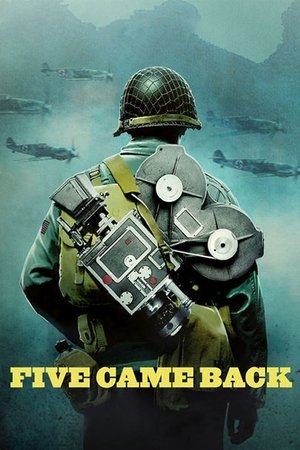
The extraordinary story of how Hollywood changed World War II – and how World War II changed Hollywood, through the interwoven experiences of five legendary filmmakers who went to war to serve their country and bring the truth to the American people: John Ford, William Wyler, John Huston, Frank Capra, and George Stevens. Based on Mark Harris’ best-selling book, “Five Came Back: A Story of Hollywood and the Second World War.”
Extranjeros de sí mismos
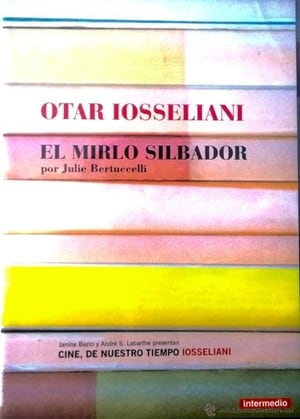
Georgian director Otar Iosseliani prepares his film Jardins en Automne. Nothing is conventional in the filmmaker's system: Julie Bertuccelli portrays the gestation and production of a film that seems to follow the freest and most unpredictable poetic intuitions of its creator. The constant and hilarious arguments with the producer, Martine Marignac, a Michel Piccoli transformed into an old woman, and the director's peculiar filming system, in which he signals his actors to start with a whistle, paint a picture of one of the most unclassifiable cinematic experiences in contemporary cinema.
The carnage in Sarajevo provides the focus of this French documentary which seeks to call attention to the terrible conflict in the hopes of finally ending it. The film is divided into five parts. Each part covers a time frame ranging from April 4, 1992, the beginning of the war, to the present. The major issues that occur are three-fold. It depicts the systematic genocide of Bosnians, the silence of Western countries, and the determination of the Bosnians to resist. They refuse to be seen as victims, even though the filmmakers portray them so. Also included are the origins and political aspects of the war. It offers interviews with participants. It also reveals how the U.S. State Department censored reports about Serbian death camps.