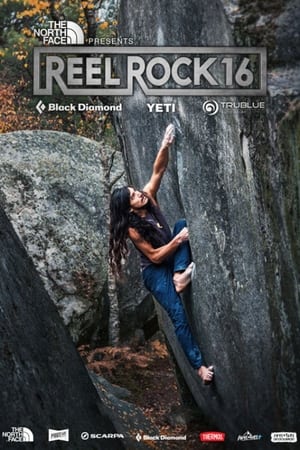
Capturing the greatest stories and sends from the year in climbing, the new films of Reel Rock 16 will deliver a joyful dose of inspiration, heart, and humor. The Reel Rock 16 lineup is our biggest release yet, with films starring Alex Honnold, Tommy Caldwell, Alex Johnson, Charles Albert, Pete Whittaker and Tom Randall. FEATURING FOUR WORLD-PREMIERE FILMS Bridge Boys A horizontal big-wall adventure on the longest, most ridiculous crack climb ever attempted. Featuring: Pete Whittaker, Tom Randall Big Things to Come An elite boulderer’s struggle with a project propels her on a decade-long journey of self-discovery. Featuring: Alex Johson Barefoot Charles Meet the opera-singing, cave-dwelling Frenchman who climbs futuristic boulder problems sans chaussons. Featuring: Charles Albert Cuddle A massive link-up of 17 alpine summits pushes a famed climbing duo to the brink - and into each others' arms. Featuring: Alex Honnold, Tommy Caldwell, Adam Stack
"Keepwild! Climbs - Klettern Ohne Spuren" is a documentary about rock climbing that takes place on Chli Bielenhorn and Cerro Murallon. It was directed by Jochen Schmoll in 2005 and produced by Drehxtrem. It features Robert Jasper, Jan Gürke and Stefan Glowacz.
"Everest Dreams" is a documentary about alpinism that takes place on Everest. It was directed by Michael Brown in 2000 and produced by NBC. It features Robert Link, Kim Gattone, Michael Brown, Dave Hahn, Greg Wilson, Mike Dunnahoo and others.
Remembering Gasherbrum I is a documentary about alpinism that takes place on Gasherbrum I - Hidden Peak. It was directed by Bob Swift in 2008.
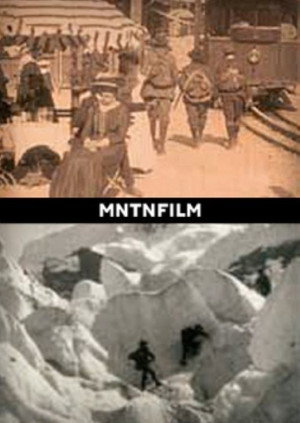
Alpine Series is a collection of scenes taken by Frank Ormiston-Smith in 1901 in the Alps. They were screened in different selections by the Warwich Trading Company. These scenes are, along with the scenes of a roped party in the Mer de Glace of the Lumière Brothers, the first alpine films in the history of cinema. The scenes include: Eagleswing Panorama of the Wetterhorn, Panorama of the snow peaks of the Jungfrau, Eagleswing panorama of the Mer de Glace, Crossing the Mer de Glace, Ascent of the Jungfrau, Ascending the Guggi Glacier, Climbing the Wetterhorn, Climbing the Jungfrau.
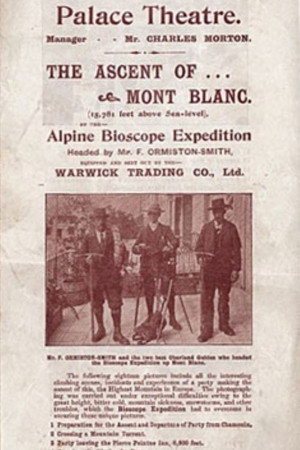
A pioneering mountaineering film made by Frank Ormiston-Smith for the Warwick Trading Company in 1902. Ormiston-Smith himself led and filmed an expedition of seven men up to the top of Mont Blanc. The party left Chamonix the 23rd of september up to Pierre-Pointue and Grands Mulets and reached the top the 25th. The film consists of 18 scenes including a final scene of the team on the summit. This is the first major mountain film shown widely in cinemas. The mountaineering filming is rudimentary by later standards, but in 1902 it gave audiences moving pictures of places, and altitudes, which they could never expect to witness otherwise.
The ascent of the Jungfrau by the Urban Alpine Expedition, headed by Frank Ormiston-Smith, the pioneer mountaineering photograher and filmmaker, on september 24th, 1903. The film consists of 15 scenes and illustrates the whole ascent from Grindelwald through the Fieschier Glacier and the Rothal Sattel and culminates with a panorama from the summit. It was produced by the Charles Urban Trading Co., one year after the huge success of 'The ascent of Mont Blanc'. Charles Urban left the Warwick Trading Company in 1903 to form his own film business, and took with him many of the film-makers who had worked for Warwick, including Ormiston-Smith, who went on to make many more mountaineering films.
Following the successful ascent of Mont Blanc, the Warwick Trading Company expedition led by Frank Ormiston-Smith went on to film the ascent of the Great Schreckhorn accompanied by three guides and porters. Screened in different selections of scenes, the film was presented as ‘the most perilous rock climbing that is within the power of man’. The film also included scenes of the ascent and descent of the Aiguilles des Grandes Charmoz. ‘The ascent of Mont Blanc’ and ‘Climbing the Great Shcreckhorn’ are the two first major mountain films shown widely in cinemas.
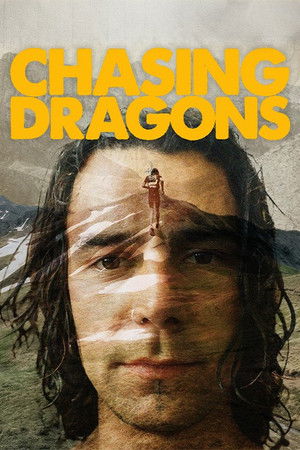
In 2023, Theodoros Ziakas and a group of friends created the “Dragon Trail,” a unique route through the mountains and rivers of Epirus—one of Europe’s last unspoiled landscapes. But in this region, the ecosystem and its vital lifelines face imminent risk of destruction. The film follows Akis Ziakas, a long-distance athlete who lives and trains in this enchanting setting. Drawing on his ultramarathon experience, Akis sets out to establish a new mountaineering trail connecting the three famous dragon lakes. The route pushes him to his physical and psychological limits, as he battles his inner demons while striving to complete the journey—one that unfolds amid breathtaking natural beauty, forging a profound connection between man and nature.
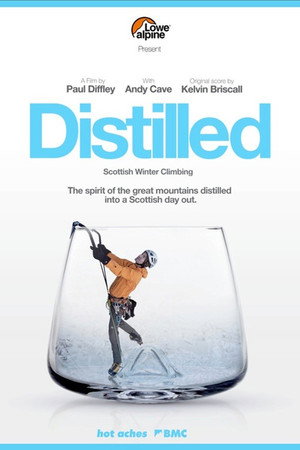
Scotland in winter is an arena where mountaineers pit their skills against exacting climbs often in ferocious conditions. It is respected by climbers around the world. Distilled examines what makes the climbing here so potent. Andy Cave first climbed in Scotland as a teenager. This was the start of a lifelong journey for Andy, which took him from the depths of a Yorkshire coal mine to the peaks of the Himalayas. As the story unfolds we see dramatic footage of Andy climbing some of Scotland’s classic and most challenging winter routes in the full spectrum of conditions that Scotland’s mountains can conjure. Distilled is a celebration of Scottish winter climbing and a poignant profile of a life spent in the mountains.
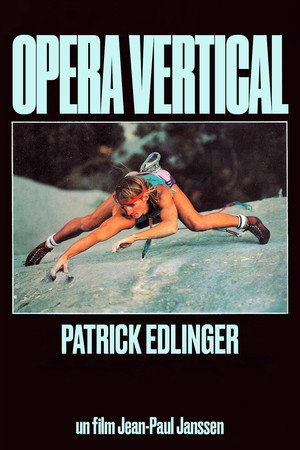
Vertical Opera is a documentary film directed by Jean-Paul Janssen, with climbers Patrick Edlinger and Jean-Paul Lemercier in the Gorges du Verdon. The film opens with a training sequence of Patrick Edlinger then he links the routes with Jean-Paul Lemercier "L'Ange en décongelation" (7a), in which he falls voluntarily to demonstrate the usefulness of the rope, then "Le Septième Saut" (7b+). Finally, the final scene, an anthology, consists of a close-up of Edlinger who climbs free solo and barefoot the route "Débiloff", still in the Verdon, above hundreds of meters of void, all to lyrical music. It is "Wie Furchtsam Wankten Meine Schritte", the aria for alto voice from Johann Sebastian Bach's cantata BWV 33, music not unrelated to the subject of the documentary: "How faltering and fearful my steps were".
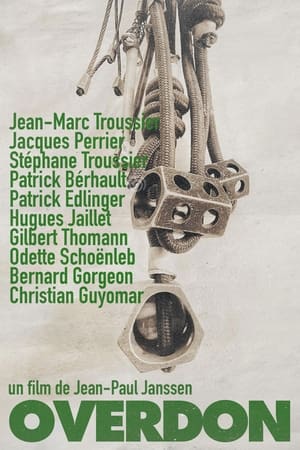
First film in a series of three with Over-Ice and Oversand and one of the first films on free climbing shot in the cliffs of the Gorges du Verdon in several parishes. We meet a certain Patrick Edlinger, Patrick Bérhault, but also Jean-Marc Troussier, Jacques Perrier, Stéphane Troussier, Hugues Jaillet, Gilbert Thomann, Odette Schoënleb, Bernard Gorgeon, Christian Guyomar. Thanks to the program Les Carnets de l'aventure, then broadcast on Antenne 2, and its producer Pierre-François Degeorges, this film was made. The chain gave its production agreement during the day, while the climbing was very confidential, no one knew Patrick Edlinger and the project itself contained only a few lines on a sheet
Stelvio: Crossroads of Peace
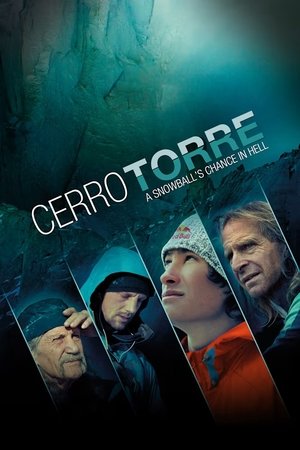
Movie about David Lama climbing the Patagonian mountain Cerro Torre for the first time free, a mountain that has been dubbed the most difficult to climb in the world.
Two warriors in pursuit of a stolen sword and a notorious fugitive are led to an impetuous, physically-skilled, teenage nobleman's daughter, who is at a crossroads in her life.
The Athos peninsula in Greece is one of Europe's last secrets. Over 2000 monks live on Athos - cut off from the outside world. Access is denied to women, tourists are not welcome. Only workers and pilgrims can obtain a visa. The "Autonomous Monastic State of the Holy Mountain" attracts people who feel like they are missing something from their modern lives. With the help of three Athos monks, "Athos - A Taste of Heaven" tells the story of the island and its inhabitants in a unique filmed diary style. The film's guiding theme is the path we as people have to find and follow - each and everyone for themselves. "First we must heal our own souls, only then we can help others", is one of Father Galaktions core messages. He lives as a hermit on the holy mountain. Not all monks, however, live as secluded and demure as Father Galaktion. The film team is also received by Father Epiphanios - a gifted and poetic cook who certainly does not disdain the pleasures of life.
Im Land des Schamanen
On the Thessalian plateau, a place famous in ancient Greek history, enormous and steep rocks rise, almost representing an epic clash of giants. In this mystical environment, Meteora once served as an aerial refuge for hermits and then for nuns of strict orders, who, renouncing the world, lived in the celestial peace of the peaks. This area is today a silent and fantastical climbing site, and some caves carved into the rock face remain inaccessible. Mountaineer Patrick Berhault and his French partner Patrick Cordier, one of the classic leaders of modern climbing, have set out to conquer these peaks steeped in history, which will never cease to be "The Pillars of Dreams."
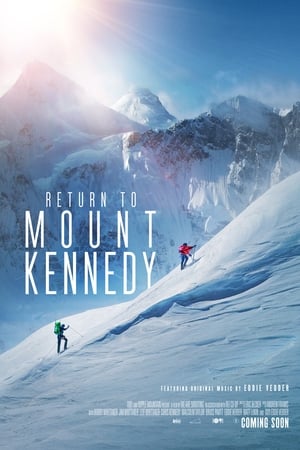
In 1965, Robert Kennedy was the first man to summit Mount Kennedy in the Yukon Territory, named in honor of his late brother. Leading that expedition was Jim Whitaker, the first American to summit Everest and original fulltime employee of REI. 50 years later, Jim’s sons Bob and Leif, along with Christopher Kennedy, decide to climb the mountain again in honor of their fathers’ joint accomplishment and unique friendship. Seattle-based filmmaker Eric Becker’s touching documentary combines archival footage—including several Kennedy home movies—with interviews from Jim himself and those who them best as we follow three sons and the journey literally in their fathers’ footsteps. Eddie Vedder, a personal friend of Bob’s, writes original music for film that tailor shots of the expansive mountain ranges together in this wholesome story.
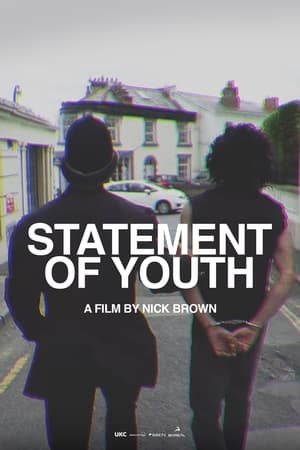
At the start of the 80’s sport climbing was in its embryonic stages. Bolted routes were beginning to make a regular appearance, indoor climbing walls as we know them nowadays had not yet been invented and there was no such thing as being a pro athlete. During that period standards rose exponentially, from 7b+ as the cutting edge to 9a becoming the new world standard at the end of the ’80’s. In such a short period the sport changed beyond recognition and, in Britain, was fuelled by a small group of climbers who would do anything to climb full-time: sleeping in sheds underneath crags, shoplifting for food and clothes, and living off unemployment benefits. As illustrated in this film directed by Nick Brown, these climbers were living outside the rest of society and went on to become the most influential figures in the history of British sport climbing.