Thanks to a remarkable discovery in the BBC's film vaults, the best of David Attenborough's early Zoo Quest adventures can now be seen as never before - in colour - and with it the remarkable story of how this pioneering television series was made. First broadcast in December 1954, Zoo Quest was one of the most popular television series of its time and launched the career of the young David Attenborough as a wildlife presenter. Zoo Quest completely changed how viewers saw the world - revealing wildlife and tribal communities that had never been filmed or even seen before. Broadcast 10 years before colour television was seen in the UK, Zoo Quest was thought to have been filmed in black and white, until now. Using this extraordinary new-found colour film, together with new behind-the-scenes stories from David Attenborough and cameraman Charles Lagus, this special showcases the very best of Zoo Quest to West Africa, Zoo Quest to Guiana and Zoo Quest for a Dragon in stunning HD colour.
Earth teems with a staggering variety of animals, including 9,000 kinds of birds, 28,000 types of fish, and more than 350,000 species of beetles. What explains this explosion of living creatures—1.4 million different species discovered so far, with perhaps another 50 million to go? The source of life's endless forms was a profound mystery until Charles Darwin brought forth his revolutionary idea of natural selection. But Darwin's radical insights raised as many questions as they answered. What actually drives evolution and turns one species into another? To what degree do different animals rely on the same genetic toolkit? And how did we evolve?
A documentary that explores the natural world of the sea, from the single-celled organism to more complex forms of life, OCEAN ORIGINS was originally filmed in the IMAX large format, which adds a crispness and clarity to the images. This documentary film seeks to examine the process of evolution by looking at the many creatures of the sea that can illustrate the way multi-cellular life emerged over the course of four billion years. OCEAN ORIGINS is a creative film that uses fascinating documentary footage to look at scientific theories and principles in an interesting manner
Journeying from the Pyrenees to the Alps, all around the mainland to Corsica, this is the story of the 'wild side' of France.
In this DVD, Mr. Riddle shares the results of his much reading and research in the area of Carbon 14 dating, and explains the importance of Carbon 12 in conjunction with C-14. He explains in simple terms the molecular breakdown process. He also discusses other dating methods and the underlying assumptions the methods are based on, the correctness of which are brought into question. Mike is an interesting and dynamic speaker. His visual aids are excellent. Mike Riddle has degrees in mathematics and education. He's a former Marine, national decathlon champion, former technical specialist and manager for Microsoft, and teacher at ICR's graduate school.
A breathtaking adventure across five continents and through time to reveal nature's most vital secret. Watch a flying fox gorge itself on a midnight snack of figs. Climb into the prickly jaws of insect-eating plants. Witness a mantis disguised as a flower petal lure its prey to doom.
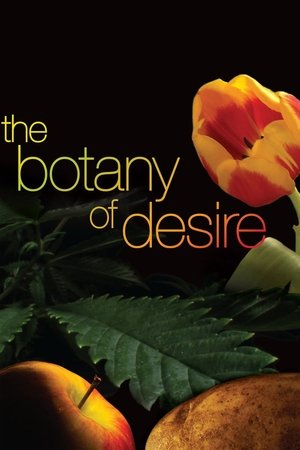
Featuring Michael Pollan and based on his best-selling book, this special takes viewers on an exploration of the human relationship with the plant world — seen from the plants' point of view. Narrated by Frances McDormand, the program shows how four familiar species — the apple, the tulip, marijuana and the potato — evolved to satisfy our yearnings for sweetness, beauty, intoxication.
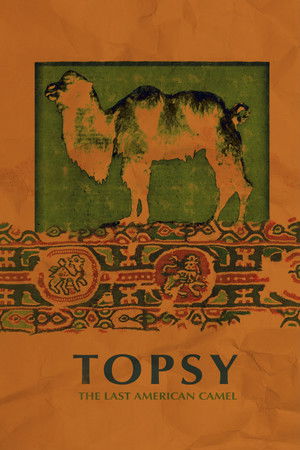
The extraordinary and storied life of Topsy, a bactrian camel, whose career spanned the military, the mines, the movies and more.
The story of Nisar Ahmed Khan, told through his children and the people he served, a spiritual guide whose followers still visit his tomb on his birth and death anniversaries. And alongside how his family spends a few days at the village keeping his traditions alive.
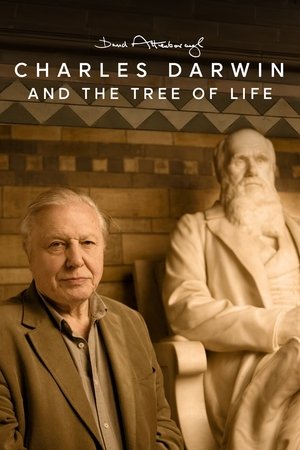
Darwin's great insight – that life has evolved over millions of years by natural selection – has been the cornerstone of all David Attenborough’s natural history series. In this documentary, he takes us on a deeply personal journey which reflects his own life and the way he came to understand Darwin’s theory.
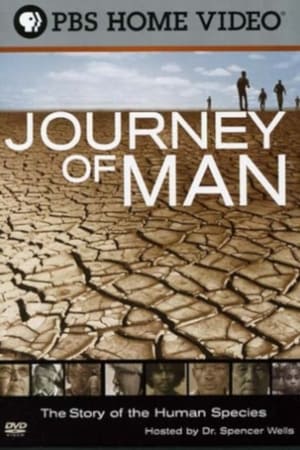
Many geneticists and archaeologists have long surmised that human life began in Africa. Dr. Spencer Wells, one of a group of scientists studying the origin of human life, offers evidence and theories to support such a thesis in this PBS special. He claims that Africa was populated by only a few thousand people that some deserted their homeland in a conquest that has resulted in global domination.
An African narrator tells the story of earth history, the birth of the universe and evolution of life. Beautiful imagery makes this movie documentary complete.
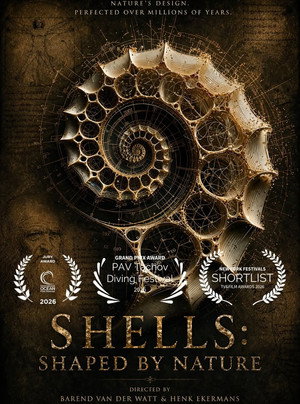
Since the dawn of time, Nature has sculpted the oceans with her delicate hand, weaving the tapestry of life in the shimmering depths and sunlit shallows. With infinite care, she conjured snails and mollusks to inhabit diverse marine realms around the African continent, each a reflection of her boundless creativity and wisdom. These delicate spirals, with their tender curves, ensnare our imagination, inspiring art, shaping cultures, adorning garments, and even serving as currency in ancient economies. "Shells: Shaped by Nature" is an artistic tribute to the enigmatic splendor of shells, celebrating these intricate marvels that grace Africa’s marine realms.
How did your body become the complicated, quirky, amazing machine it is today? Anatomist Neil Shubin uncovers the answers in this 3-part science series that looks at human evolution. Using fossils, embryos and genes, he reveals how our bodies are the legacy of ancient fish, reptiles and primates — the ancestors you never knew were in your family tree.
Documentary telling the little-known story of how Darwin came to write his great masterpiece, On the Origin of Species, a book which explains the wonderful variety of the natural world as emerging out of death and the struggle of life. In the twenty years he took to develop a brilliant idea into a revolutionary book, Darwin went through a personal struggle every bit as turbulent as that of the natural world he observed. Fortunately, he left us an extraordinary record of his brilliant insights, observations of nature, and touching expressions of love and affection for those around him. He also wrote frank accounts of family tragedies, physical illnesses and moments of self-doubt, as he laboured towards publication of the book that would change the way we see the world. The story is told with the benefit of Darwin's secret notes and correspondence, enhanced by natural history filming, powerful imagery from the time and contributions from leading contemporary biographers and scientists.
A dinosaur-obsessed teen and his filmmaker father travel the world interviewing paleontologists about the latest discoveries, tracking down the crew of Jurassic Park, digging up 150-million-year-old bones, and meeting dino fanatics of all walks of life.
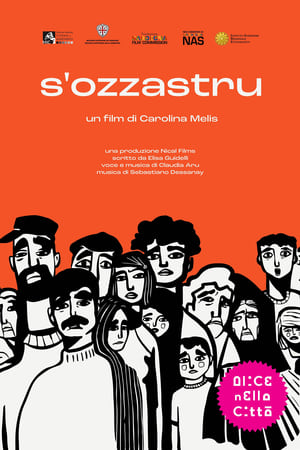
This is the story of a thousand-year-old tree, resilient ambassador of Nature and silent witness of History. The lives of men and women slip under its fronds, often unaware of how much their existence depends on its presence. This is the story of s'ozzastru and of the generous and solid land that welcomed it. In 2021 in Sardinia, a thousand-year-old wild olive tree burned. This fire devasted 70.000 acres of land and houses. Thousands of animals died, suffocated or burned alive.A year later, the tree sprouted again, becoming a symbol of resilience. Every year, around the world, 7 millions of acres of land are destroyed in over 60.000 fires, almost all caused by human hand.
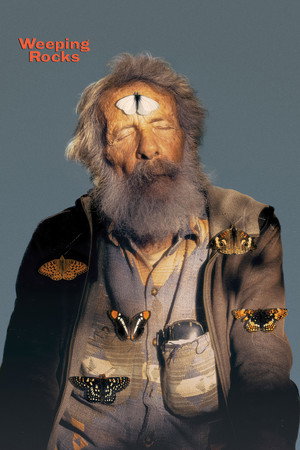
Weeping Rocks follows Art, an entomologist nearing the end of his life, who has spent over five decades walking the same ten trails counting butterflies. His eccentric practice has uncovered patterns of environmental decline that went unnoticed for years. As time reshapes the landscape and species fade, Art’s journey becomes a meditation on mortality, change, and the beauty of what remains.
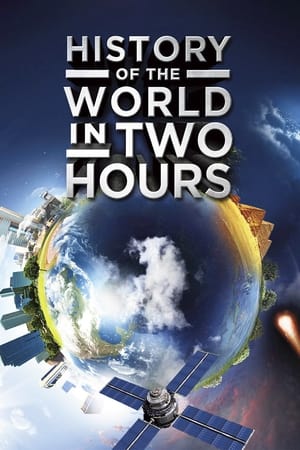
Did you know that 1% of the white noise you see on old televisions is background radiation from The Big Bang? That the gold on a wedding ring comes from a star that exploded 5 billion years ago? And, that we're connected to the salt water of the first oceans through the water in our bodies? Our human story is actually 14 billion years old and the clues are all around us. This CGI-driven special will tell the history of our world in two hours, an ambitious story that will give surprising connections to our daily lives. From the formation of the earth and the emergence of life, to the advance of man and the growth of civilization, it’s a rapid-fire view of our unforgettable story.
After falling in love with a boulder, two glyptodons brawl over their shared romantic interest.