A documentary about the corrupt health care system in The United States whose main goal is to make profit even if it means losing people’s lives. "The more people you deny health insurance, the more money we make" is the business model for health care providers in America.
The story of the evolution of a boy from Nebraska who became one of the most respected men in the world, and the heroes who helped guide him along the way. By allowing access to his life and never-before-released home videos, Buffett offers a glimpse into his unique mind to help us understand what is truly important when money no longer has meaning.
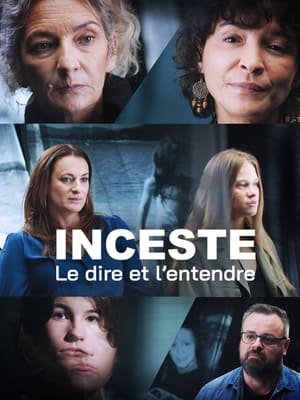
Through this documentary, Emmanuelle Béart aims to uncover the truth about incest. The actress, accompanied by director Anastasia Mikova, breaks her silence and confronts her reality with that of others, shedding light on a taboo subject.
FINDING THE MONEY follows economist Stephanie Kelton on a journey through Modern Money Theory or “MMT”. Kelton provocatively asserts the National Debt Clock that ticks ominously upwards in New York City is not actually a debt for us taxpayers at all, nor a burden for our grandchildren to pay back. Instead, Kelton describes the national debt as simply a historical record of the number of dollars created by the US federal government currently being held in pockets, as assets, by the rest of us. MMT bursts into the media with journalists asking, “Have we been thinking about how the government spends money, all wrong?” But top economists from across the political spectrum condemn the theory as “voodoo economics”, “crazy” and “a crackpot theory”. FINDING THE MONEY traces the conflict all the way back to the story we tell about money, injecting new hope and empowering countries around the world to tackle the biggest challenges of the 21st century: from climate change to inequality.
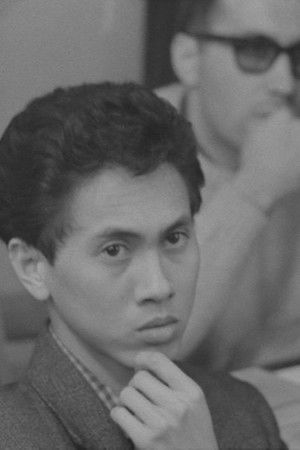
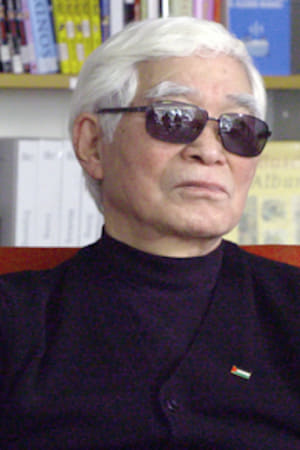
Masao Adachi, the author and director of experimental works and pinku-eiga in the 1960s, was a member of the Japanese New Left that shifted from being a filmmaker to a guerrilla fighter. In 1974, he joined the Japanese Red Army in Lebanon, which worked closely with the Popular Front for the Liberation of Palestine. Filmmaker Lutz Dammbeck met Adachi in Tokyo in 2018 and talked with him about a wide range of topics, including art, revolution, the influence of western avant-garde art and American underground; the Japanese Red Army; collaboration with secret services; the role of the Left after 1968; and the reasons for failures of leftist ideas and strategies.
Paul Grignon's 47-minute animated presentation of "Money as Debt" tells in very simple and effective graphic terms what money is and how it is being created
In his new film, Erwin Wagenhofer is looking for the good and beautiful in this world.
Michael Moore comes home to the issue he's been examining throughout his career: the disastrous impact of corporate dominance on the everyday lives of Americans (and by default, the rest of the world).
The story of America's rise to power starting with 1959, using archival footage and US pop music to highlight the consequences to the rest of the world and in the peoples' minds.
Cash, securities and debt are based on the fact that everyone honors their obligations and gets into debt. Can we free ourselves when money becomes a shackle? Do we serve money or does it serve us?
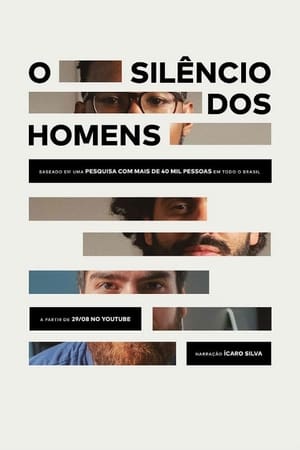
This film is part of a project that has listened to over 40,000 people on masculinity issues and has resulted in a documentary and a tool book based on this publicly available study through an agreement with the Social Information Consortium (CIS) of the University of São Paulo.
At 16, Max left with dreams and a GoPro slung over his shoulder for an exchange program at a high school in Oklahoma. Since then, Donald Trump has become president, the Capitol has been stormed, and abortion bans have gained ground. On the eve of Trump’s second term, Max goes back to see his friends to understand what their journeys reveal about the evolution of American society
From Belgium, Jialai Wang maintains contact via smartphone and camera with her mother and grandmother in China. When her grandmother’s health deteriorates, Jialai returns to Shanghai, but when she arrives, her grandmother has already died, and she is left alone with her mother. A devout Buddhist, her mother seems to pay more attention to her daily prayers, Maoist past and dog Dongdong than she does to her daughter. She herself had been abandoned as a child by her own mother, when she divorced Jialai’s grandfather and moved to the city.
A documentary about the development and spread of the virtual currency called Bitcoin.
Social democracy propaganda film about future dreams for Denmark in 1960. Although Denmark is free again, the former opponent and worker, Svend, is disillusioned: "It is all something soft". The dream of the future is incarnated by a young woman, Karen, who shows Svend the visions of a better life in the 'youth's land'. There are homes and a nuclear-powered car for everyone.
What does it mean to be Black in America in the 21st century? The recently formed Black American film group TNEG™ has set out to elucidate this very question. Hearing from the likes of fine artist Kara Walker and musical artist Flying Lotus, the film is based on a deceptively simple approach -- asking a refined list of black 'specialists' as well as 'uncommon folks' questions about what they think, and more importantly as lead director Arthur Jafa states, 'What they KNOW' -- the film is an unprecedented 'stream of the black consciousness' and a strikingly original and rarefied look at black intellectual and emotional life. What's so unorthodox about this simple approach is that the interviews were recorded separately from the images in the film. What results is a breathtaking, kaleidoscopic look of American black life from the dawn of three original filmmakers.
Un été à la ferme - L'âge d'or
The film explores the potential for automation in every sector of employment and questions the integrity of our methods of resource distribution going into the future.
Since the enactment of the Anti-Boryokudan Act and Yakuza exclusion ordinances, the number of Yakuza members reduced to less than 60,000. In the past 3 years, about 20,000 members have left from Yakuza organizations. However, just numbers can’t tell you the reality. What are they thinking, how are they living now? The camera zooms in on the Yakuza world. Are there basic human rights for them?
A young man, convicted murderer, has a chance of redemption when he enters the best Italian university of economics, going back and forth from prison to university every day.