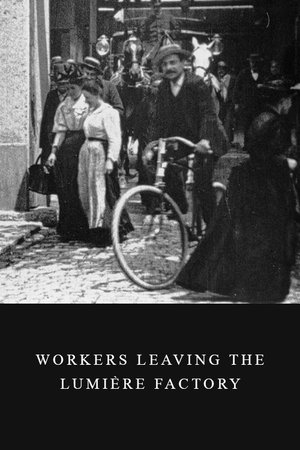
Working men and women leave through the main gate of the Lumière factory in Lyon, France. Filmed on 22 March 1895, it is often referred to as the first real motion picture ever made, although Louis Le Prince's 1888 Roundhay Garden Scene pre-dated it by seven years. Three separate versions of this film exist, which differ from one another in numerous ways. The first version features a carriage drawn by one horse, while in the second version the carriage is drawn by two horses, and there is no carriage at all in the third version. The clothing style is also different between the three versions, demonstrating the different seasons in which each was filmed. This film was made in the 35 mm format with an aspect ratio of 1.33:1, and at a speed of 16 frames per second. At that rate, the 17 meters of film length provided a duration of 46 seconds, holding a total of 800 frames.
Women from Turkey and Mecklenburg are working together side-by-side at a fish-processing factory in Lübeck. As they work, they share stories about their lives, including their sorrows, griefs, hopes, and dreams, while expressing their longing for home and feelings of being lost in a foreign place.
How did the USSR - a country considered a second-rate industrial power, economically inferior to Germany, the USA and the UK - shape its victory over the armies of Hitler's regime, and secure its place among the winners?
Documentary following some stoner friends over the course of roughly a day. Featured here is Bill, a guy who got kicked out of the Marines for doing dope steadily for six years (I'm not gonna do it forever--or maybe I will, who knows?) and Barry, a forklift-driving doper who wins the Employee of the Month plaque while stoned (Live for yourself--live today and then worry about tomorrow when it gets here--that's the way I go).
The story of the factory worker Pietro Perotti, who worked at Fiat Mirafiori from 1969 to 1985 and participated in the workers’ protests by overseeing communications inside the factory, making stickers, wall posters, texts and drawings in the bathrooms, figures out of papier-mâché and foam rubber, and turning the protest marches into “street theatre.” With his movie camera, Perotti immortalized the situations and workers’ protests at Mirafiori until 1974. Thanks to this unpublished material, the movie paints a fresco of factory life in what used to be Europe’s biggest metalworking factory.
Film from Andrew Morgan. The True Cost is a documentary film exploring the impact of fashion on people and the planet.
A detailed look at the gradual decline of Shenyang’s industrial Tiexi district, an area that was once a vibrant example of China’s socialist economy. But industry is changing, and the factories of Tiexi are closing. Director Wang Bing introduces us to some of the workers affected by the closures, and to their families.
A cinema verite study of the world of the blue-collar worker and the economic and psychological bind in which he is caught.
The drastic economic development in South Korea once surprised the rest of the world. However, behind of it was an oppression the marginalized female laborers had to endure. The film invites us to the lives of the working class women engaged in the textile industry of the 1960s, all the way through the stories of flight attendants, cashiers, and non-regular workers of today. As we encounter the vista of female factory workers in Cambodia that poignantly resembles the labor history of Korea, the form of labor changes its appearance but the essence of the bread-and-butter question remains still.
In post-industrial Ohio, a Chinese billionaire opens a new factory in the husk of an abandoned General Motors plant, hiring two thousand blue-collar Americans. Early days of hope and optimism give way to setbacks as high-tech China clashes with working-class America.
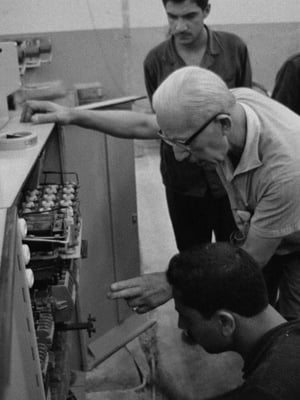
The film is a reportage showing the help of workers from the GDR in the industrial reconstruction of Syria. We witness the friendly relationship between workers from both countries, who are jointly involved in the construction of the cotton spinning mill in Homs. In impressive pictures the exoticism of the environment and the mentality of the Syrian hosts is shown. At the same time it becomes clear that the workers from the GDR become 'ambassadors of the GDR' through their collegial behaviour and good work.
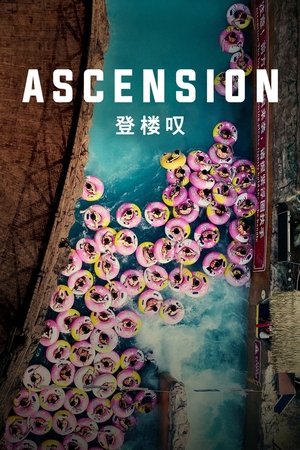
The film explores the pursuit of the “Chinese Dream.” Driven by mesmerizing—and sometimes humorous—imagery, this observational documentary presents a contemporary vision of China that prioritizes productivity and innovation above all.
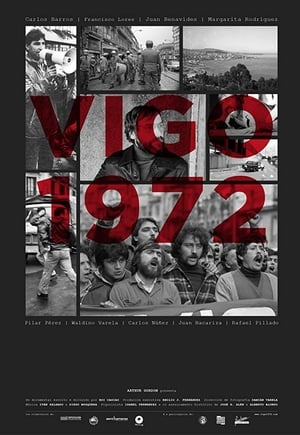
‘VIGO 1972’ narrates the events which took place in Vigo in September 1972, when the firing of five Citröen auto workers resulted in the largest general strike in the history of Galicia — with over thirty thousand workers — all of this during the Franco dictatorship in Spain.
7 mill. HK – en film om Burmeister & Wain
Outsourcing Greenville is the story of what happened when the world's largest refrigerator plant outsourced to Mexico leaving 1/4th of Greenville, Michigan residents unemployed. The factory had been a fixture of the Greenville community for over 100 years until Electrolux uprooted the plant in March of 2006 to move production to Mexico where they could pay workers wages as low as $1.57/hour. This story is told through the voices of employees and the president of their union as they attempt to face the future in a season of difficulty and change.
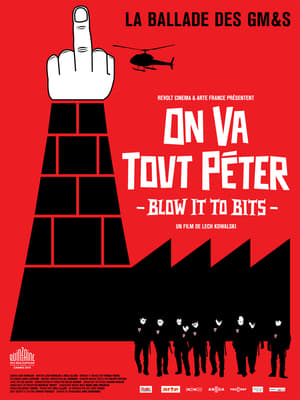
A mix of Rock and Roll and Blues are the secret for successful rebellion. When I took my camera to the middle of France where the GM&S factory was threatened by a permanent shut down, I felt like something extraordinary was about to take place. And it did. The lyrics were written by workers who have had enough! The tune was composed by people not afraid to go against even the rules of revolt! The volume was loud enough to attract the media. Their working-class concert spread across France like wild fire. I sat out of sight, camera in hand, filming like catching fish in a barrel.
Colorless Odorless follows the work records and archival materials of victims of semiconductor biohazards, tracing the smells and effects of substances that cameras cannot capture. Testimonies of the past overlap with current symptoms, and the disaster repeats itself in other bodies and places.
In the heyday of the jute industry, millions of people in Bengal made their living doing this laborious work, which has hardly changed since the industrial revolution. The 100-year-old machinery has been endlessly repaired. State aid kept this sustainable alternative to plastic going, but its future looks bleak.
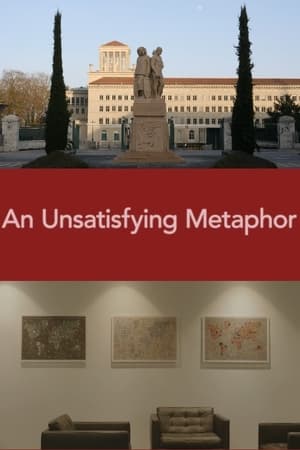
Documentary about the history of 20th century globalization through the lens of the World Trade Organization's changing art collection; from works of human subjects showcasing the potential of dignified labor, to their replacement with abstract maps and grids for the valorization of the modern trade system.
A look at a family living in Stoke-on-Trent in the 1940's and what it's like working in the pottery factories that Stoke is famous for.