In late 18th-century Italy, in the mansion of Don Magnifico, the young and pretty Angelina works as a maid. Teased by her two frivolous half-sisters, Clorinda and Tisby, Angelina believes she is in love with a young valet and goes to the ball. Dressed in her finest finery, she meets the man who is in fact the Prince and flees from him after giving him a bracelet that will allow him to recognise her a little later. The masks come off, and kindness and love triumph! ‘La Cenerentola’ is the last opera buffa composed by Gioachino Rossini for an Italian audience. A dramma giocoso in two acts, with a libretto by Jacopo Ferretti, freely adapted from Charles Perrault’s fairy tale ‘Cinderella’ (1697), omitting the magic in favour of a realism tinged with humour and social criticism. Premiered for the Rome Carnival at the Teatro Valle in Rome on 28 January 1817. Recorded live at Glyndebourne Opera, Lewes, East Sussex, on 2 and 4 June 2005.
The writer Dario Fo applies his inventive genius to Rossini's comic opera in its premiere DVD release. Recorded in 2005 under the musical direction of Maurizio Barbacini, Fo's production brings fresh vitality and colour to the story of Lisetta, and of her father Don Pomponio's increasingly ridiculous attempts to find a husband for her through an advertisement in the newspaper LA GAZZETTA. Filmed using high definition cameras with multitrack sound.
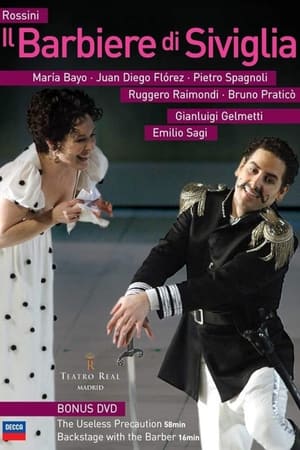
Stage director Emilio Sagi's production of the legendary Barber of Seville is enriched by a bright distribution. Maria Bayo returns to one of her signature role as Rosina, opposite Juan Diego Florez, the Rossini expert tenor. The title role is embodied by the Italian baritone Pietro Spagnoli, while Ruggero Raimondi and Bruno Pratico reconcile the audience with Don Basilio and Don Bartolo.
The Met’s spectacular production of Verdi’s Egyptian epic captures both the grandeur and the intimacy of this powerful tale of love and politics. Liudmyla Monastyrska is Aida, the Ethiopian princess-turned-slave in love with the Egyptian warrior Radamès, sung by Roberto Alagna. Olga Borodina is her rival, Amneris, daughter of the Pharao, and George Gagnidze sings Aida’s father, Amonasro, the King of Ethiopia. Principal Conductor Fabio Luisi is on the podium.
Richard Strauss's opera, from the Royal Opera House, Covent Garden.
Live performance at the Metropolitan Opera in 2000.
Robert Lepage’s dreamlike production, with its thousands of twinkling LED lights stretching across the stage to represent the sea, encapsulates the mystic feeling of L’Amour de Loin, Saariaho’s haunting opera of distant love. Eric Owens is Jaufré Rudel, a troubadour in 12th century France who has become tired of his hedonistic life and longs for an idealized love. Enter the Pilgrim (Tamara Mumford) who tells him his perfect love does, in fact, exist, far across the sea. She is Clémence, Countess of Tripoli (Susanna Phillips). The magic of the characters’ inner lives as they explore the meaning of love, longing, life, and death is heightened by Saariaho’s hypnotic and bewitching score, conducted by Susanna Mälkki.
Jean-Marie Villegier's modern interpretation of Handel's "Rodelinda" – filmed live at the world-renowned Glyndebourne Opera House in the United Kingdom, sets the timeless tale of jealousy and treachery in the black-and-white world of the silent-movie era. Soprano Anna Caterina Antonacci sings the title role of Rodelinda, with tenor Kurt Streit and bass Umberto Chiummo performing the parts of Grimoaldo and Garibaldo, respectively.
A masterpiece of bel canto at the Teatro Real in Madrid: conductor José Miguel Pérez-Sierra and director David McVicar take on Donizetti’s Maria Stuarda, with Lisette Oropesa in the title role.
The complete version of Verdi's Otello performed by Placido Domingo and Kiri Te Kanawa, at the Royal Opera House, Covent Garden. Gala Performance in honour of Sir Georg Solti's 80th birthday.. 27 October 1992. BBC 2 Television live relay.
This is a joy from beginning to end. Although there are many tricks and ideas from Laurent Pelly, as always he seems to still retain the Offenbach magic. La Lott and Monsieur Beuron are a joy, but so is everyone else. The Patriotic Trio by the sea is both a hoot and wonderfully sung, the score seems truly complete yet never flags and the finale sequences for especially acts 1 & 2 are a joy of movement and sound fused as one glorious Offenbachian moment.
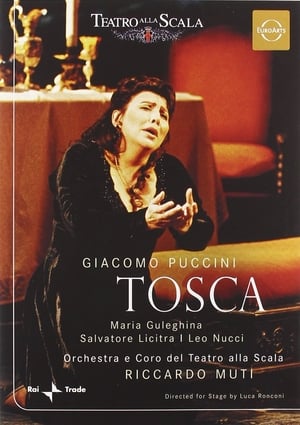
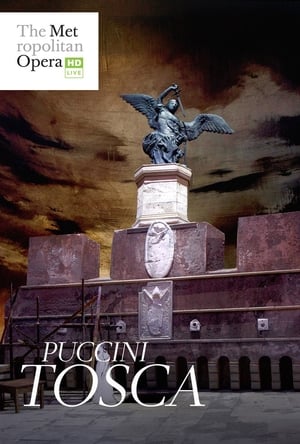
Tosca is an opera in three acts by Giacomo Puccini to an Italian libretto by Luigi Illica and Giuseppe Giacosa. It premiered at the Teatro Costanzi in Rome on 14 January 1900. This version is conducted by Riccardo Muti at La Scala, Milan.
Ethereal music, a fairytale plot, beguiling sets and spectacular special effects all these combined to make Rinaldo in every sense the Baroque multimedia event par excellence. In his modern staging, producer David Alden has resorted to all kinds of magic tricks. The mourning Almirena, for example, is suspended like a paralysed mermaid in a neon-blue water tank for her aria Lascia ch'io pianga. Armida constantly struggles to make her obstinate pet Hydra see reason, and no expense is spared on the stylishly artistic dance interludes. The characters move in an ironic blend of Twenties look, trendy club scene and sacro' kitsch. Unsurprisingly, opera-goers were quick to latch onto such a glittering and star studded production. Indeed, there can be no doubt that the American David Daniels is the undisputed star of this Munich production, even alongside the other famous names on the cast list.
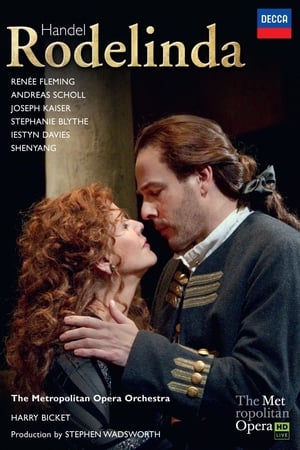
Renée Fleming stars in the title role of one of Handel’s greatest dramas, seen in Stephen Wadsworth’s 2004 Met premiere production. Rodelinda is faced with an impossible dilemma: With her husband Bertarido believed dead, she either has to marry the despised Grimoaldo (the elegant Joseph Kaiser), who has usurped her husband’s throne, or see him murder her son. But Bertarido (leading countertenor Andreas Scholl) is alive and eventually reclaims both throne and wife—and makes peace with his enemies. Stephanie Blythe is marvelous as Eduige, Bertarido’s sister, who is betrothed to Grimoaldo but turns against him. Baroque authority Harry Bicket conducts.
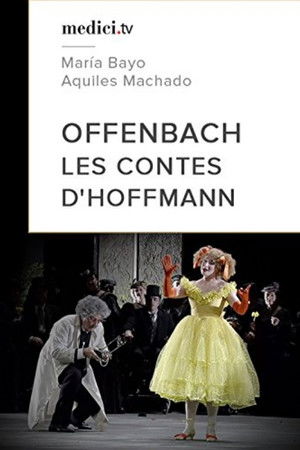
Opera in three acts, a prologue and an epilogue, by Jacques Offenbach (1819-1880), with a libretto in French by Jules Barbier (1825-1901), based on a work that Barbier himself and Michel Carré (1821-1872) had written based on stories by E.T.A. Hoffmann (1776-1822). Approximate duration: 2 h 45 min Recommended for those over 15 years old. The young poet Hoffmann, accompanied by Nicklausse, his alter ego and confidant, is in a tavern next to the theatre where Mozart's Don Giovanni is being performed. During the opera's intermission, some diners arrive at the bar who, upon seeing the poet, encourage him to sing and tell them the story of his famous love affairs. Hoffmann finally gives in and shares with them the stories of Olympia, Antonia and Giulietta. They, absorbed in the poet's stories, remain in the tavern, forgetting about the opera performance.
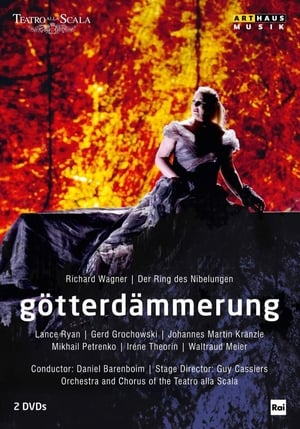
The stupendous climax to Wagner’s four-part Ring cycle is brilliantly realized by the Otto Schenk/Günther Schneider-Siemssen production and byJames Levine’s monumental conducting. The Met orchestra, chorus, and an all-star cast make this Götterdämmerung one that truly rises to the occasion. Hildegard Behrens’s Brünnhilde must be experienced to be believed, as does Matti Salminen’s richly sung, domineering Hagen. At the center of the drama is Siegfried Jerusalem as Siegfried, who does not realize he has been drawn into a plot of betrayal until it is too late. Christa Ludwig is magnetic as Waltraute and Ekkehard Wlaschiha is a compelling Alberich.
The Marriage of Figaro is a continuation of the plot of The Barber of Seville several years later, and recounts a single "day of madness" in the palace of the Count Almaviva near Seville, Spain. Rosina is now the Countess; Dr. Bartolo is seeking revenge against Figaro for thwarting his plans to marry Rosina himself; and Count Almaviva has degenerated from the romantic youth of Barber into a scheming, bullying, skirt-chasing baritone. This follows the Count trying to obtain favours from Susanna, Figaro's bride to be, under the nose of the Countess.
‘Nabucco’, or ‘Nebuchadnezzar’ (Italian: Nabucco), is an opera by Giuseppe Verdi with a libretto by T. Solera, based on events described in the Bible. (Nabucco is a shortened Italian rendering of the name of King Nebuchadnezzar II). It was this opera, the third in Verdi’s oeuvre, that brought him true fame. It tells of the tribulations of the Jews, their captivity by the Babylonians, and their subsequent release to their homeland by Nebuchadnezzar, King of Babylon. Giuseppe Verdi’s opera ‘Nabucco’, is a monumental work that tells the story of the enslavement of the Hebrew people by the Babylonian king Nebuchadnezzar (Nabucco) and their journey towards redemption. The premiere took place on 9 March 1842 at La Scala in Milan. The first performance of the final version was held at the Teatro San Giacomo in Corfu in September 1844. From the box set of 27 Verdi operas, ‘Tutto Verdi’. Recorded live at the Teatro Regio in Parma, 12–14 October 2009.
Live performance, Bayerische Staatsoper, 2011. The Tales of Hoffmann (French: LES CONTES D'HOFFMANN) is an opéra fantastique by Jacques Offenbach that combines three short stories by E.T.A. Hoffmann into a haunting whole: a melancholy poet reflects on three women he loved and lost in the past: a mechanical performing doll, a Venetian courtesan, and the consumptive daughter of a celebrated composer. One of the questions this opera poses for any director is how to link the 'tales' of Hoffmann's three lost loves together and knit them satisfactorily into the Prologue and Epilogue. In this production, Richard Jones solves the puzzle by turning it into an autobiographical journey which ends with a grand meet-up of all the characters Hoffmann has encountered: for once, Hoffmann is not presented as a rollicking kind of drunken story-spinner, but rather a sad-eyed, sobered-up depressive, who reaches for the bottle only because his disastrous love life has gone wrong yet again.
Part of Tutto Verdi series - Macbeth (2006) Parma. Macbeth is one of the most multi-layered, profound and demanding roles that Verdi ever wrote for a baritone and the Italian singer Leo Nucci is arguably the most distinguished in his field. The role has repeatedly brought him lasting success and he enacts it with an intensity that only the very experienced stage personality can muster. French singer Sylvie Valayre is known for her versatile interpretations of spinto and dramatic coloratura soprano parts, especially for particularly gruelling roles like Lady Macbeth. Supported by Italian bass Enrico Iori as Banco and tenor Roberto Iuliano as Macduff, they make up a wonderful cast under the baton of Bruno Bartoletti, musical director of the Teatro Regio di Parma.