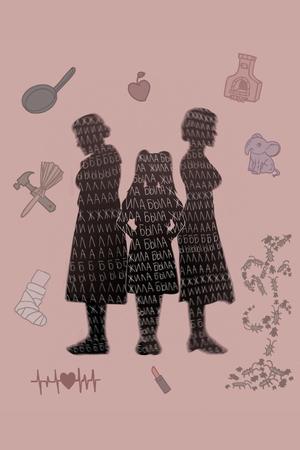
A portrait of Rita, who claims that her mother was never a mother for her. Rita gives birth to her own five children and forces her mother to take the role of a mother.
A unique cinema tour de force from Cinema eVerite', 'Flesh Is Heir To' is a psychological thriller delving into the feminine psyche and societal sexuality standards. The film is written and directed by critically acclaimed off-off Broadway writer/producer and filmmaker Dale A. Johnson.
Elisabeth leaves her abusive and drunken husband Rolf, and goes to live with her brother, Göran. The year is 1975 and Göran lives in a commune called Together. Living in this leftist commune Elisabeth learns that the world can be viewed from different perspectives.
Tuku is all set to get married. But being a bride is not a child’s play, for she doesn’t know how to make tea. Or to knit a sweater even. Will she be able to knit a sweater? Because if she does, she might get hitched.
Like most of the people in her town, Karen Silkwood works at the local nuclear plant producing highly radioactive plutonium. Exposed one day to a lethal dose of radiation, Karen faces the blank walls of corporate indifference and denial. As her illness increases, her protest grows louder and she becomes an obvious danger to the powers that be.
A wife is sick and tired of her husband's infidelities, so she leaves home and goes back to grad-school. There she meets many self-confident women who help her find her own voice.
Nora is a young housewife and mother, living in a quaint little village with her husband and their two sons. The Swiss countryside is untouched by the major social upheavals the movement of 1968 has brought about. Nora’s life is not affected either; she is a quiet person who is liked by everybody – until she starts to publicly fight for women’s suffrage, which the men are due to vote on in a ballot on February 7, 1971.
After World War II, Antonia and her daughter, Danielle, go back to their Dutch hometown, where Antonia's late mother has bestowed a small farm upon her. There, Antonia settles down and joins a tightly-knit but unusual community. Those around her include quirky friend Crooked Finger, would-be suitor Bas and, eventually for Antonia, a granddaughter and great-granddaughter who help create a strong family of empowered women.
The lives of two lovelorn spouses from separate marriages, a registered sex offender, and a disgraced ex-police officer intersect as they struggle to resist their vulnerabilities and temptations.
When a secretary's idea is stolen by her boss, she seizes an opportunity to steal it back by pretending she has her boss' job.
The true story of Frances Farmer's meteoric rise to fame in Hollywood and the tragic turn her life took when she was blacklisted.
Nadine and Manu are two mad women, as tidy as can be, almost perfectionists. They have several things in common: extreme sex, drugs, beer and the trigger. They find the solution to their problems with guns and beware to those who dare to get in their way!
In 1911, a willful and determined man from peasant stock named Charles Saganne enlists in the military and is assigned to the Sahara Desert under the aristocratic Colonel Dubreuilh.
Anna and Edith are colleagues at an insurance company. Their male chef uses the women's business success to his own advances. Anna's husband would prefer her to be at home. Anna and Edith become a couple, but it doesn't end with a romantic rendez-vous. Together, and with the help of their female colleagues, they want to improve their work conditions.
Directed by Solveig Hoogesteijn, Macu, the Policeman's Woman (1987) is a Venezuelan crime drama based on a true story. The film follows Macu, a young woman living in a Venezuelan shantytown, who becomes romantically involved with a local policeman named Ismael. As their relationship develops, Ismael's jealousy intensifies, leading to tragic consequences. The narrative delves into themes of power, control, and the dynamics of abusive relationships within marginalized communities. The film is notable for its exploration of gender roles and societal issues in Latin America.
Matthew, a college freshman, meets his dream girl in a dorm elevator during a blackout. He never sees her face, but instantly falls in love. In the morning, the power is restored, but the "dream girl" has vanished. All Matthew knows is that she lives in an all-girls dorm. He sets out on a semester-long journey to find his mystery girl among a hundred female suspects. Could it be Wendy? Dora? Arlene? Patty? Cynthia? Or the 95 other girls, any of whom could have been in that elevator with Matthew.
Delphyne (meaning ‘womb’) discusses the stigma around menstruation. Addressing shame and acceptance, taboos around menstrual blood are told through a fabric-themed metaphor, and the conflict between a mother-daughter relationship; to find a shared unity and language to beat the conflict which projects itself in the shame metaphor that they’ve unwound and removed from their life. The historical connotations of staining, feminine purity and the divide between private and public space as well as ownership of the body come into play. The coming of age theme is reflected in reference to her struggle with the self (alter-ego), struggle with the ‘other’ (male influence) and struggle with the home (her Mother).
"Boxcar" Bertha Thompson, a transient woman in Arkansas during the violence-filled Depression of the early '30s, meets up with rabble-rousing union man "Big" Bill Shelly and the two team up to fight the corrupt railroad establishment.
Fleabag may seem oversexed, emotionally unfiltered and self-obsessed, but that's just the tip of the iceberg. With family and friendships under strain and a guinea pig café struggling to keep afloat, Fleabag suddenly finds herself with nothing to lose.
An epic meditation on psychoanalysis, the Baader-Meinhof, feminism, and pre-revolutionary Russia.