Hoping to find a sense of connection to her late mother, Gorgeous takes a trip with her friends to visit her aunt's ancestral house in the countryside. The girls soon discover that there is more to the old house than meets the eye.
This fantastical movie inspired by the music of Michael Jackson features imaginative interpretations of hit tracks from the iconic 1987 album “Bad”.
A sexual reverie unfolds over the course of one ethereal night. Characters wander through an erotic maze of love and lust, blurring the lines between wet dream and lucid nightmare as a macabre, erotic stage performance sends a ripple of lustful desires through its audience and performers.
Experimental film by Aldo Francia that consists in diverse situations through the 123 steps of the Santa Justina staircase in the Cerro Larraín of Valparaíso.
Simultaneously sumptuous and gorgeous, garish and grim, this is a re-working of Pinocchio for the neo-liberal era. Rachel Maclean’s dark fairytale, which represented Scotland at the Venice Biennale 2017, depicts a brash and baroque binary world of poverty and riches where the prospect of easy wealth tempts even good boys like Pic into bad ways. But if everyone believes the lie, what’s the problem?
Avant-garde homage to pre-revolution Russian silent movies, and to the poet Aleksandr Blok.
CREMASTER 3 (2002) is set in New York City and narrates the construction of the Chrysler Building, which is in itself a character - host to inner, antagonistic forces at play for access to the process of (spiritual) transcendence. These factions find form in the struggle between Hiram Abiff or the Architect ...
CREMASTER 4 (1994) adheres most closely to the project's biological model. This penultimate episode describes the system's onward rush toward descension despite its resistance to division. The logo for this chapter is the Manx triskelion - three identical armored legs revolving around a central axis. Set on the Isle of Man, the film absorbs the island's folklore ...
There is no escape… From one side of the globe to the other, there is no escaping the faces, the visions, the ever-watchful camera. There is no escaping the mask, there is no escaping the resonating echoes of images and sounds that cross each other over time. There is no escaping the cinema. There is no escaping the terrors of the mind. “A mysterious loner, perhaps a poet, journeys through a series of uncanny surrealistic landscapes with an unclear purpose. His adventure is divided into three sections. The main theme of this experiment is to compare the eerier qualities of different landscapes and interpose the characters within them, elaborating the project’s ongoing preoccupation with extracting sinister moods from ordinary settings. In a way, these can be seen as experimental horror films in which an atmosphere of dread is evoked and sustained without the expected narrative trappings.”
A woman returning home falls asleep and has vivid dreams that may or may not be happening in reality. Through repetitive images and complete mismatching of the objective view of time and space, her dark inner desires play out on-screen.
An attempt to bring the work of surrealist artists to a wider public. The plot is that of an average Joe who can conjure up dreams that will improve his customer's lives. This frame story serves as a link between several avant-garde sequences created by leading visual artists of their day, most of whom were emigres to the US during WWII.
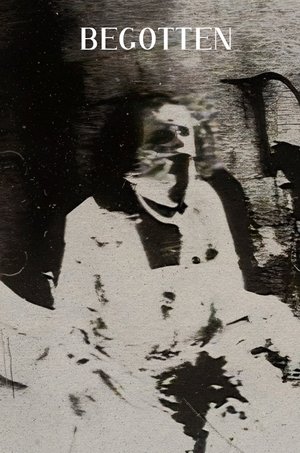
Begotten is the creation myth brought to life, the story of no less than the violent death of God and the (re)birth of nature on a barren earth.
A space occupies it, awaiting to be unlocked by a freeing action or notion. What lies ahead is its determination.
The past and the future collide as a mother abandons her child, provoking three spirits to seek revenge. An experimental musical mixing drama, tragedy and the occult.
The film appears like a ritual with splendids and crypteds psalms. The Great Master of Order (Marcel Mazé, new fetish actor after Aloual) seduces the young male prey with a running cinema projector which carves Murnau's Nosferatu extracts on their bodies. Metamorphosis, rituals passages, Eros and Thanotos, illusion and reality, film into the film are the themes and images in perpetual osmosis in this Stéphane Marti's opus.
An experimental short film that evokes moments in the life of a man recreated through the magic of memory. Made from documents from various sources, this film is composed of several scenes: the stages of the day and of life between joy and carefree youth, the cruelty of the working world, the horror of war. The final result is put into perspective with the birth of a child, perpetuating the cycle of life.
Heterophobia traces the quick fall into hell of Mariano. A young gay man who, having been first raped and then rejected by an heterosexual friend with whom he had vague romantic illusions, has a sentimental journey from initial guilt and messianistic will of redemption, through flaring spite, up through castrating rage, before arriving to a final conclusion: that the the only possible action against patriarchy is revolution. Made in the margins of the Argentine audiovisual community (from which some of the creative team have been effectively blacklisted). It was produced according to the precepts of guerrilla film making is a romantic torch song--not melancholic, but actually demanding a torch with which to ignite the world.
The surrealist film shows repetitive imagery involving a string fashioned in a bizarre, almost spiderweb-like pattern over the hands of several individuals, most notably an unnamed young woman and an elderly gentleman. The film also shows a shadowy darkness and people filmed at odd angles, an exposed human heart, and other occult symbols and ritualistic imagery which evokes an unsettling and dream-like aura. Considered an unfinished film.
While under the effects of anasthesia in a dentist's office, a young man and woman fantasize a romantic triangle between themselves and the dentist.
Drawing inspiration from a poem penned by Castro Alves, this film vividly captures the political, cultural, and intellectual climate of Brazil during the late 1970s. At its core, the story revolves around four distinctive embodiments of Christ's image: a black man, a soldier, an Indian, and a guerrilla fighter. These courageous individuals, hailed as the harbingers of doom in the tupiniquim lands, valiantly combat the insatiable avarice and oppressive "civilizing" brutality propagated by the formidable John Brahms—a foreign exploiter devoid of morals.