This documentary on the effect the talent competition "Afghan Star" has on the incredibly diverse inhabitants of Afghanistan affords a glimpse into a country rarely seen. Contestants risk their lives to appear on the television show that is a raging success with the public and also monitored closely by the government.
A documentary about the great American movie palaces of the 1920s and 1930s. Filmed on location at some of the extraordinary theaters across the country, the program explores the diverse and priceless architecture of such greats as the Atlanta Fox, the Wiltern in Los Angeles, San Antonio's Majestic, Seattle's Fifth Avenue and, perhaps the most famous, Radio City Music Hall in New York City. Also included are stills and vintage clips of classic movies and newsreels of the era that illustrate the historical evolution and mass appeal of the movie palaces. Picture palace organist Gaylord Carter performs a variety of movie accompaniments.
Documentary short showcasing the genius of jazz greats Coleman Hawkins, Roy Eldridge, Cozy Cole, and Milt Hinton, among others.
The extraordinary story of how Hollywood changed World War II – and how World War II changed Hollywood, through the interwoven experiences of five legendary filmmakers who went to war to serve their country and bring the truth to the American people: John Ford, William Wyler, John Huston, Frank Capra, and George Stevens. Based on Mark Harris’ best-selling book, “Five Came Back: A Story of Hollywood and the Second World War.”
After a quarter-century of political denial and social stigma, of stunning scientific breakthroughs, bitter policy battles and inadequate prevention campaigns, HIV/AIDS continues to spread rapidly throughout much of the world. Through interviews with AIDS researchers, world leaders, activists, and patients, FRONTLINE investigates the science, politics, and human cost of this fateful disease and asks: What are the lessons of the past, and what can be done to stop AIDS?
The carnage in Sarajevo provides the focus of this French documentary which seeks to call attention to the terrible conflict in the hopes of finally ending it. The film is divided into five parts. Each part covers a time frame ranging from April 4, 1992, the beginning of the war, to the present. The major issues that occur are three-fold. It depicts the systematic genocide of Bosnians, the silence of Western countries, and the determination of the Bosnians to resist. They refuse to be seen as victims, even though the filmmakers portray them so. Also included are the origins and political aspects of the war. It offers interviews with participants. It also reveals how the U.S. State Department censored reports about Serbian death camps.
Directed by Marianne Chaud
The Road Forward is an electrifying musical documentary that connects a pivotal moment in Canada’s civil rights history—the beginnings of Indian Nationalism in the 1930s—with the powerful momentum of First Nations activism today. Interviews and musical sequences describe how a tiny movement, the Native Brotherhood and Sisterhood, grew to become a successful voice for change across the country. Visually stunning, The Road Forward seamlessly connects past and present through superbly produced story-songs with soaring vocals, blues, rock, and traditional beats.
A documentary about punk and subculture scene of Pula, Croatia from 1978 to 1991, the city that gave birth to one of the most vivid punk and alternative rock scenes in former Yugoslavia, despite having population of just over 60,000 residents.
Extranjeros de sí mismos
Georgian director Otar Iosseliani prepares his film Jardins en Automne. Nothing is conventional in the filmmaker's system: Julie Bertuccelli portrays the gestation and production of a film that seems to follow the freest and most unpredictable poetic intuitions of its creator. The constant and hilarious arguments with the producer, Martine Marignac, a Michel Piccoli transformed into an old woman, and the director's peculiar filming system, in which he signals his actors to start with a whistle, paint a picture of one of the most unclassifiable cinematic experiences in contemporary cinema.
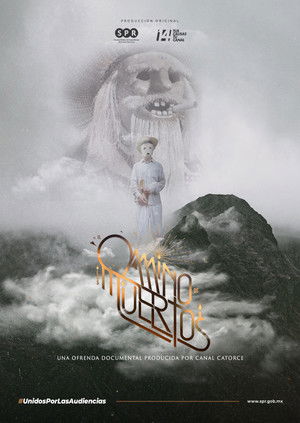
Hallstätter Ballade refers to a celebrated 1961 Austrian documentary short film directed by István Szőts. The film is best known for poetically capturing the unique, centuries-old Alpine tradition of skull painting (Totenkult) in the village of Hallstatt.
The Serengeti is one of the most brutal environments on the planet. It's also home to the tough Vumbi lion pride. Using ground-breaking new tools (including a lion-proof peeping Tom robot), National Geographic explorers Michael "Nick" Nichols and Nathan Williamson embed with the lions to reveal a never-before-seen view into a world with razor thin margins between life and death.
It is a documentary story about five legends of russian cinema: Nonna Mordyukova, Tatyana Okunevskaya, Tatyana Samoylova, Lidiya Smirnova and Vera Vasileva. These wonderful women tell about their lifes and careers in hour interview.
A journey into the secret world of 76-year-old Renaldo Kuhler, a scientific illustrator who invented an imaginary country to survive his disaffected youth.
The film presents how the human body recognizes and becomes aware of its surroundings. The various information pathways to the brain such as sight, sound, smell, taste and touch are explored in a accurate but simple manner via human impression and cartoon characters!
Documentary film that deals with the problems of the rock'n'roll scene in Niš, focusing primarily on the period after the collapse of the former SFRJ.
Several key words emerge from Hugo Pratt's work, inseparable from his life: travel, adventure, erudition, esotericism, mystery, poetry, melancholy... and of course, Corto Maltese, his hero and alter ego, who established him as one of the greatest names in comic books. Born in Italy in 1927 and dying in Switzerland sixty-eight years later, Hugo Pratt, born without an H and with only one T, grew up in the shadow of a fascist father who took him at a very young age to Ethiopia, which was occupied by Mussolini's forces. The teenager developed a fascination for the wide-open spaces of Africa, soon followed by an irresistible attraction to the Indian world. This was the starting point for a life of travel, success, conquests, rare failures, and marked by his veneration for the American cartoonist Milton Caniff, his absolute master.
1977: Grêmio lives a dark period in its history, after losing the last eight Campeonato Gaúcho to Internacional. Then there was a crowd that would shake up the structures and prejudices of the universes of the gaucho football and forever mark its name in history: the Coligay, the first organized football group of supporters formed exclusively by homosexuals.
Guten Tag, RDA !