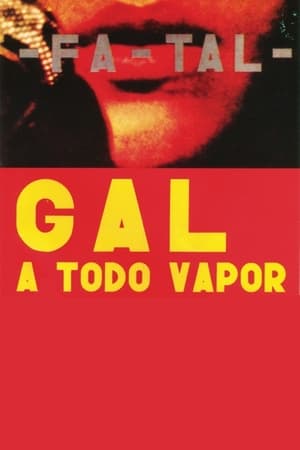
Experimental, cinematic symphony of Granada, José Val del Omar's birthplace.
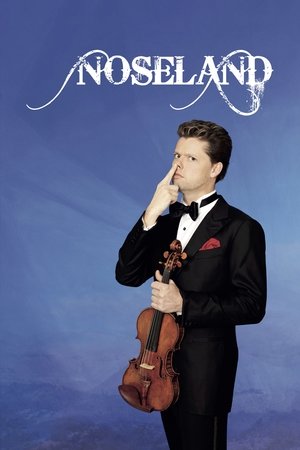
A polka kingdom crumbles in this documentary tracing the rise and fall of dubious duple meter master Jan Lewan. A Grammy-nominated polka superstar who defected from Poland to the West in the 1970s, Lewan created a musical empire that made him an internationally-recognized figure. When scandal erupted and Lewan's shady dealings were revealed, fans couldn't believe that their hero had committed one of the largest polka-related financial crimes in history.
Two of the biggest boy bands in pop history, New Kids On The Block & Backstreet Boys, brought their NKOTBSB Tour to the UK on April 28, 2012. The second night on April 29th at the world-famous O2 Arena also set a milestone- the show was broadcast online and in select theaters all over the world via livestream. NKOTBSB first shocked and delighted fans when they took the stage together for a medley at the sold out NKOTB Radio City Music Hall show in 2010. The two groups wowed audiences again in their first joint televised performance at the American Music Awards in November 2010 and then went on tour together in 2011 through 2012.
Songs for Drella is a concept album by Lou Reed and John Cale, both formerly of The Velvet Underground, and is dedicated to the memory of Andy Warhol, their mentor, who had died unexpectedly in 1987. Drella was a nickname for Warhol coined by Warhol Superstar Ondine, a contraction of Dracula and Cinderella, used by Warhol's crowd. The song cycle focuses on Warhol's interpersonal relations and experiences, with songs falling roughly into three categories: Warhol's first-person perspective (which makes up the vast majority of the album), third-person narratives chronicling events and affairs, and first-person commentaries on Warhol by Reed and Cale themselves. The songs on the album are, to some extent, in chronological order.
A one-hour documentary on the making of Frank Zappa's bizarre 1971 comic musical. Vintage private footage from Frank's personal archives plus behind-the-scenes of the actual shooting and recording. With Ringo Starr, Theodore Bikel, Keith Moon and such songs as "Sleeping in a Jar," and "Strictly Genteel." The inside history of the first feature-length film to be shot on video in 6 days.
A very personal look at the history of cinema directed, written and edited by Jean-Luc Godard in his Swiss residence in Rolle for ten years (1988-98); a monumental collage, constructed from film fragments, texts and quotations, photos and paintings, music and sound, and diverse readings; a critical, beautiful and melancholic vision of cinematographic art.
New York City's Monterey is a residence hotel, whose inhabitants are older and primarily live alone. The camera, usually stationery, observes the lobby. No score, the lobby is clean with granite floors, men wear hats, people enter and exit an elevator, the camera looks out from within the elevator as doors open and close. People sit alone and motionless in their apartments. There are long shots of empty halls. Paint peels. The flooring on upper levels is linoleum. Hall lights are florescent. Doors open a crack then close.
Filmed by Jonas Mekas from the 44th floor of the Time-Life Building, “Empire” explores the passage of time without the use of characters or a traditional narrative. The film, that consists of one stationary shot of the Empire State Building, was made from standard 1,200-foot rolls of 16mm film with a more than eight-hour runtime.
Though several actors portray Elvis Presley at different stages of his life, this documentary is comprised mostly of actual performance footage and interviews with Elvis, his fans and those close to him. This biographical docu-drama features rare footage of Elvis and dramatically recreated scenes from Elvis' life.
A look at the life and work of composer Nino Rota.
Emak-Bakia (Basque for Leave me alone) is a 1926 film directed by Man Ray. Subtitled as a cinépoéme, it features many techniques Man Ray used in his still photography (for which he is better known), including Rayographs, double exposure, soft focus and ambiguous features. The film features sculptures by Pablo Picasso, and some of Man Ray's mathematical objects both still and animated using a stop motion technique.
Twenty-five years since the birth of Rave, a new generation of British DJs and producers are at the forefront of a global musical revolution. From Trance to Dubstep, the sound of British producers has now become the most sought after commodity for the biggest popstars on the planet.
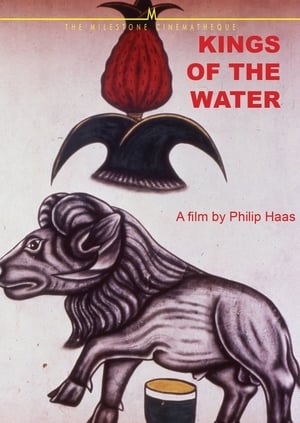
Trance dance and water implosion, a line drawn between secular freak-outs and religious phenomena. Shot in a single-take at a sacred site on the Upper Suriname River, the minor secrets of an animist are revealed as time itself is undone. Rites are the new Trypps, embodiment is our eternal everything.
The faces of a 5:00 PM crowd descending via the Pan Am building escalators in one continuous shot. In old-fashioned black and white, these faces stare into the empty space, in the 5:00 PM tiredness and mechanical impersonality, like faces from the grave.
Documentary on modern black gospel music, focusing on the pioneering Rev. Thomas Dorsey and Mother Willie Mae Ford Smith
In Concert: A Benefit for the Crossroads Centre at Antigua is a live concert film featuring performances by the British rock musician Eric Clapton and invited friends, such as David Sanborn, Sheryl Crow, Mary J. Blige and Bob Dylan.[citation needed] The DVD and VHS releases hit the market on 26 October 1999 under license of Warner Bros. Records. The concert tickets revenue was donated to the Crossroads Centre Foundation. It was the first Crossroads Guitar Festival, although titled differently at the time.[1] The release reached various national charts and sold more than 225,000 copies worldwide.
Les Blank's first feature-length documentary captures music and other events at Leon Russell's Oklahoma recording studio during a three-year period (1972-1974).
Here's the most detailed, informative, fascinating Zappa & the Mothers doc yet! Their restless experimentation and agitated social satire come into sharper focus as music journalists and Zappa biographers chime in with Zappa's bandmates and as you watch rare '60s performances and interviews.
Grand Opera marks a stock-taking of Benning's work and his life, presenting a personal and artistic autobiography woven together with a series of events dealing with the historical development of the number pi, Benning's travels, and homages to Michael Snow, Hollis Frampton, George Landow (Owen Land), and Yvonne Rainer.
Working at the limits of what can easily be expressed, filmmaker Peter Mettler takes on the elusive subject of time, and once again turns his camera to filming the unfilmable. From the particle accelerator in Switzerland, where scientists seek to probe regions of time we cannot see, to lava flows in Hawaii which have overwhelmed all but one home on the south side of Big Island; from the disintegration of inner-city Detroit, to a Hindu funeral rite near the place of Buddha's enlightenment, Mettler explores our perception of time. He dares to dream the movie of the future while also immersing us in the wonder of the everyday. THE END OF TIME, at once personal, rigorous and visionary, Peter Mettler has crafted a film as compelling and magnificent as its subject.