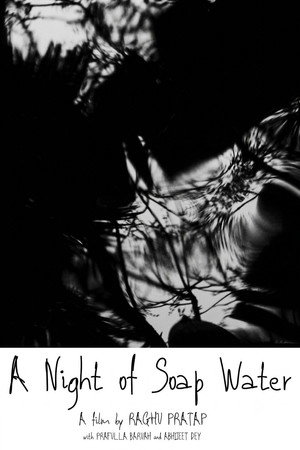
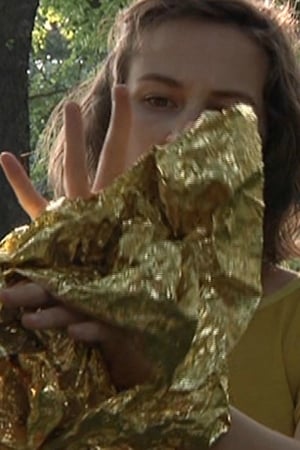
We live with stories. And it's hard for us to give up on these stories, which provide us our identity, a way of understanding ourselves. Reflections from three successive generations are dusted off and presented as remaining fragments. An attempt to archive thoughts on familial history, narrative traditions, human perception and "the story" from known and unknown sources. "There is history behind it and the history becomes the story and the story becomes the pattern and the pattern becomes rigidity."
The rare short film presents a curious dialogue between filmmaker Julio Bressane and actor Grande Otelo, where, in a mixture of decorated and improvised text, we discover a little manifesto to the Brazilian experimental cinema. Also called "Belair's last film," Chinese Viola reveals the first partnership between photographer Walter Carvalho and Bressane.
The second entry in Velu Viswanadhan's series of experimental documentaries. This film traces the Ganges river upstream.
Bill struggles to put together his shattered psyche.
David Markey's documentary of life on the road with Sonic Youth and Nirvana during their tour of Europe in late 1991. Also featuring live performances by Dinosaur Jr, Babes in Toyland, The Ramones and Gumball.
A film about the Tibetan Freedom Concert in San Francisco in 1996.
An anthology of one-minute films created by 51 international filmmakers on the theme of the death of cinema. Intended as an ode to 35mm, the film was screened one time only on a purpose-built 20x12 meter public cinema screen in the Port of Tallinn, Estonia, on 22 December 2011. A special projector was constructed for the event which allowed the actual filmstrip to be burnt at the same time as the film was shown.
Enigma is something of a more glamorous version of White Hole, with a wide variety of elaborate textures (often composed of iconographic and religious symbols) converging towards the centre of the screen.
An experimental ethnographic documentary that criticizes the colonizer view of anthropology.
This film is depicts early lesbian sexuality, using reenacted scenes from the experience of a 12-year old girl as the platform for a meditation on forbidden desire, transgression, and Lacanian psychoanalytic concepts of identity formation. Raw adolescent memories counterpoint staged scenes, exploring mechanisms of power and submission.
A look at the various modes of transportation made for the Expo '86 World Fair in Vancouver, Canada.
A meditation on the human quest to transcend physicality, constructed from decaying archival footage and set to an original symphonic score.
A cameraman wanders around with a camera slung over his shoulder, documenting urban life with dazzling inventiveness.
What kind of power is accessible through the discovery of a voice? Morgan Quaintance interlinks two anti-racist and anti-authoritarian liberation movements in South London and Chicago’s South Side with his own biography to explore what happens when speech is ignored, and the voice fades.
The Los Angeles punk music scene circa 1980 is the focus of this film. With Alice Bag Band, Black Flag, Catholic Discipline, Circle Jerks, Fear, Germs, and X.
Footage yarn sliding over trees, fields, buildings, bulldozers, power lines... while a monotonous hum exacerbates the images.
La Maison en Petits Cubes tells the story of a grandfather's memories as he adds more blocks to his house to stem the flooding waters.
An experimental film that lifts the veil on the world of African American drag racing.
A short film advertising the newspaper Sztandar Młodych (The Banner of Youth), noteworthy for its abstract elements painted directly onto film stock. An attempt at showing the complexity of the world in a capsule, the film reflects the new policy of the openness to the West during the Thaw of the late 1950s in Poland.
The Island is a short film shot entirely on Pulau Bidong, an island off the coast of Malaysia that became the largest and longest-operating refugee camp after the Vietnam War. The artist and his family were some of the 250,000 people who inhabited the tiny island between 1978 and 1991; it was once one of the most densely populated places in the world. After the United Nations High Commissioner for Refugees shuttered the camp in 1991, Pulau Bidong became overgrown by jungle, filled with crumbling monuments and relics. The film takes place in a dystopian future in which the last man on earth - having escaped forced repatriation to Vietnam - finds a United Nations scientists who has washed ashore after teh world’s last nuclear battle. By weaving together footage from Bidong’s past with a narrative set in its future, Nguyen questions the individual’s relationship to history, trauma, nationhood, and displacement.