NASA launches its most ambitious hunt for traces of life on Mars, landing a car-sized rover in a rocky, ancient river delta. The rover will stow samples for possible return to Earth and test technology that may pave the way for human travel to Mars.
Never-before-aired NASA footage presents evidence that the Moon is being used as a base.
With more than 27 years of service, the space shuttle Discovery has clocked more time in space than any other shuttle. She has flown more than 148 million miles, and has become one of the most storied spacecraft in American history. Join us as we celebrate her remarkable past and follow her final flight: to the Smithsonian National Air and Space Museum. It's an emotionally charged mission full of logistical challenges. Discovery is a robust, but very fragile aircraft, and getting her to D.C. in one piece will require some innovative engineering.
It has been said that 10,000 years from now only one name will still be remembered, that of Neil Armstrong. But in the four decades since he first set foot on the moon, Armstrong has become increasingly reclusive. Andrew Smith, author of the best-selling book Moondust, journeys across America to try and discover the real Neil Armstrong. He tracks down the people who knew Armstrong, from his closest childhood friend to fellow astronauts and Houston technicians, and even the barber who sold his hair, in a wry and sideways look at the reluctant hero of the greatest event of the 20th century.
Nearly forty years after the moon landing the men on the mission reveal what really happened. On how close the mission came to disaster.
NASA's biggest spacecraft, Cassini, plunges into Saturn in the final act of a 20-year mission showcasing the planet like never before. An incredible first full look at the Saturn mission with a spotlight on the team that dreamed to explore the planet deeper than ever before.
Twelve men who belong to one of the world's most exclusive fraternities -- people who've walked on the surface of the moon -- are paid homage in this documentary. Using newsreel footage, rare NASA photographs, and digitally animated re-creations, Magnificent Desolation: Walking on the Moon examines the Apollo missions between 1969 and 1972 which put astronauts on the moon.
Moonscape is a free and freely downloadable high-definition documentary about the first manned Moon landing. Funded and produced by space enthusiasts from all over the world, it shows the full, unedited Apollo 11 landing and moonwalk, using only the original TV and film footage and the original audio and photographs. All this material has been scanned, digitized and restored from the best available sources. The live TV broadcast, the 16mm color film footage shot on the Moon and in Mission Control, and the Hasselblad 70mm color photographs taken by astronauts Buzz Aldrin and Neil Armstrong, have been fully synchronized with the audio recordings (including the onboard and Mission Control recordings) and are presented in real time, as they happened, with full subtitles in English or Italian.
Discover the UFO phenomenon like never before, with insights from NASA, CNES, Oxford, compelling firsthand witnesses, and even the possible viewpoint of extraterrestrial visitors.
Before the joint NASA/ESA Cassini-Huygens mission, humanity only knew what had been learned, decades earlier, with the previous limited, rapid "fly-by" Pioneer and Voyager missions. Cassini-Huygens spent more than 13 years in wildly varied orbits around Saturn, allowing the spacecraft to pass near many of its moons, as well as execute a soft-landing of its Huygens lander on the moon Titan. By mission end, it accumulated a mountain of imagery and scientific data that will continue to be studied for years to come. This film is a testament to the amazing efforts of the scientists who planned and executed the mission. It combines breathtaking images, movies, and a variety of animations to take the viewer into Saturn's complex system of rings and moons, as well as stepping viewers through some of the more exciting scientific discoveries made over the course of the elaborately complex mission.
Curiosity: Life of A Mars Rover
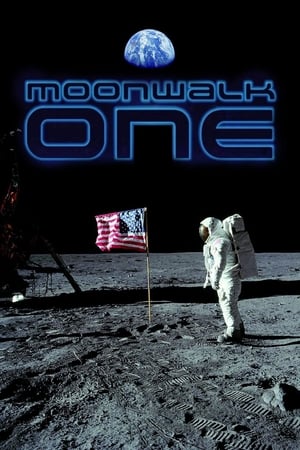
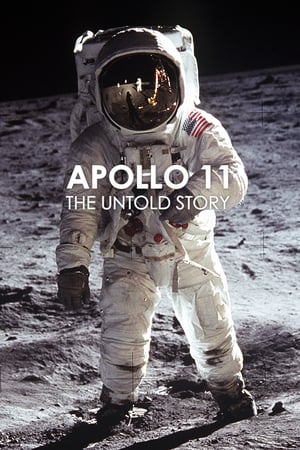
July 1969. America made history and sent the first humans to the moon. High-quality NASA footage and extensive news broadcasts bring this sensational moment in history bursting back into life. Live news footage from every corner of the globe recreates the excitement and elation that surrounded the event, as 600 million people tuned in to watch Neil Armstrong's remarkable first steps.
Spacecraft OSIRIS-REx attempts to grab a piece of an asteroid to bring back to Earth so scientists can study it to learn about the planet's origins.
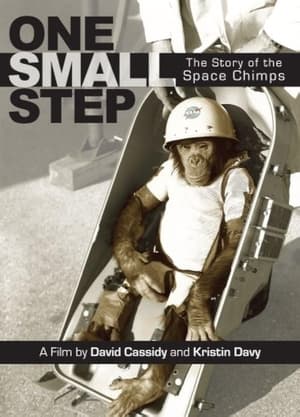
One Small Step: The Story of the Space Chimps is the dramatic and moving real-life tale of the United States Air Force chimponauts and their NASA compatriots.
One of humanity’s greatest achievements, the International Space Station is a $150 billion science laboratory hurtling around Earth at 17,000mph, its thin metal walls shielding astronauts from the most hostile environment humans have ever endured. Microgravity, the vacuum of space, extremes of temperature, micrometeorites - life here is perilous. To mark 25 years of continuous habitation onboard, Space Station We Have a Problem reveals how astronauts are only a technical glitch or software error away from disaster. From malfunctioning spacesuits and docking disasters, critical leaks and even the entire space station backflipping out of control, this is life and death played out in low earth orbit, coupled with the bravery and brilliance that each time, saves the day.
In the last month of the space shuttle programme, Kevin Fong is granted extraordinary access to the astronauts and ground crew as they prepare for their final mission. He is in mission control as the astronauts go through their final launch simulation, and he flies with the last shuttle commander as he undertakes his last practice landing flight. Kevin also gains privileged access to the shuttle itself, visiting the launchpad in the company of the astronaut who will guide the final flight from mission control.
This provocative and insightful film is the first in a series of documentaries that will reveal the secret knowledge embedded in the work of the greatest filmmaker of all time: Stanley Kubrick. This famed movie director who made films such as 2001: A Space Odyssey, A Clockwork Orange, The Shining and Eyes Wide Shut, placed symbols and hidden anecdotes into his films that tell a far different story than the films appeared to be saying. In Kubrick's Odyssey, Part I, Kubrick and Apollo, author and filmmaker, Jay Weidner presents compelling evidence of how Stanley Kubrick directed the Apollo moon landings.
The complex engineering challenges that make re-entry into the earth's atmosphere so dangerous. Scientists have labored for years to bring a crew safely home in what is essentially a meteorite, wrapped in a cocoon of fire, hurtling towards earth six times faster than the fastest bullet. Scientific experts from NASA explain the significance of Columbia's events as they unfolded, offer insights into what may have caused them and how those key events contributed to the shuttle’s ultimate destruction.
An idea born in unsettled times becomes a feat of engineering excellence. The most complex machine ever built to bring humans to and from space and eventually construct the next stop on the road to space exploration.
Over forty years ago man first set foot on a body other than Earth, a milestone event in human history shared by millions back home on television. From the first grainy black and white TV pictures of Apollo 7 to the glorious color finale of Apollo 17, this is the incredible tale of mankind's greatest adventure and how it was shared with the world.