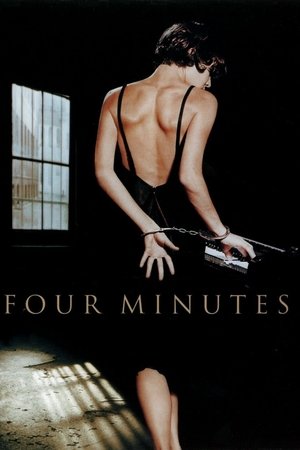
Jenny is young. Her life is over. She killed someone. And she would do it again. When an 80-year-old piano teacher discovers the girl’s secret, her brutality and her dreams, she decides to transform her pupil into the musical wunderkind she once was.
Around 1536, at Windsor Castle, King Henry VIII of England fell in love with the young queen's lady-in-waiting, Jane Seymour. In order to free himself from his marriage to Anne Boleyn, the monarch decided to recall Anne's former lover, Lord Percy, from exile, as he still loved the queen. Both were unjustly sentenced to be beheaded for alleged adultery. The outcast Anne Boleyn spends her last moments in the Tower of London, from where she is led directly to the execution site...
Letters, Riddles and Writs is a one act opera for television by Michael Nyman broadcast in 1991.
In the magical world of dancing fireflies, we follow the story of the main character - naughty Svätojanek, which takes place against the backdrop of the changing seasons. Little episodes from the life of the industrious little bugs, set in the endless cycle of nature, are arranged in dancing images that carry a strong ethical message.
New Year's concert 2025 of Vienna Philharmonic with Riccardo Muti.
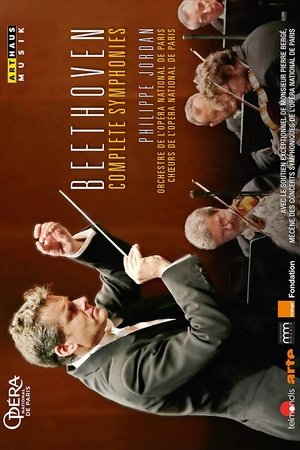
Beethoven - Complete symphonies
Pyotr Ilyich Tchaikovsky's 1879 opera, adapted from Alexander Pushkin's novel. Performed by the Finnish National Opera. Filmed on 20 December 2024 and streamed by Operavision.
Benjamin Britten's monumental anti-war oratorio from the Vladislav Hall of Prague Castle in memory of war veterans and victims. British composer Benjamin Britten wrote War Requiem in 1962 on the occasion of the restoration of the war-damaged cathedral in Coventry. He used the traditional, codified Latin text of the requiem – a mass for the dead – interspersed with verses by Wilfred Owen, a British officer who wrote his poems directly in the trenches of World War I. More than two hundred artists then joined their voices in the Vladislav Hall of Prague Castle as part of the Prague Sounds festival for a symbolic performance of the work, which is rarely performed due to its demanding nature and large cast.
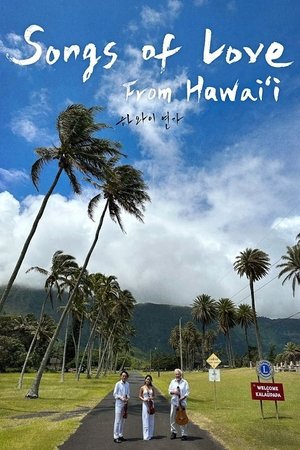
Told in three unique stories, Songs of Love from Hawaii is a hybrid historical drama that uncovers the journeys of Hawaii's first Korean immigrants. From picture bride Lim Ok Soon to those isolated in Kalaupapa, their tales of love, sacrifice, and resilience come alive through stunning performances by world-class musicians and rare archival images against Hawaii's breathtaking landscapes.
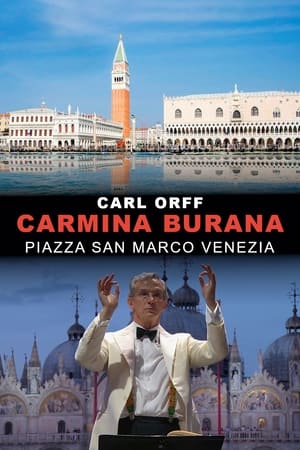
The Choir and Orchestra of the La Fenice Theatre, conducted by Fabio Luisi, take over Piazza San Marco in Venice for a grandiose concert. Facing the basilica, the musicians perform the famous cantata "Carmina burana", twenty-four medieval poems set to music by Carl Orff between 1935 and 1936.
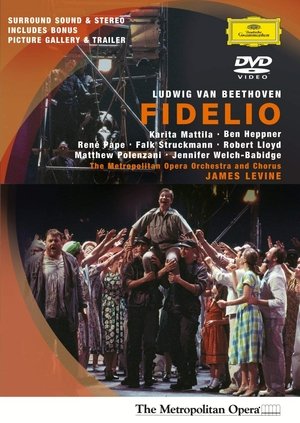
Two years prior to the opening scene, the nobleman Florestan has exposed or attempted to expose certain crimes of the nobleman Pizarro. In revenge, Pizarro has secretly imprisoned Florestan in the prison over which Pizarro is governor. The jailer of the prison, Rocco, has a daughter, Marzelline, and a servant (or assistant), Jaquino. Florestan’s wife, Leonore, came to Rocco’s door dressed as a boy seeking employment, and Rocco hired her. On orders, Rocco has been giving Florestan diminishing rations until he is nearly starved to death. Place: A Spanish state prison, a few miles from Seville; Time: Late 18th century.
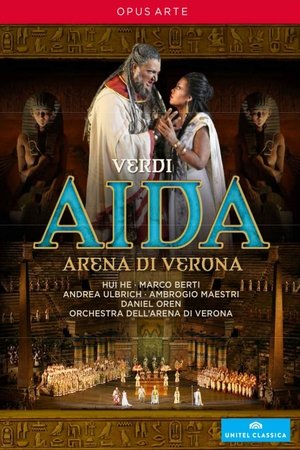
The grand scale and magnificent acoustics of the Roman arena in Verona are ideally suited to the pageantry of Verdi's Egyptian opera, presented here in a staging that is true to the original 1913 production, framed by obelisks and sphinxes and filled with chorus and dancers. Chinese soprano Hui He has won international acclaim for her portrayal of the eponymous slave girl whose forbidden love for the war hero Radamés (Marco Berti, the experienced Verdi tenor) brings death to them both.
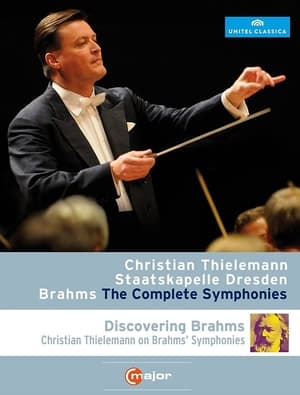
After the great success of his Beethoven cycle, Christian Thielemann now turns with his new orchestra, the Staatskapelle Dresden, to the symphonic work of Johannes Brahms. Bonus features include: an extensive 52 minute interview with Christian Thielemann on Brahms' Symphonies and provides and in-depth look into his interpretation of Brahms.
A look back at the violent conflict between the two leading figures of musical modernity, Arnold Schönberg and Igor Stravinsky, in the first decades of the 20th century. Although Arnold Schönberg and Igor Stravinsky both had a decisive influence on the fourth art, their creations remained diametrically opposed. While the Austrian developed the dodecaphonic method, placing the twelve notes of the chromatic scale at the heart of the composition technique to the detriment of tonality, his Russian rival based his practice on stylistic eclecticism. Their supporters formed two opposing camps, and the two composers - one the father of the Second Viennese School, the other of Neoclassicism - became, in the wake of their successes, the figureheads of a conflict that marked the history of music by its duration and intensity.
Known for his mournful "Adagio for Strings," Samuel Barber was never quite fashionable. This acclaimed film is a probing exploration of his music and melancholia. Performance, oral history, musicology, and biography combine to explore the life and music of one of America’s greatest composers. Features Thomas Hampson, Leonard Slatkin, Marin Alsop and many more of the world's leading experts on Barber's music, with tributes from composers Leonard Bernstein, Aaron Copland, Virgil Thomson and William Schuman. The film was broadcast on PBS, and screened at nine film festivals internationally, with three best-of awards. It was named a Recording of the Year 2017 by MusicWeb International.
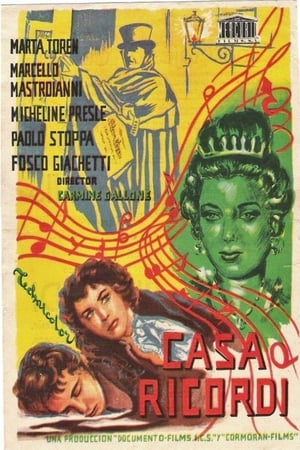
The film covers a hundred years in the lives of the Ricordi family, the Milan publishing house of the title, and the various composers and other historic personalities, whose careers intersected with the growth of the Ricordi house. It beautifully draws the parallel between the great music of the composers, the historic and social upheavals of their times, as well as the "smaller stories" of the successive generations of Ricordi.
Tibor Frešo
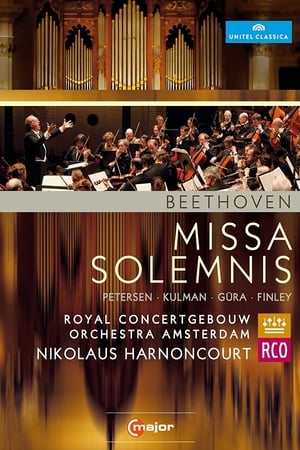
With this performance of the Missa solemnis Nikolaus Harnoncourt, Honorary Guest Conductor of the Royal Concertgebouw Orchestra, once more attained the status of a living legend, due mostly to his wide-ranging expertise of music from the Baroque and Classical era. The highly acclaimed soloists are Marlis Petersen (Soprano), twice the singer of the year by the renowned Opernwelt magazine, Elisabeth Kulman (Alto), Werner Güra (Tenor), winner of the BBC Music Magazine Award for the best vocal performance, and Gerald Finley (Bass), Grammy-Awardwinner for the best opera recording. They are accompanied by the famous Netherlands Radio Choir.
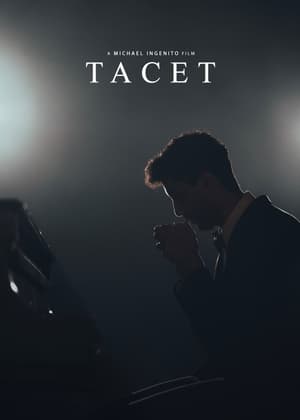
An aspiring classical pianist loses his hearing and, with the help of those closest to him, must find the strength to play again. . .
Emma, a talented conductor and rising star on the Montreal scene, has a complicated relationship with her father and agent Patrick. She has to face up to her emotions and decide whether she wants to successfully combine her career with her love affair with Naëlle, a recently separated cellist and mother of a young son.