A critique of liquid love through sarcasm and crude humor. With the desire that the viewer empathize with the protagonists and reflect on the ephemerality of sexual-affective relationships in modern society. At the end of the short film, the transformation of people into mere consumer goods will be clear, which, once they have been used, are discarded
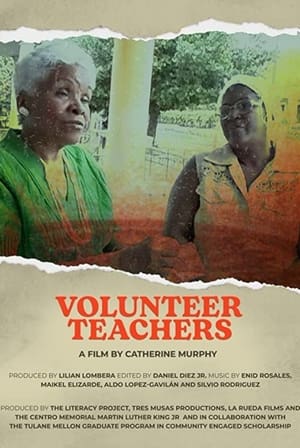
Ana Deborah Mola and Belkis Lescaille were among the first young teachers who started pilot programs around the island of Cuba in 1960, laying foundation for the massive National Literacy Campaign that would take place the following year.
Agnes Martin is one of the most important artists of the twentieth century. Before she died in 2004 at the age of 92, her paintings sold for millions of dollars and were displayed in the world's greatest museums. Through interviews with her friends, lovers, and classmates who knew her well, insight is gained into Agnes Martin's personality and the development of her creative process before she became known for her grid paintings.
Filmed in a squatter community of Labangon in Cebu, Philippines, Holding Our Ground is the inspiring story of a group of women who have organized collectively to pressure their government for land reform, to establish their own money-lending system and to create shelters for street kids. A story of grassroots organizing that can be a model in both hemispheres.
La Cité sanitaire de Clairvivre
Orléans
Cliff Dwellers of America
Living on the prairies during the summer, the Swainson Hawk flies 11,000 km to Argentina for the winter. But toxic pesticides pose a serious threat to these majestic birds. Dr. Stuart Houston and his team use satellite technology along with traditional bird-banding to greatly increase our knowledge of the lives of migratory birds.
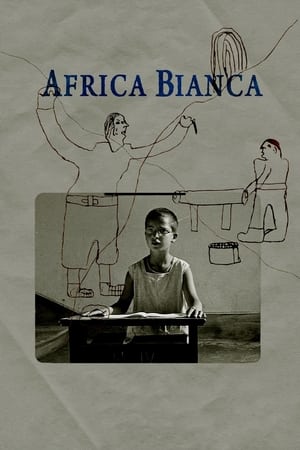
The armies of Fascist Italy conquered Addis Ababa, capital of Abyssinia, in May 1936, thus culminating the African colonial adventure of the ruthless dictator Benito Mussolini, by then lord of Libya, Eritrea and Somalia; a bloody and tragic story told through the naive drawings of Pietro Dall'Igna, an Italian schoolboy born in 1925.
Heinz Schröder discusses his 1930s SPD membership. Gertrud Keen addresses her opposition to politics. Wolfgang Szepansky recalls his imprisonment at Sachsenhausen, a concentration camp.
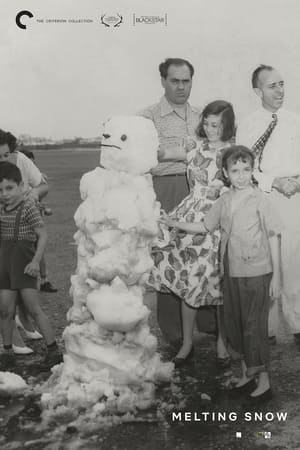
Two tons of snow—flown from New Hampshire to Puerto Rico in 1952 in order to “gift” Puerto Ricans a “white Christmas”—become a metaphor for the colonialist paternalism of America’s relationship to Puerto Rico.
Vernichtung durch Arbeit - KZ-Häftlinge: Sklaven für die deutsche Industrie
On June 10, 1944, the SS murdered nearly the entire population of the French village of Oradour. The ruins still stand, the population is buried in the cemetery. Only one person has ever been convicted of this crime: the former SS-Obersturmführer Heinz Barth.
A report on the 1980 trial in which Kurt Lischka, Herbert Hagen and Ernst Heinrichsohn were convicted of deporting the Jewish population of France during the Second World War.
An overview of fascist tendencies in post-war western Germany, illustrated by various events and everyday examples, backed up with numerous interviews.
Buttenhausen, a village: 1933 - 1942 Television journalist Lea Rosh interviews residents and Jewish visitors in Buttenhausen about their memories of the coexistence of Christians and Jews in this village in the Swabian Alb. Her reports on everyday life under National Socialism shed light on the situation of the people at that time.
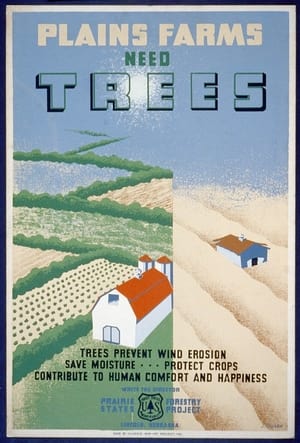
This short film serves as a cautionary tale to farmers who recklessly cut down trees on their land. When prairie farmers engaged in this practice to facilitate plowing, they discovered that the trees had served as windbreaks protecting top soil from erosion. The Dominion Department of Agriculture's experimental station at Indian Head, Saskatchewan, cultivated acres of young trees for distribution to farmers.
In December 2025, the extraordinary artist Hildegard Knef would have celebrated her 100th birthday. Her life was shaped by numerous talents, an unshakeable will to succeed and the ability to keep pushing herself forward. This documentary sheds light on the life of the legendary actress and singer.
Trans man Stafford candidly tells the story of a memorable encounter he had at a sex club.
Peggy and Fred in Kansas is one of the earliest installments in Thornton's Peggy and Fred in Hell series. Thornton represents the outside world with archival footage of rugged terrain and industrial wastelands. We are introduced to the post-apocalyptic room where the children act and re-enact a disjointed play on media narratives. Though the seemingly isolated room is furnished with typically domestic objects, in the hands of the "children raised on television" these items appear as props for the purpose of performing adult affectation. Peggy and Fred channel their isolation like open radios, as if boredom were the frequency from which media is transmitted. - Description from EAI