A look at the state of the global environment including visionary and practical solutions for restoring the planet's ecosystems. Featuring ongoing dialogues of experts from all over the world, including former Soviet Prime Minister Mikhail Gorbachev, renowned scientist Stephen Hawking, former head of the CIA R. James Woolse
Actor/director Sidney Poitier discusses his life and career. He tells of his upbringing in Jamaica; the difficulties he encountered in New York City at the start of his career; his involvement in the US civil-rights movement; and efforts to end apartheid in South Africa. Friends and acquaintances, as well as other performers, give their insights about what makes him so special.
A short experimental documentary exploring the insecurities of a model.
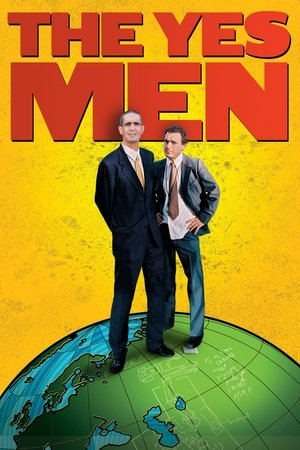
Wirklich alles?!
In the 17th-century, St. Margaret Mary has been hand-picked by Jesus to be His special disciple of His Sacred Heart. Through a series of apparitions at Paray-le-Monial, Jesus reveals His Heart to her. Through the centuries, countless others have been drawn to encounter the transformative power and beauty of the Sacred Heart.
In October of 1994 three student filmmakers disappeared in the woods near Burkittsville, Maryland, while shooting a documentary. A year later their footage was found.
A look at the unusual process used in the making of the film Shortbus (2006) featuring interviews, behind the scenes footage and clips from the feature film. Director John Cameron Mitchell starts with the concept of using real sex in a film with a positive message. The cast of unknowns is selected from homemade audition tapes and then a callback audition workshop. More acting workshops are used to develop the characters and script. The project overcomes a number of obstacles and the rest of the film's development is followed up until its premiere at the Cannes Film Festival.
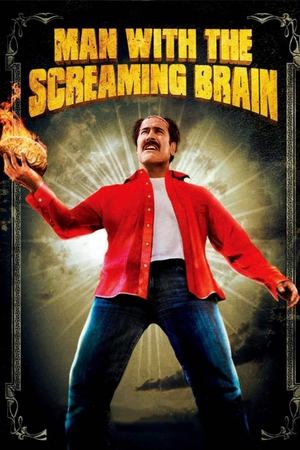
The brains of a Russian taxi driver and a wealthy businessman are brought together in one body by a mad scientist.
Since the early 1990s, Quentin Tarantino has been on a cinematic rollercoaster ride, that's never looked like slowing down, that has cemented himself as one of the worlds most influential filmmakers. Through his unique style, Tarantino carved out a place in Hollywood just for him, and even when others have tried to emulate him, his films stand-out amongst the crowd. And with one movie left before he supposedly retires, we take a look back at the ups and downs of his incredible life on film.
In 1966, German film critic Theodor Kotulla — who would go on to become one of the New German Cinema's most uncompromising filmmakers — visited the set of Robert Bresson's "Mouchette" (1967) and created this half-hour documentary about the director. It won the 1967 German Film Award for best short documentary.
Edward Said, Professor of English & Comparative Literature at Columbia University, was a prominent literary critic of the late 20th century and a leading spokesperson for the Palestinian cause in the US. Born to a Palestinian family in Al-Quds (Jerusalem) in 1935, he and his family were dispossessed in 1948 and settled in Cairo. Educated in the US, he lived in New York for many years. Said was a member of the Palestine National Council. After resigning from the PNC in 1991, Said wrote critically about the post-Oslo peace process, the political failures of Yasser Arafat and the PLO. Said was diagnosed with leukemia in 1991 and struggled with the disease while continuing to write and teach. He stopped giving interviews but made an exception less than a year before his death in 2003, speaking about his illness, work, Palestine, politics, life, and education. The last interview is the final testament of this passionately committed intellectual.
Hosted by Diane Sawyer, the program offers an intimate look at Bruce Willis’s life following his frontotemporal dementia diagnosis, and the strength and advocacy of his wife, Emma Heming Willis.
In the late sixties, Spanish cinema began to produce a huge amount of horror genre films: international markets were opened, the production was continuous, a small star-system was created, as well as a solid group of specialized directors. Although foreign trends were imitated, Spanish horror offered a particular approach to sex, blood and violence. It was an extremely unusual artistic movement in Franco's Spain.
Elem Klimov's tribute to his late wife, director Larisa Shepitko, killed in a car accident a year earlier. Features excerpts from all of her films, and archival audio of her discussing life and art.
Documentary charting the contribution to Hollywood movies made by writer Joseph Campbell, whose ideas about mythic structure helped shape Star Wars.
Who has ever compared Reservoir Dogs? What are “Open Road” and “New World Disorder”? Why is Harvey Keitel a fairy and how did we all almost become diehard fans of Paul Calderon? Here’s a story about Quentin Tarantino. The director who needs no introduction.
He was one of the most notorious Nazi war criminals, infamous for his assassination attempts on twins. But at the end of World War II, he simply disappeared...
On September 16, 2022, in Teheran, the murder by police of the young Mahsa Amini, arrested for "wearing a headscarf contrary to the law", sparked off an unprecedented insurrection. Within hours, a spontaneous movement formed around the rallying cry: "Woman, life, freedom". For the first time, women, joined by men and students, took the initiative and removed their veils, the hated symbol of the Islamic Republic. The Iranian population, from all regions and social categories, rose up in protest. Social networks went wild. The diaspora (between 5–8 million Iranians) took up the cause, and the whole world discovered the scale of this mobilization: could the theocratic regime be overthrown this time?
Eleven major film makers from Europe, America and Asia talk about Akira Kurosawa and discover surprising influences on their own work.
Roar follows a family who are attacked by various African animals at the secluded home of their keeper.