A visual study of the investigation by Forensic Architecture into the Israeli cyberweapons manufacturer NSO Group and the use of its Pegasus malware to target journalists and human rights defenders worldwide.
Amos Gitai returns to the occupied territories for the first time since his 1982 documentary FIELD DIARY. WEST OF THE JORDAN RIVER describes the efforts of citizens, Israelis and Palestinians, who are trying to overcome the consequences of occupation. Gitai's film shows the human ties woven by the military, human rights activists, journalists, mourning mothers and even Jewish settlers. Faced with the failure of politics to solve the occupation issue, these men and women rise and act in the name of their civic consciousness. This human energy is a proposal for long overdue change.
This documentary, filmed after October 7, places recent events in context and retraces the extraordinary history of this region to shed light on the present, interviewing actors and witnesses to this conflict: Islamists, Jewish nationalists, imams, rabbis, intellectuals, urban planners, soldiers, etc.
The Tank and The Olive Tree recalls a certain number of forgotten fundamentals and sheds new light on the history of Palestine. By combining geopolitical analysis, interviews with international personalities who are experts on the subject and testimonies from Palestinian and French citizens, this documentary offers the keys to understanding what the media call the Israeli-Palestinian conflict. Enough to rid people's minds of clichés and prejudices! If The Chariot and the Olivier is intended to be educational, it speaks above all of a magnificent territory, and of a people who constantly affirm that “to live is already to resist”...
The Israeli filmmaker Shai Corneli Polak records the building of the 'security wall' through Palestinian territory at the village of Bil'in. The villagers protest mostly peacefully, while the Israeli army doesn't react peacefully. By now the Israeli High Court has ruled that the building of the wall was illegal.
Najwa, Nawal, and Siham, three Palestinian widows, live with their 11 children in a house on Shuhada Street in Hebron. Their house lies on the border; the façade is under Israeli occupation, the Palestinian Authority controls the back. At the entrance to the house is a military post; on the roof the Israeli army has placed a watch point over Palestinian Hebron. The three women, trapped in the middle and constantly surrounded by Israeli soldiers, carry on their difficult lives in a perverse situation: the occupation becomes a routine, the absurd becomes a given. This is the story of an occupation that extends to the staircase and the roof of the house, where it encounters poverty, loneliness, pain, but also the small joys of everyday life. This is an internal prison, the external one is the ongoing occupation.
War in Lebanon
A look inside the work of Breaking the Silence, an organization of former IDF combat soldiers who collect and publish testimonies of soldiers who served in the occupied territories. For six months, director Silvina Landsmann, camera in hand, accompanied the staff of the organization. The many hours of footage have been refined into a film that dives into the heart of Breaking the Silence’s work: guided tours of Hebron and the surrounding area, public lectures and house meetings, internal staff meetings and media strategy. All the while the organization is forced to justify its very existence, both internally and to the broader public, and to justify its place in the political debate. The Good Soldier raises questions about Israel’s dynamic mainstream and the challenges of confronting it.
2003 documentary film produced by Oliver Stone for the HBO series America Undercover about the conflict in occupied Palestine. He speaks with Ehud Barak and Benjamin Netanyahu, former prime ministers of Israel, Yasser Arafat, late president of the Palestinian National Authority, and various Palestinian activists resisting the oppression of the zionist regime.
A music festival symbolizing peace, freedom, and eternal love transforms into a horrifying nightmare of terror. Survivors, marked by death and trauma, reconstruct the event through their perspectives, embodying the lost innocence and beauty of youth, forever scarred by the tragic events that unfolded. This is a horrifying glimpse through the eyes of the individuals who endured the brutal October 7th onslaught at the Nova Music Festival.
Bible expert Bill Gallatin explores biblical prophecies from the Book of Revelation that have transpired, with a discussion of whether these events signify that we are now living in the End Times preceding the return of Jesus Christ. Gallatin touches on events such as the increasingly acute difficulties in the Middle East, numerous environmental catastrophes, earthquakes and more, explaining how they connect to scriptural writings.
NUMEC: How Israel Stole the Atomic Bomb and Killed JFK. Terrorists took advantage of the massive weapons surplus following the end of WWII and created lucrative black-markets for illegal arms trafficking many of which went to ethno-fascist fanatics who created the state of Israel. The weapons theft would escalate to Highly Enriched Uranium for nuclear bombs and the assassination of a US president.
Many prophets who authored the Tanakh of the Jews prophesied about the fate of the Jewish people and the State of Israel.
Documentary about war photographer James Nachtwey, considered by many the greatest war photographer ever.
The film returns to the origins of the creation of the State of Israel (from 1896 to 1948) and highlights the responsibility of the Western World.
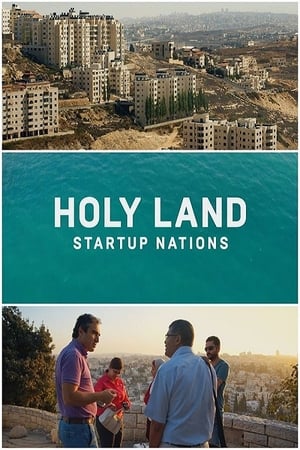
With the most tech startups and venture capital per capita in the world, Israel has long been hailed as The Startup Nation. WIRED’s feature-length documentary looks beyond Tel Aviv’s vibrant, liberal tech epicenter to the wider Holy Land region – the Palestinian territories, where a parallel Startup Nation story is emerging in East Jerusalem, Nazareth, Ramallah and other parts of the West Bank, as well as in the Israeli cybersecurity hub of Be’er Sheva. And we will learn how the fertile innovation ecosystem of Silicon Wadi has evolved as a result of its unique political, geographical and cultural situation and explore the future challenges – and solutions – these nations are facing.
Tawfiq’s Reef chronicles the plight of Palestinian fishermen in Gaza, heavily restricted in the area in which they can fish, often indebted, shot at, harassed or imprisoned by the Israeli Navy on the narrow sliver of fishing waters available to them off the Gaza coastline, making this one of the most dangerous professions in the world.
Set in the al-Mishal Cultural Center in Gaza before it was destroyed by an Israeli air strike on August 9, 2018, A Play Before The Bombs is a story that unfolds over a 4 year period. The film follows Abeer Ahmed, a young woman growing up in the Jabaliya Refugee Camp, the largest refugee camp in Gaza, as she and the other members of her cast and crew prepare to put on a play that focuses on a Palestinian woman’s right to receive inheritance. While the content of the play is tailored towards fostering a cultural discussion among Palestinians, neither the play nor the playhouse can escape the omnipresence of the Israeli siege on Gaza. A siege that shatters literal buildings as well as the hopes and dreams of the performers and community members who take refuge within the walls of al-Mishal in search of artistic fulfillment.
A thought-provoking documentary on the current and historical causes of the Israeli-Palestinian conflict and U.S. political involvement.
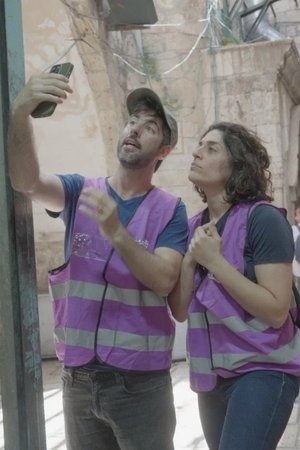
This film made by a Palestinian-Israeli collective shows the destruction of the occupied West Bank's Masafer Yatta by Israeli soldiers and the alliance which develops between the Palestinian activist Basel and Israeli journalist Yuval.