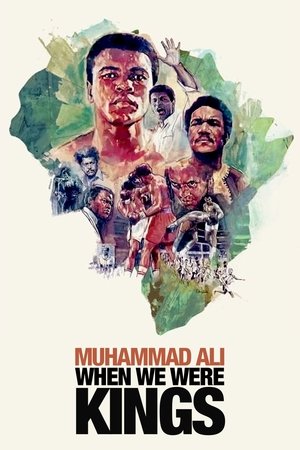
In 1896, Ethiopia, an African nation, largely armed with spears and knives, defeats a well-equipped and organized Italian military bent on colonization.
Frei.Wild - 15 Jahre mit Liebe, Stolz und Leidenschaft
An extensive look at the making of Fright Night (1985) and Fright Night Part 2 (1988) featuring exclusive interviews with cast and crew members, rare photographs, behind-the-scenes footage and more.
Between the ages of two and three, children already know which gender they belong to. One in 10,000 males and one in 40,000 females feel the opposite gender to the one they were assigned at birth. The first signs of transsexuality can appear very early. The families of all the protagonists in the documentary agree that their children have, almost from the moment they began to speak, expressed with surprising insistence and firmness that they belonged to the sex opposite to that of their genitalia.
Michael Grade tells a tale of television skullduggery and dirty dealings in the battle to win the Saturday night ratings crown.
Documentary on the punk scene in the city of Jyväskylä, Finland.
Documentary film interviews leading African Americans on race, identity, and achievement.
Iran, 2008. As President Mahmoud Ahmadinejad's motorcade creeps through the teeming streets of Qom Shrine, thousands of people jam hand-written letters into the hands of his handlers. Hearing their President deliver a speech is a thrill, but more promising to these men and women is the hope that their letters - expressing pleas for loans, medical attention, housing and jobs - will be answered. Since his 2005 election on a populist, "man of the people" platform, Ahmadinejad has encouraged Iranians to send him such letters; according to a staff member, he has received about 10 million of them, and has been able to respond to nearly 76 percent. In one letter, a 16-year-old boy says his family has no money and goes to bed hungry every night. According to the staff member, the boy will be helped. As other letters are read, the worker says that "In Islam, charity is a necessity."
Documentary on Antonio "King Tone" Fernandez and his gang, the Latin Kings, whose main target was to protect Latin people.
Retrospective documentary on the making of the low-budget horror film Prison (1987)
Athletes and fans explore the impact of sports on the lives of Americans.
Zombies are part of pop culture, but what are they? Where do they come from? To find real zombies we visit Haiti where Zombies are an integral part of the island's cultural and religious roots.
Documentary film interviews leading Latinos on race, identity, and achievement.
Echo of the Mountain takes a look at the life and work of Santos de la Torre, a great Huichol artist who, like his people, lives in oblivion. Despite having made a great mural for the metro station Palais Royal – Musée du Louvre, Santos lives isolated and ignored in his country. This documentary follows his pilgrimage to Wirikuta, where he asks gods for permission to make a new mural; his journey across 385 miles of the Peyote Route, and Santos's creative process during the making of a new mural which aims to illustrate the history, mythology and religious traditions of the Huichol people.
Talented teen musicians from around the USA spend a week working with Grammy nominated professionals
Xiara Trujillo is a precocious seven-year-old who moved from the Bronx to Maryland with her mom, Aracelli Guzman, four years ago. Though she seems happy hanging out and playing with her pal Melissa, Xiara becomes defensive and emotional when talking about her father, Harold Linares. As we see and learn, Harold is in jail serving a ten-year sentence for weapons possession; Xiara seems to blame his incarceration on her mother, whom she says "kept calling the police." Xiara, who has always been extremely close to her father, acts out with her mother.
In Capetown, South Africa, in September 1966, Prime Minister Hendrik Verwoerd, the architect of apartheid, was stabbed to death in Parliament. The course of South African history was changed by the assassin, Dimitri Tsafendas, who was written off as mad and condemned to twenty-eight years of imprisonment. A Question of Madness tells the extraordinary human story of a man, born of a black mother, but classified white, who travelled the world in hopeless search of sanctuary - eventually returning to the land of apartheid to wreak vengeance on the one who symbolized the racism which had haunted his life.
From its beginning during the Reagan years through current times, the War on Drugs has left many victims stranded in the prison system. PRISONERS OF THE WAR ON DRUGS reveals life behind bars in the nation’s prisons. Each prisoner has his or her own story, but for most, the story is predictably similar; they have been criminalized for drugs or drug related offenses, locked up with easy access to substances, and given little opportunity for rehabilitation. This film provides an inside look at the prison system, its prisoners and a war on drugs we do not seem to be winning.
In the 1920s, former coal miner Harry Hoxsey claimed to have an herbal cure for cancer. Although scoffed at and ultimately banned by the medical establishment, by the 1950s, Hoxsey's formula had been used to treat thousands of patients, who testified to its efficacy. Was Hoxsey's recipe the work of a snake-oil charlatan or a legitimate treatment? Ken Ausubel directs this keen look into the forces that shape the policies of organized medicine.
Georgian director Otar Iosseliani prepares his film Jardins en Automne. Nothing is conventional in the filmmaker's system: Julie Bertuccelli portrays the gestation and production of a film that seems to follow the freest and most unpredictable poetic intuitions of its creator. The constant and hilarious arguments with the producer, Martine Marignac, a Michel Piccoli transformed into an old woman, and the director's peculiar filming system, in which he signals his actors to start with a whistle, paint a picture of one of the most unclassifiable cinematic experiences in contemporary cinema.