The Winter Butterfly is a story about passion and love, depicting Matsunaga a samurai, as a corrupt oppressor rather than a hero. With the emergence of a new system during the Meiji period, many things changed in Japan for the sake of progress. The story told in four parts is related to the seasons of the year, which can be scorching, amenable, cold or unpredictable. All evoked by Stephen Warbeck's beautiful and sensitive score.
In an era where aliens have invaded and taken over feudal Tokyo, a young samurai finds work however he can.
The life, adventures and exploits of warlord Date Masamune the One-eyed Dragon: his early youth as an aggressive warrior, the battles he won until subduing almost all his enemies, the lonely comprehension of knowing that he actually can not take over the whole country because he was born too late.
Seibei Iguchi leads a difficult life as a low ranking samurai at the turn of the nineteenth century. A widower with a meager income, Seibei struggles to take care of his two daughters and senile mother. New prospects seem to open up when the beautiful Tomoe, a childhood friend, comes back into he and his daughters' life, but as the Japanese feudal system unravels, Seibei is still bound by the code of honor of the samurai and by his own sense of social precedence. How can he find a way to do what is best for those he loves?
Izo is an assassin in the service of a Tosa lord and Imperial supporter. After killing dozens of the Shogun's men, Izo is captured and crucified. Instead of being extinguished, his rage propels him through the space-time continuum to present-day Tokyo. Here Izo transforms himself into a new, improved killing machine.
In an Edo-period retelling of "City Lights", Iyami, a poor beggar, befriends a flower-selling blind young girl. Through the ups and downs of their friendship, Iyami strives to find a way to make her see again.
A nameless gunfighter arrives in a town ripped apart by rival gangs and, though courted by both to join, chooses his own path.
Pursued by formidable Chinese assassins, young Kotaro and his dog run into No Name, a mysterious stranger who gets pulled into the chase. The unlikely companions form a bond over saving the dog from a poison attack, but chaos erupts when the assassins find Kotaro, and No Name must face his past before a horrible fate is met again.
Nathan Algren is an American hired to instruct the Japanese army in the ways of modern warfare, which finds him learning to respect the samurai and the honorable principles that rule them. Pressed to destroy the samurai's way of life in the name of modernization and open trade, Algren decides to become an ultimate warrior himself and to fight for their right to exist.
Four people recount different versions of the story of a man's murder and the rape of his wife.
Toru Emori leads the cast as Hirate Musashi while a Hiroshi Fujioka competes with him as Okamoto Musashi. They must not only contend with the Yoshioka and Yagyu fencing schools, but have to take on Chiyonosuke Azuma as Sasaki Kojiro, and deal with the women who pursue them for love. Unlike the Yoshikawa Eiji novel which is not historically accurate, this film offers a new view of Japan’s greatest hero! The film is based on the novel by Kosuke Gomi!
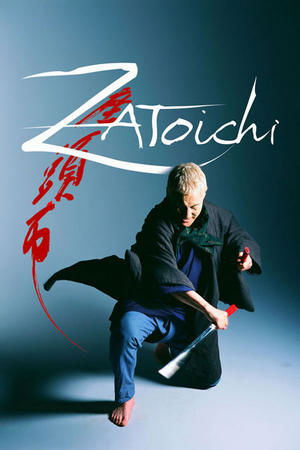
Blind traveler Zatoichi is a master swordsman and a masseur with a fondness for gambling on dice games. When he arrives in a village torn apart by warring gangs, he sets out to protect the townspeople.
A samurai answers a village's request for protection after he falls on hard times. The town needs protection from bandits, so the samurai gathers six others to help him teach the people how to defend themselves, and the villagers provide the soldiers with food.
Down-on-his-luck veteran Tsugumo Hanshirō enters the courtyard of the prosperous House of Iyi. Unemployed, and with no family, he hopes to find a place to commit seppuku—and a worthy second to deliver the coup de grâce in his suicide ritual. The senior counselor for the Iyi clan questions the ronin’s resolve and integrity, suspecting Hanshirō of seeking charity rather than an honorable end. What follows is a pair of interlocking stories which lay bare the difference between honor and respect, and promises to examine the legendary foundations of the Samurai code.
Lord Oda Nobunaga plans to control Japan where rival warlords battle by waging war against several clans. His vassal Araki Murashige stages a rebellion and promptly disappears.
Ryunosuke, a gifted swordsman plying his trade during the turbulent final days of Shogunate rule, has no moral code and kills without remorse. It’s a way of life that leads to madness.
Follow the infamous ninja bandit named Ishikawa Goemon (Yosuke Eguchi) in an epic story. One night while looting treasure from Nanban (Southern Barbarians), Goemon finds a mysterious box hidden inside a secret grave. A forgotten relic from the past containing untold powers.
A naively honorable samurai comes to the bitter realization that his devotion to moral samurai principles makes him an oddity among his peers, and a very vulnerable oddity in consequence. He takes the blame for the misdeeds of others, with the understanding that he will be exiled for one year and restored to the clan's good graces after the political situation dies down. As betrayal begins to heap upon betrayal, he realizes he'll have to live out his life as a ronin, if not hunted down and killed.
A cowardly samurai is sent as an official executioner targeting the clan's former sword instructor, a man whose sword and spear skills are second to none.
Tough contract killers and secret organizations operating worldwide in a murderous battle for a relic that hides much more than just a simple instrument. The merciless hunt for the guitar of the "King of Rock'n Roll" leaves a trail of violence and death in its wake.