La traviata in Paris is a film-opera of Giuseppe Verdi's La traviata filmed live on television and worldwide, directed by Giuseppe Patroni Griffi, conceived and produced by Andrea Andermann in 2000. A Traviata that takes place live, with a television reporter who, amid the events of the day that took place in France on June 3, 2000, connects live to the scene of the action but at the time exactly a century earlier, in the Paris of June 3, 1900 (the setting of the opera is thus postdated from the original, which was conceived for the 1850s).
Benjamin Britten's 1973 opera, performed in 2008 at the Liceu Opera in Barcelona, Spain.
The hero of this admirably complete August 2013 Guillaume Tell from Pesaro is homegrown maestro Michele Mariotti. The inimitable overture is (mercifully) unstaged and terrifically played, with splendid cello and flute solos: the fine standard never flags. Rossini’s extraordinary 1829 score audibly presages Meyerbeer, Berlioz, Glinka, Verdi and Wagner, among many others. Graham Vick’s direction privileges class conflict, with a clenched fist on the red-and-white forecurtain. The Edwardian costumes place Austrians in white evening garb; the black-clad Swiss polish the floor while the rulers savor a filming (much of that to follow) — the fisherman Ruodi, in a boat with a blonde and fake scenery, with Tell and his family providing tech support. Vick deploys geographical and historical kitsch liberally but not (always) pointlessly. Ron Howell’s pretentious, mannered choreography, however, beggars belief.
Nabucco - live from Metropolitan Opera, June 2002. On its surface, Nabucco is about the epic struggle of Zaccaria and the Jews suppressed by Babylon’s King Nebuchadnezzar and his vengeful daughter, Abigaille. But to Italians fighting for their freedom from Austria, Verdi’s first great opera was an inspiring call to arms.
Starring the exquisite coloratura soprano Emma Matthews as the innocent girl priestess Lakmé, and superb tenor Aldo Di Toro as the love-struck Gerald, the story tackles religion and cross-cultural love against a backdrop of British rule in India in the mid-19th century. French conductor Emmanuel Joel-Hornak brings out the full depth of the lush, dramatic score, with familiar high points being the beautiful renditions of the well-known Flower duet and Bell Song. Dominica Matthews adds her rich voice as Mallika and Stephen Bennett is darkly dominating as Brahmin priest Nilakantha, Lakmés father, while Roxane Hislop is a consumate Mistress Bentson. Set and costume designs by Mark Thompson fill the stage with rich colour, atmosphere and exoticism, complemented by Nigel Levings warm lighting. This restudied production, originally conceived by Adam Cook, is skilfully directed by Roger Hodgman.
Berlioz’s colossal masterpiece requires stupendous forces—dozens of soloists, enormous chorus, orchestra and ballet, a superb conductor who understands the uniqueness of the score—plus a production that does visual justice to the work. “A stupendous achievement” was one critic’s assessment of Peter Wexler’s inventive production. And with James Levine’s wizardry galvanizing the marvelous all-star cast, this is truly a gem. Plácido Domingo is the legendary hero Aeneas, Jessye Norman the obsessed prophetess Cassandra, and Tatiana Troyanos is Queen Dido, who commits suicide when Aeneas leaves her.
Marc Minkowski conducts the Orchestra and Chorus of the Opera National de Lyon in this 1997 production of Offenbach's opera starring Natalie Dessay, Yann Beuron, Jean-Paul Fouchecourt and Laurent Naouri.
Leonora plans to elope with Don Alvaro, but he accidentally shoots and kills her father, who curses them as he dies. The lovers go on the run, but get separated. Bent on revenge, Leonora's brother Don Carlo, hunts them down. Verdi painted an immense canvas with this dark but tuneful opera, vividly brought to life in John Dexter’s production, with sets by the great Eugene Berman. The legendary Leontyne Price is seen in one of her greatest roles, Leonora. Price’s soaring voice encompasses every nuance of Leonora’s emotion as she moves from joy through resignation to ultimate heartbreak. James Levine’s brilliant leading of the Met orchestra and chorus is a lesson in Verdi style. Giuseppe Giacomini is Alvaro, the man Leonora loves, and Leo Nucci is Don Carlo, the dark instrument of their Fate.
A Victor Hugo play, haunting and scandalous, provided the inspiration for Verdi’s mid-career masterpiece. A vengeful but misguided court jester strives to save his daughter from a duke’s licentious clutches, but can't part with the feeling that a curse looms over all of his actions. In Rigoletto, the composer introduces several of his most iconic arias and duets—as well as an 11th-hour quartet that counts among the finest moments in opera.
Politics and love leads to a love triangle between father, son and stepmother.
In the 50's, in Paris, the neighbors Rodolfo and Mimi meet each other when Mimi's candle blows out in a cold and dark night. They immediately fall in love for each other, in times of financial difficulties in the post-war. Rodolfo introduces Mimi to his close friends Marcello and his beloved Musetta; Colline; and Schaunard and together they have a good-time in Café Momus. Some time later, Mimi tells Marcello that she can not support the jealousy of Rodolfo any longer and when Marcello discuss with Rodolfo, Mimi overhears the real reason for the behavior of her beloved Rodolfo.
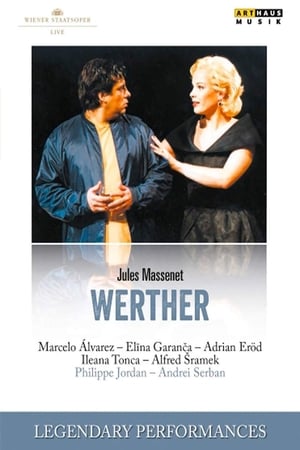
Werther loves Charlotte, but she promised her mother on her deathbed that she would marry Albert. After the marriage Charlotte suggests that Werther should travel - but not forget her. In addition to the singing and orchestral accompaniment, the entire cast acts very convincingly. And, there's no backstage mugging, entrances and spoken nonsense to spoil the experience of the drama.
This lavish, cinematic realisation of Stravinsky's neo-classic masterpiece, performed in English, is filmed both in studio and on location. The imaginative richness in the music is complemented by costumes and sets which are, by turn, exquisitely garish and darkly grotesque to intoxicating effect.
Two-time Tony Award–winning composer Jeanine Tesori’s powerful new opera Grounded, commissioned by the Met and based on librettist George Brant’s acclaimed play, wrestles with the ethical quandaries and psychological toll of 21st-century warfare.
This epic opera follows Virgil, beginning as the Greeks appear to have ceded the field after ten years of the Trojan War. Cassandra tries to warn of the terrible fate to come, but fate is set and Troy falls. The first two acts cover this tragic end, then the flight of survivors to Carthage and events at Carthage continue in acts 3 - 5, culminating in the further voyage for Italy and Rome. This is Virgil's classic epic, in operatic form, in about a three and a half hour performance from French Opera.
A romantic opera in three acts with music and libretto by Richard Wagner, performed by the Orchestra of the Teatro di San Carlo. The original title, Tannhauser und der Sangerkrieg auf Wartburg, reveals the real nature of the opera, born by a fusion of two traditional sagas and dedicated to the dualism of spirituality and sensuality and the possibility of redemption through love. Composed between 1843 and 1845, Tannhauser has a tormented musical theme, made up of constant variations. It debuted in Dresden in 1845 when Wagner was just over 30.
The Queen of the Night has begged Prince Tamino to free her daughter Pamina from the clutches of the High Priest Sarastro, who has abducted her. Together with the bird-catcher Papageno, Tamino enters Sarastro's realm to seek her. When he finds her, the two fall in love, but they have to have to undergo ordeals before they can be together. At the end, Papageno is also rewarded with his Papagena.
This incredible look at the preparation and production of a Live in HD cinema transmission takes you behind the scenes of the new Cav/Pag with the HD director, host, stars, and crew for an up-close view of the exciting process behind the Met's extraordinary HD presentations.
The Royal Ballet performs Tchaikovsky's classic ballet, choreographed by Liam Scarlett and starring Marianela Nunez as Odette/Odile and Vadim Muntagirov as Prince Siegfried.
A short film by Walerian Borowczyk in two parts. The first 'panel' follows the morning routine of Leon Boyer who, despite being almost 100 years old, still farms the land, drives a vintage car, and plays with his two dogs. The second panel shows shots of beautiful flowers and a cat, to a recording of Tino Rossi singing 'La romance de Nadir / Je crois encore entendre' from Bizet's opera 'Les pêcheurs de perles'.