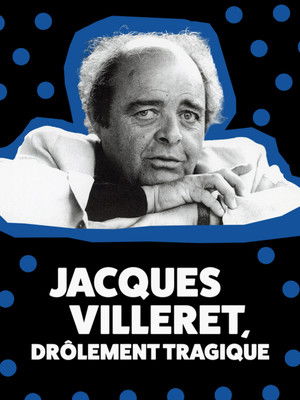
A childhood in boarding school, volunteered at 17 for the war and dismissed for indiscipline, thug in Marseille turned gigolo in Paris, he became actor thanks to some inspired women. Then flying high, fast and far, thanks to his director masters René Clément, Luchino Visconti & Jean-Pierre Melville.
Exhibition on Screen's latest release celebrates the life and masterpieces of Hieronymus Bosch brought together from around the world to his hometown in the Netherlands as a one-off exhibition. With exclusive access to the gallery and the show, this stunning film explores this mysterious, curious, medieval painter who continues to inspire today's creative geniuses. Over 420,000 people flocked to the exhibition to marvel at Bosch's bizarre creations but now, audiences can enjoy a front row seat at Bosch's extraordinary homecoming from the comfort of their own home anywhere in the world. Expert insights from curators and leading cultural critics explore the inspiration behind Bosch's strange and unsettling works. Close-up views of the curiosities allow viewers to appreciate the detail of his paintings like never before. Bosch's legendary altarpieces, which have long been divided among museums, were brought back together for the exhibition and feature in the film.
Gray Matters explores the long, fascinating life and complicated career of architect and designer Eileen Gray, whose uncompromising vision defined and defied the practice of modernism in decoration, design and architecture. Making a reputation with her traditional lacquer work in the first decade of the 20th century, she became a critically acclaimed and sought after designer and decorator in the next before reinventing herself as an architect, a field in which she laboured largely in obscurity. Apart from the accolades that greeted her first building –persistently and perversely credited to her mentor–her pioneering work was done quietly, privately and to her own specifications. But she lived long enough (98) to be re-discovered and acclaimed. Today, with her work commanding extraordinary prices and attention, her legacy, like its creator, remains elusive, contested and compelling.
Impassivity and silence are Mads Mikkelsen's trademarks, and roles without reply his specialty. His sculptural allure is such that his mere presence takes on a dramatic dimension. For him, everything starts with the body. It's his main working tool, which he shapes and engages for each film. For the majority of world audiences, the Danish actor remains associated with his "villain" characters in Hollywood blockbusters - Casino Royale, Doctor Strange, Hannibal, Fantastic Beasts... Yet he finds with uncommon ease a balance between major American film franchises and more modest, confidential independent films. If the actor manages to move from one universe to another without being stereotyped, it's because he has a very physical - thanks to his former career as a gymnast - and pragmatic approach to his art.
Tennessee outsider artist Billy Tripp has constructed a massive steel sculpture for the past 33 years, and is finally setting his sights on retirement. Former Brownsville native Randall Kendrick examines Tripp’s life and work as he builds one of the final pieces of his ever expanding sculpture, The Mindfield.
A worn-out floor, the hole underneath, a political activist, and the Ouled Sbita tribe are the protagonists in this political satire. For 23 years, the director’s chair at an international art institute scratched the wooden floor. This 102cm x 120cm floor section is cut out and sent to an expropriated piece of land in Morocco. In The Hole’s Journey, Ghita Skali uses sharp wit, personal stories and playful editing to touch on specific power dynamics and freedom of choice.
Up until the end of her life, Beatrice Wood continued to influence younger artists with her definitive, free-wheeling ways. She was central to the American Dada movement and was the last surviving member of this group. In this program she recalls her friends Man Ray, Picabia and others, and her ex-husband Marcel Duchamp. She died in 1999 at 105 years of age.
Marc Chagall was an artist caught between two worlds, between traditional art and modernism, figuration and abstraction. The film accompanies him on an important stage of his life from 1910 to 1930, between Paris and Vitebsk. Chagall's home town was a laboratory for the artistic avant-garde in Belarus, while Paris was the center of modern art movements.
This is the legendary meeting between a young filmmaker and one of the masters of surrealism: the spanish painter Óscar Domínguez, born in La Laguna, Tenerife, in 1906, died in Paris in 1957. In the "Visite," the artist -admirer of Picasso, rebellious disciple of Breton- is presented in solitude, far from the tumult of the exhibitions and parisian circles. An austere approach, almost “povera”, with no audio, nor flashy camera movements, but rarely attractive. Why Resnais could not finish his movie? Hope one of our experts help us to solve the mystery.
The documentary film tells the story of Zucchero Sugar Fornaciari through his words and those of colleagues and friends such as Bono, Sting, Brian May, Paul Young, Andrea Bocelli, Salmo, Francesco Guccini, Francesco De Gregori, Roberto Baggio, Jack Savoretti, Don Was, Randy Jackson and Corrado Rustici. A journey of the soul which, thanks to images coming from Zucchero's private archives and from the "World Wild Tour", his last and triumphant world tour, goes beyond the portrait of a successful musician reaching into the doubts and fragilities of 'man.
This film tells Jean-Michel's story through exclusive interviews with his two sisters Lisane and Jeanine, who have never before agreed to be interviewed for a TV documentary. With striking candour, Basquiat's art dealers - including Larry Gagosian, Mary Boone and Bruno Bischofberger - as well as his most intimate friends, lovers and fellow artists, expose the cash, the drugs and the pernicious racism which Basquiat confronted on a daily basis. As historical tableaux, visual diaries of defiance or surfaces covered with hidden meanings, Basquiat's art remains the beating heart of this story.
After being stuck at home for two months, she finally goes out for a walk. In a short form documentary, she photographically explores this deserted Lisbon, never ever seen, through a passionate look. The city breathes, stripped of human beings.
With his soaring falsetto and magnetic yet understated stage presence, Jimmy Somerville burst onto the 1980s new wave scene, making the world dance to songs rooted in struggle and resilience. From the harsh realities of Glasgow’s working-class neighborhoods to the challenges of growing up gay in a hostile world, and the devastating impact of the AIDS crisis, Somerville transformed pain into anthems of freedom. First with Bronski Beat, then The Communards, and later as a solo artist, he became both rebel and diva—the unmistakable voice of a generation fighting for equality. Through intimate stories from those who have stood by him for four decades, this portrait reveals a rare artist who has never wavered in his convictions.
THE STORY WON’T DIE, from Award-winning filmmaker David Henry Gerson, is an inspiring, timely look at a young generation of Syrian artists who use their work to protest and process what is currently the world’s largest and longest ongoing displacement of people since WWII. The film is produced by Sundance Award-winner Odessa Rae (Navalny). Rapper Abu Hajar, together with other creative personalities of the Syrian uprising, a post-Rock musician (Anas Maghrebi), members of the first all-female Syrian rock band (Bahila Hijazi + Lynn Mayya), break-dancer (Bboy Shadow), choreographer (Medhat Aldaabal), and visual artists (Tammam Azzam, Omar Imam + Diala Brisly), use their art to rise in revolution and endure in exile in this new documentary reflecting on a battle for peace, justice and freedom of expression. It is an uplifting and humanizing look at what it means to be a refugee in today’s world and offers inspiring and hopeful vantages on a creative response to the chaos of war.
Janina Ramirez explores the BBC archives to create a TV history of Leonardo Da Vinci, discovering what lies beneath the Mona Lisa and even how he acquired his anatomical knowledge.
Filmed in his London studio, David Hockney sits down with Melvyn Bragg to discuss his remarkable life and career, illustrated by a wide range of his vibrant and joyous artworks.
Short documentary about artist Keith Haring, detailing his involvement in the New York City graffiti subculture, his opening of the Pop Shop, and the social commentary present in his paintings and drawings.
A selection of seemingly unconnected scenes featuring Nick Cave, Blixa Bargeld, Nina Hagen and Lene Lovich. Losely based on Voltaire's satire "Candide".
Portrait of the brilliant Ukrainian artist against the backdrop of the 20th century.
"I especially hope to inspire young women, because I often feel like so much emphasis is put on how beautiful you are, and how thin you are, and not a lot of emphasis is put on what you can do and how smart you are. I'd like to change the emphasis of what's important when looking at a woman." Filmed in San Francisco in 2000, Margaret Kilgallen (1967-2001) discusses the female figures she incorporated into many of her paintings and graffiti tags. Loosely based on women she discovered while listening to folk records, watching buck dance videos, or reading about the history of swimming, Kilgallen painted her heroines to inspire others and to change how society looks at women. Three of Kilgallen's heroines—Matokie Slaughter, Algia Mae Hinton, and Fanny Durack—are shown and heard through archival recordings. Kilgallen is shown tagging train cars with her husband, artist Barry McGee, in a Bay Area rail yard and painting in her studio at UC Berkeley (source: Art21).